Showing posts with label German Expressionism. Show all posts

Friday, October 28, 2022

October 28: Unheimliche Geschichten (Uncanny Stories)


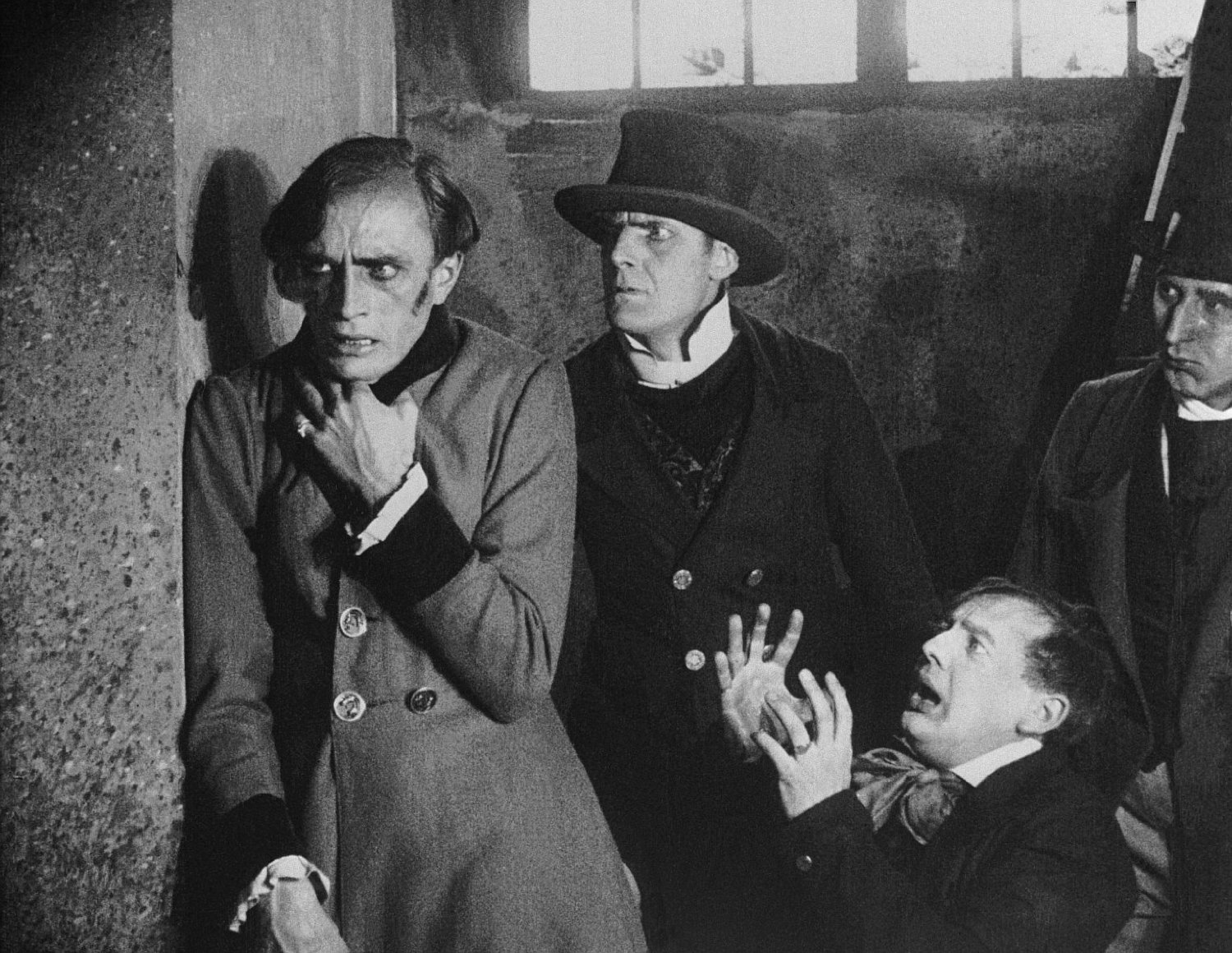
Germany's Unheimliche Geschichte or Grausíge Nächte (Horrible Nights) is the earliest horror anthology; released in 1919 and containing five distinct stories with a sixth frame story. Three of the five stories were written by well known writers of the gothic: Edgar Allan Poe, Robert Louis Stevenson and Germany's own Anselma Heine. Director Richard Oswald provided a fourth story with "Der Spuk" (The Spectre). The fifth writer, Robert Liebmann was on the cusp of establishing himself as an important screenwriter in the country when he provided a story for the film; he would go on to be one of the most successful screenwriters of 1920's German cinema (he would later die at the age of just 52 in 1942 because he was Jewish). The most famous cast member (by far!) is Conrad Veidt, who not only appears as Death in the prologue, but also has roles in the individual stories themselves. The other two principle players appearing in all of the stories are Anita Berber and Reinhold Schünzel.  The director himself makes a cameo in the prologue as well; in what would become a the norm for director cameos, he went uncredited. 


The director in the middle with his two principle male players


The film's original runtime was 112 minutes (or 1 hour 52 minutes), with DVD releases having it cut to 98 minutes. The five principal stories as follows:


The Apparition by Anselm Heine

The Hand by Robert Liebmann

The Black Cat by Edgar Allan Poe

The Suicide Club by Robert Louis Stevenson

The Spectre by Richard Oswald


The film goes by several different translated names in English, including:  Eerie Tales, Five Sinister Stories, Weird Tales, Tales of Horror and Tales of the Uncanny. The film is not just a milestone as the very first horror anthology movie, it is also an oft over-looked early film of German expressionism. Though the direction style is not as outlandish as Murnau or Wiene, it is a very important work in the vein of gothic silent cinema in Germany, a great example of a work that gave ideas to the imagination of later films of Expressionism. Oswald would remake the film in 1932 with full sound as The Living Dead with Paul Wegener as the principle actor. 


A Few Stills & GIFs


Gr
Friday, October 29, 2021

Spooktober 29: Alraune [A Daughter of Destiny] (1928)


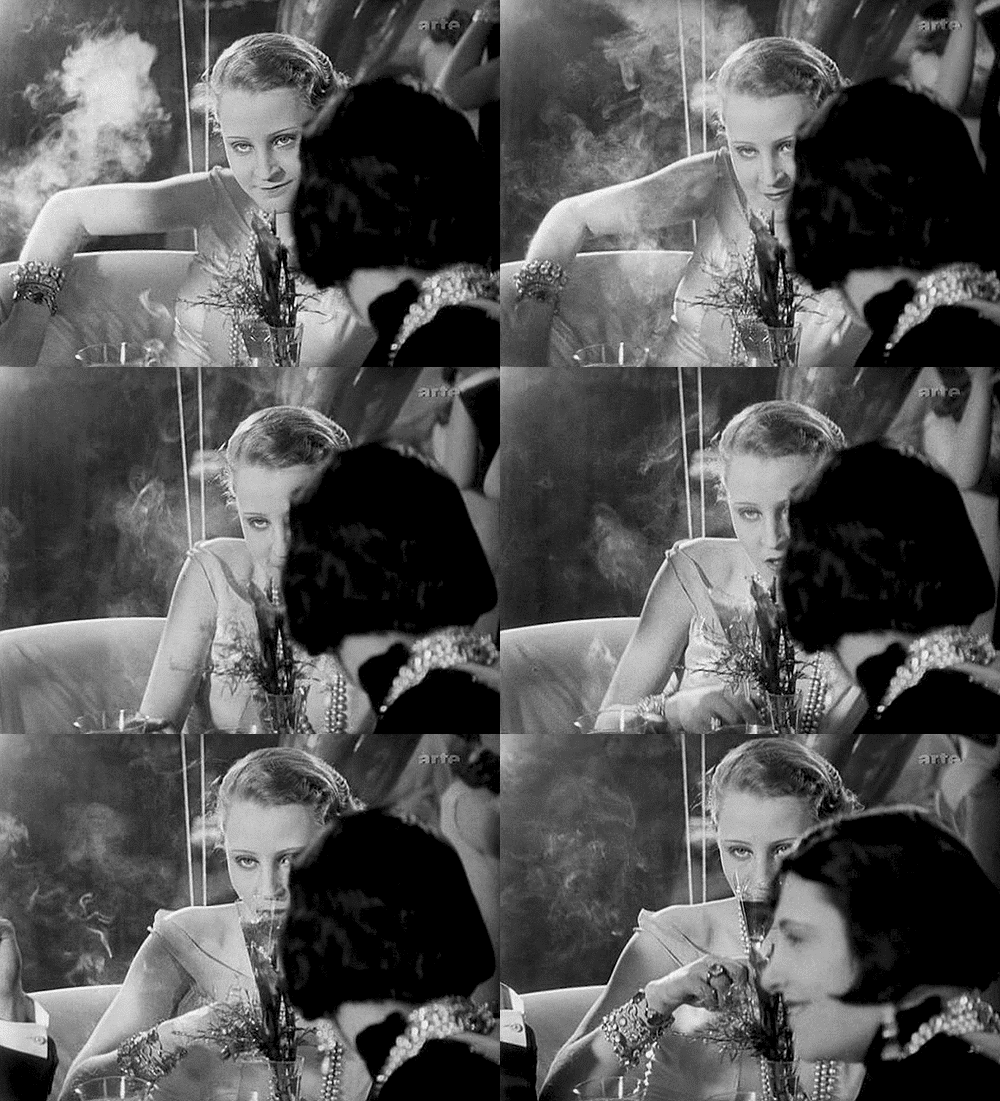
One of the last great silent horror films before the coming of sound Alraune was also one of the last silent films in the Frankenstein story vein, Alraune (also known in English by the title A Daughter of Destiny) was released in Germany at the beginning of 1928 and in the U.S. later that spring.  Despite it's clear influence from and general association with the Mary Shelley novel, the core story, and, indeed, the title itself come from an entirely different novel altogether. The novel Alraune (translation "mandrake" hence the tangled roots prominently featured in several posters) by Hanns Heinz Ewers was published in 1911 as a fully illustrated affair and was based on a German fold tale that dates from the Middle Ages (and I cannot help but mention the anti-Semitic nature of several of the illustrations in that novel despite that it's author claimed not to be an avowed anti-Semite later when he became involved with National Socialism [only to be quickly ostracized and banned], something that is conspicuously absent in the film). Though the novel draws from the folk tale, it updates it into a horrific scientific setting that was clearly a nod at least (if not an out-and-out rip off) of the Frankenstein story published nearly a hundred years before it.  The film further draws from the Shelley invention in the form of a mad scientist like professor played by Paul Wegener. The story then hews much closer to the old belief that mandrakes, which were thought to be the spawn of hanged men, where used by witches to bear soulless children. In the film an experiment is performed by the professor on a prostitute using the same belief, the result is the unnatural offspring Alraune. Brigitte Helm, famous for her starring role in Metropolis, plays the female monster, who grows to adulthood in an unnaturally short period of time and shows all the the signs of being a soulless woman corrupted not just by an unnatural birth, but also by her adoption by the professor, who is playing in God's own arena. To contrast her willingness to engage in shocking behaviors, the story has her sent off to a convent, where things...well let's just say...don't go well for the nuns there. Though the film has very creepy imagery, there is very little straight out horror in it. It is, instead, a kind of morality tale that cautions against the evils of drink, gambling and other vices of "low living." The director was Henrick Galeen, and his is considered the most sexually explicit to date of the handful of adaptations of the Ewers novel (as the first poster above attests), and firmly ensconces Helm into the ranks of the "vamp" (as was made so wildly popular int he 1910's by Fox's Theda Bara). It also thoroughly and successfully turns an old supernatural folk tale into a work of solid science fiction. Helm would replay the role again in 1930 in a sound version directed by Richard Oswald (see the middle poster above). Galeen's Alraune has been compared to some of the best German Expresionist films of the decade, including The Cabinet of Dr. Caligari  and Nosferatu


Tuesday, October 26, 2021

Spooktober 26: Der Student von Prag (1926)


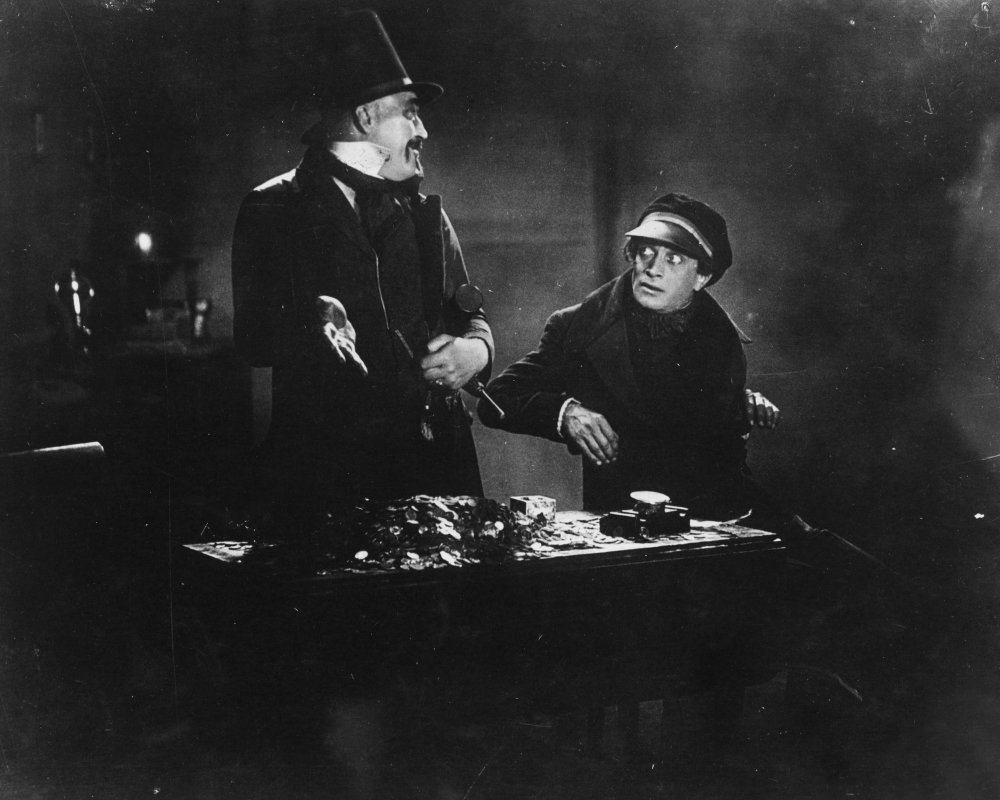
Celebrating 95 years of the 1926 release of Der Student von Prag (The Student of Prague), directed by Henrik Galeen and starring Conrad Veidt.