Showing posts with label J. Searle Dawley. Show all posts

Tuesday, October 11, 2022

October 11: J. Searle Dawley's Snow White (Highly Recommended!)


J. Searle Dawley is one of cinema's earliest and most prolific directors. In his directing career, that spanned almost twenty years, he helmed almost 200 films, many of them shorts, but he also made an impressive number of films that ran for an hour or more. More impressive still, was his embrace of a wide range of genres. He started his career in 1907 at Edison. From the start he distinguished himself at the company as the go-to man for any film subject and for his efficiency and speed of production; something that he excelled at, and yet, the end product did not suffer from it (Dawley had been in the directing business so long that he even directed D.W. Griffith in a role before Griffith himself became a director). His films included horror and, in fact, today his most famous film is Frankenstein dating from 1910 (the first known film adaptation of Mary Shelley's novella). As for genre's, he seemed to have a special flare for more fanciful stories (as the special effects in Frankenstein prove) and in 1916 he tackled the Grimm brothers' Snow White for Famous Players (as the contemporary poster above indicates, it was distributed by Paramount). The film starred Marguerite Clark as Snow White, Dorothy Cumming as the queen and Alice Washburn as a very impressive Witch Hex.  Running a little over an hour, it is feature length and was a big success at the box office (there is story that it was the first film Walt Disney ever saw, I have no idea if that was apocryphal or not, but it does demonstrate how wide and popular the release of the film was).  Part of that success may lie in that it was adapted from a popular Broadway production of the tale, but certainly Dawley's direction prowess was also key (Disney did admire the film enough that it inspired the inspiration for his own animated version in 1937).  The film is also one of Dawley's earlier feature length films that still survives intact and his been released in many editions for home viewing. It is one Dawley's finest and is a great edition to any silent Halloween film lineup.


Thursday, September 30, 2021

Happy Spooktober! The Phantom Honeymoon (1919)


This a J. Searle Dawley film in every respect (written, directed and produced).  Probably the most notable thing about this 1919 release is, that not only does it survive, but is available for purchase for home viewing. And I love a ghost story.... There are also aspects of this film, while not new even in the late 1910's, show up even into this era, the new century and millennium, albeit it "period pieces." Principle among them is the exotic "Hindu" caretaker (think The Wolfman from 2010 with the great Art Malik in the part of Singh) of the British "castle."  It  also doesn't sport any special effects that are new (in fact many of them had been around for decades by the time of release, many pioneered by Méliès in the 1890's), but it is a feature length film, at just a little over 60 minutes, and it is certainly not a well known supernatural silent film. It is truly scary that this was distributed by Hallmark. Yeah...they've been around for a while! 😆 Happy October everyone!! 


Friday, July 14, 2017

Born Today July 14: Robert Brower


1850-1934

Giant of the stage and very early silent narrative film star Robert Brower was born on this date in Point Pleasant, New York. Brower was a veteran of the 19th century stage; he was persuaded to join the Edison Company after they started making narrative films, as opposed to actualities and newsreels.  He made his first film in 1909 with the J. Searle Dawley directed A Rose Of The Tenderloin.  He signed a contract with the company in 1911.  Probably the first film that he made under contract was Silver Threads Among The Gold (1911), directed by Edwin S. Porter--and one of the first films ever to require a live band to place set pieces.  The first full length film that he is thought to have made an appearance in, albeit in an uncredited role, was the 50 minute long The Quest Of Life (1916) made for the Famous Players company (which, incidentally, featured a small appearance by a very young Rudolph Valentino).  He had a credited role in the more than 5 hour long action adventure serial The Mystery Of The Double Cross (1917) made for Astra Film.  His next feature length non-Edison credited role came in 1918 in the comedy A Burglar For A Night.  In the 1910's he worked steadily, with the vast majority of his film appearances coming during this time--most of these were in Edison shorts.  He film work slowed in the 1920's, but he was still quite the actors actor during the time.  He even managed to work into the era of early talkies!  He had a supporting roles in Cecil B. DeMille's 1923 Adam's Rib and in Ernst Lubitsch's The Student Prince In Old Heidelberg (1927); and the first film that he worked on that had sound was a William A. Wellman film from 1928: Beggars Of Life, a partial silent.  The first fill sound film that he acted in was D. W. Griffith's Abraham Lincoln in 1930--his role was uncredited.  In fact, all the rest of his film appearances would be in uncredited roles, including a bit part in James Whale's The Invisible Man in 1933.  The last film in which he appeared was released after his death; The Silver Bullet premiered on 11 May 1935.  Brower had passed away in West Hollywood on the 8th of December 1934 from a heart attack, he was 84!  There is no information as to his burial or cremation.  


For More:


Wednesday, May 17, 2017

Born Today May 17: Bertha Kalich


1874-1939

Silent film and Yiddish stage actress Bertha Kalich (sometimes spelled "Kalish") was born Baylke Kalakh in Lemberg, Galicia--then part of the Austro-Hungarian Empire (now Lviv, Ukraine) the daughter of a brush maker and amateur violinist father and a seamstress mother.  Her mother had a love of the theater and this rubbed off on young Bertha.  As her interest in the stage grew as a young child, her impoverished parents were able cobble together enough funds to send her to a private school and the take private music lessons.  By the age of 13 she was a member of the chorus in the local Polish theater and had enrolled in the Lemberg Conservatory.  By her very early teens, she had already been a member of the chorus in at least one opera performance.  Throughout her teens, she performed in Polish, Russian and German.  She had also entered the Yiddish theater owned by Max Gimpel.  She wound up the leading lady for the company and they performed, primarily, by that time in Budapest.  She then left for Romania, quickly learning the language, she was able to appear in large or starring roles in the national theater there.  She was wildly popular--even winning over the admiration of staunchly anti-Semitic theater-goers.  It was not long, however the she would become a victim of her own success.  Her fellow actors became insanely jealous of her; there was even rumoured a murder plot against her.  As a result of this, she was offered a sponsorship in New York by Joseph Edelstein who had just opened the soon to be famous Thalia Theater, a Yiddish language house.  They set themselves apart from other Yiddish play houses, by offering Yiddish language versions of high works of literature, especially Shakespeare.  She was so popular, that she was dubbed "the Jewish Bernhardt"--a reference to actress Sarah Bernhardt--a nickname that stuck.  A couple of plays that she starred in made the move from the Yiddish stage to Broadway--rare for the time!  However by 1910, he star on the live New York stage had begun to fade.  In 1914, she left New York for Hollywood.  Her success there was ever so fleeting, as she appeared in only 4 films.  The first of these was a reprisal of one her most successful roles on the Broadway stage in New York; Marta Of The Lowlands was made in 1914, and was directed by none other than J. Searle Dawley after he went to work for the Famous Players Film Company.  She didn't exactly set the town on fire.  The other three films that she appeared all came in 1916 (SlanderAmbition and Love And Hate).  She then returned to the Yiddish theater scene in New York.  By the late 1920's her eyesight began to fail, suffering from a degenerative disease that would eventually result in full blindness.  Much later in life, she engaged in some radio work, reprising many of her most beloved stage roles.  Kalich died from undisclosed causes on the 18th of April in 1939 at the age of 64 in her adopted home town of New York City.  She is buried in the Mount Hebron Cemetery in Queens in the Yiddish Theater Alliance section.


For More:


Leave Virtual Remembrances @ Find A Grave

Saturday, May 13, 2017

Born Today May 13: J. Searle Dawley


1877-1949

The man who considered himself the very first real motion picture director, who the world came to know as J. Searle Dawley, was born James Searle Dawley on this date in Del Norte, Colorado.  I would say that it's more accurate to say that he could be considered the very first director of purely narrative films; but the honor of very first director really should go to the man who hired Dawley at the Edison Co., and that would be Edwin S. Porter.  Dawley at first wanted to break into the acting circuit, securing a position in the acting house run by Louis Morrison; however the tour that he was hired to work on was canceled and his was obliged to return home to Colorado.  This was in 1895 and came just after his high school graduation.  He rejoined the group in 1897, and worked both as a actor and a stage manager for 3 years.  He then left for the vaudeville circuit, with ambitions to become a writer.  He worked there both as a writer and actor, before joining the Spooner company, where he plied all of his talent accrued to date: acting, writing and stage managing.  Having gained attention of the Edison Co. and of Porter, he was hired in 1907 specifically to direct.  This was indeed a first.  He was hired to direct a short film that already had a scenario attached to it:  The Nine Lives Of A Cat became his directorial debut in 1907.  Though D. W. Griffith was two years older than Dawley, he wouldn't make his directorial debut until 1908.  In fact, Dawley would direct Griffith in a film that survives to this day; Rescued From An Eagle's Nest was filmed in 1908, before Griffith made his debut later in the year.  It is a remarkable film, because it contains some of the earliest complicated special effects--films had formally moved on from good old fashioned trick photography.  Some of Dawley's early work in Fort Lee for Edison available on disc include:  A Little Girl Who Didn't Believe In Santa Claus  1907, A Suburbanite's Ingenious Alarm 1908, Fireside Remembrances 1908 (all up to this point co-directed with Porter), and  Cupid's Pranks 1908.  Dawley made the move to California in 1910, earlier than most directors--though he still worked for Edison Manufacturing.  He began to focus of films on works of literature.  He brought works by Twain, the Brothers Grimm, Dickens, Dumas,  and Stevenson amongst others, to the moving picture.  But it would be one work of literature by a female author that Dawley would forever be known for.  In 1910 he made the first ever filmed adaptation of Mary Shelley's Frankenstein.  The film, though a short, features extremely sophisticated special effects--cutting edge for it's time.  


It was released on March 18th and starred Augustus Phillips (in his first film appearance) as Frankenstein and Charles Ogle as his monster.  Being the person chosen to set up Edison in a new studio in the Hollywood area, he also brought in new directors that would go on to have a big impact on silent cinema.  The first non-Edison film that he directed was for Solax (Alice Guy's studio).  The film was Between Two Fires (1912), this was quite a long time before he severed work for Edison.   In 1912 and 1913, he began filming outdoor documentaries, most in Yellowstone National Park, but at least one film was produced in Yosemite as well (Dawley had developed a penchant for photographing and filming in the locations as he made his way from the east coast to the west coast--many of these films were actually filmed during the his time of travel and released later).  In 1913, he made his first film for Zukor's Famous Players, a adaptation of Thomas Hardy's Tess Of The D'Urbervilles.  Though known as a famous silent film director, it should not be forgotten that one of his first skills in the theater was writing, and though he was adept and literary adaptation, he also wrote original scenarios for films as well.  The first of these came in 1909 with The Legend Of Sterling Keep.  In all, he has 40 writing credits to his name.  And though he would never make a film in the sound era, his films were not all silent, in fact, the one credit that he has for cinematographer comes in a De Forest Phononfilm demonstration entitled Adolph Zukor Introduces Phonofilm, a film that has Zukor explaining the Phonofilm sound on film system, it dates from 1923.  In fact, his last 3 films used the De Forest Phonofilm system and were full sound movies:  Abraham Lincoln dates from 1924 and Roger Wolfe Kahn Musical Number dates from 1925.  Dawley's last film came out in 1926:  Brooke Johns and Goodee Montgomery, it is a formally lost and now restored film.  After this, Dawley decided to retire from the movie industry; he eventually made his way over to radio, where he worked successfully through the 1930's.  Dawley would also go on to be one of the founders of an organization to would eventually turn into the Screen Director's Guild.  He certainly influenced a whole host of other directors, both contemporary with him and a younger generation coming into their own when he decided to retire.  Walt Disney mentioned several times how influential Dawley had been for him on multiple levels.  Dawley passed away in Hollywood at the age of 71 on the 30th of March 1949.  Strangely there is no information about a funeral service of any sort.  


For More:

IMDb

Wikipedia

Wednesday, February 15, 2017

Born Today February 15: John Barrymore


1882-1942

John Sidney Blyth (some family spellings have the name spelled Blythe) either on this day or on Valentine's Day in Philadelphia.  It could easily be said that he was born into acting royalty; even then the Drew and Barrymore families were giants of the stage.  His parents were British actor Maurice Barrymore, whose birth name was Herbert Blyth, who had adopted the Barrymore last name after he took a liking to it from a poster is saw in Haymarket Theater in London.  His mother was Georgie Drew Barrymore; she was the descendent of the powerful and well known theater family the Drews.  Her parents were well off and occupied high positions in the theater, including her mother, who was a famous thespian and one the earliest female managers of a large theater, the Arch Street Theater; her father, who was also an actor, was considered a comedic genius.  Several other members of the Drew family were also successful actors of the stage. While a great deal of the details of John Barrymore's early life are not known, it is known that he was steeped on the theater and accompanied his parents on at least one major dramatic tour.  The family was not without it's stresses; Barrymore was often a naughty, uncontrollable child (owed to being the baby of fmaily?) and he was sent away to numerous schools.  One actress from Poland insisted that he and his two siblings be baptized into the Catholic faith (apparently as a show to his mother's secret conversion); his grandmother came to live with the family when her theater business began to flounder, and that caused considerable stress with the household.  But, it was his mother's death from tuberculosis when he was 11 that left him solely in the custody of his grandmother, who raised him.  He would go onto attend (and be kicked out of) one prep school.  For higher education, he decided that a stint in his father's home country would be the thing, and in 1898 he headed off to King's College in Wimbledon, eventually winding up in the Slade School of Fine Arts.  Though, none of this made much of an impression on him, and he was soon enjoying the London nightlife more than anything.  He returned to New York in 1900, where he found work as an illustrator for The New York Evening Journal.  That same year, he was persuaded by his father, despite that he had proclaimed a disliking for the professor of acting, to join performance of a short play.  But, it was a stage incident in the play that his older sister Ethel was acting in that would have a real effect on how he viewed acting.  She had persuaded the director to take him on when the production was short of players, one evening he forgot his lines, and admitted so on stage; rather than giving in, the actors then proceeded to improvise the whole scene instead.  He then got himself embroiled in a real scandal that included in the murder of the high profile New York architect Stanley White.  He almost had to testify at the trial of the man who shot White.  Already in the throws of a serious drinking problem, he was fired from his newspaper job for producing poor illustration while intoxicated.  It was then that he resigned himself to taking up the family business of acting.  Between the year's 1903 and 1913, Barrymore appeared in larger and larger roles on the stage,  many of which that would go on to be hits.  It was during that later part of this theatrical run, that he is thought to have entered the motion picture business.  It is known that in 1912 he traveled to Los Angeles.  Five films (it is sometimes listed as 4) then came out with the name of an actor as "Jack Barrymore" as a star; it is generally agreed that "Jack" was, in fact, John Barrymore.  The first of these was The Dream Of A Moving Picture.  All of them were produced by the Lubin Manufacturing Co., and all but one--the last one--were intended to be vehicles that studio's in house "star" at the time Jerold T. Hevener.  The last of these films, One On Romance, which was actually released in 1913, saw "Jack Barrymore" as the top billed star.  John Barrymore's film career was off.  The first film that carries Barrymore's actual name came in 1914 with An American Citizen.  The film was directed by none other that J. Searle Dawley, probably the first true director of films, for the Lasky Famous Players, that would later become Paramount.  Barrymore would go on to be one the most recognizable faces in silent film and super-star known all over the globe.  Before we had Lon Chaney Sr. in recognizable horror transformation roles, we had Barrymore in the roles of Dr. Jekyll and Mr. Hyde, in the Famous Players version of the Stevenson story in 1920 (not that Chaney wasn't in films before this, he was!).  That on-screen transformation is still in the horror vaults as one the finest ever filmed.  The number of seriously famous silent films that he appeared in during the 1920's are basically two numerous to list here (that what links below are for); but what is remarkable about his career, is that up until 1925, he had never left the stage.  This meant that when the inevitable happened, that talking pictures would take over, the studios had little to worry about in regards to his voice capabilities; what they did have to worry about (and they knew it), was his ever growing debilitation from alcohol consumption.  Given his star power, it's little surprise that Barrymore was one of the actors put in the earliest transitional or partial sound films.  The first of these was in 1926 with Don Juan.  Vitaphone provided the sound effects and some early musical scoring.  The first full sound (in other words, "full on talkie") that he appeared in, was General Crack in 1929.  By 1933, he had gone to work for MGM and his health began fail. The first effect of this to primarily affect was his ability to remember lines for live performances.  It's not that he didn't make films in the 1930's that showed terrible performances, it's just that they were few and far between and most studios wouldn't chance handing him a role due his extreme alcoholism, despite a spate of film appearances in 1933.  He wound up with a recurring role in the Bulldog Drummond series as Col. Neilson.  He collapsed on the set of a "reality" radio show of it's day--Rudy Vallé's show, sort a Howard Stern affair of it's time--on the 19th of May in 1942.  He was rushed to Hollywood Presbyterian Hospital, where he died 10 days later from cirrhosis that resulted in kidney failure and complicated by pneumonia.  He was 60 years old.  He was buried at first on the 2 of June 1942 in Calvary Cemetery in Los Angeles-- apparently against his wishes--his devoutly Catholic sister insisted on the burial there.  In 1980, his son disinterred his body for cremation and reburial next to his parents in the Mount Vernon Cemetery in Philadelphia, par his original request.  Today, for "Barrymore" fans not familiar with his work on it's own merits, he is most famous for being the grandfather of actress Drew Barrymore.

His current burial site in Philadelphia

Former burial site in California, now empty, but still maintained.


Find A Grave For Original Burial Information


Thursday, June 2, 2016

Born Today June 2: Thomas Hardy


1840-1928

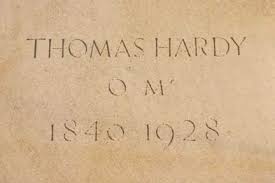
Famed British novelist and poet Thomas Hardy was born in Higher Bockhampton in the hamlet of Stinsford, Dorset, England in the UK (today the town is Upper Bockhampton, in Dorchester), to a stonemason and local builder and his well read wife.  His mother, Jemima, educated Thomas herself, until he was old enough, at age 8, to attend school.  The family did not have the means to send him for higher education, so his formal schooling ended at the age of 16, when he was apprenticed to local architect James Hicks.  He remained in the position until 1862, when he moved himself to London and was able to enroll in King's College.  While there, he won prizes from the Royal Institute of British Architects and from the Architectural Association.  He was then put in charge of excavation of the graveyard at the St. Pancras Old Church, one of the oldest--if not the oldest--Christian places of worship in England.  The graveyard was later destroyed to make way for the local Midland Railway.  Also while living in London, he was introduced to the literary works of several influential authors, including John Stuart Mill.  Never fully feeling at home in London, and with his health worsening, he returned to Dorset just five years later; settling in Weymouth.  It is here, at this time, that he decided to devout his life to writing.  After marrying his first wife, the couple moved into a home in Max Gate that he had designed and built by his brother.  This is where the writing really took off; he would remain in the home for the rest of his life.  Films of his work were produced during his lifetime; the first of which came in 1913 with Tess of the D'Urbervilles, a film directed by one of Edison's men J. Searle Dawley (unfortunately it is a lost film).  In all, 5 films were made from his work before 1930; with The Greenwood Tree, released a year after his death, being the first in sound.  The latest films based on his work include: Far From The Madding Crowd (2015) and North Of Cheyenne (also based on Madding Crowd) having just been announced.  In December of 1927, Hardy became very ill with pleurisy; he lingered until around 9PM GMT on 11 January 1928.  His funeral was held on the 16th at Westminster Abbey; the end of which proved to be controversial.  Hardy had always expressed a wish to be interred with his first wife in Stinsford. An argument ensued between his remaining family and the executor of his will over interment; so a brokered compromise had to be reached.  His heart was buried in Stinsford, and the rest of his remains, in the form of ashes were interred in the "Poets Corner" within the Abbey.  

Stinsford Memorial in Dorset

Plaque at Westminster Abbey


Leave Virtual Flower at Find A Grave

FOR MORE SEE:

Thomas Hardy at Poetry Foundation


Saturday, October 25, 2014

One Of My Favorite Horror Stills!


From the very first filmed production of Frankenstein dating from 1910, produced by the Edison Company and directed by J. Searle Dawley ans starring Charles Ogle as the above pictured Monster.