Showing posts with label Fox Films. Show all posts

Sunday, September 24, 2017

Born Today September 24: Winfield Sheehan


1883-1945

Winfield R. Sheehan, who is mostly and rightly remembered (when he is remembered at all) as a rather hard boiled Fox studio man; he was born on this day in Buffalo, New York.   When just a teenager, he served during the Spanish-American War, after wards going to work as a reporter for the New York paper The Evening World, reporting on police matters.  He later worked for both the Fire Commissioner and Police Commissioner in New York--this later work would lead him into the world of motion pictures, and would bring out  a resolute character in him--which would come into play with his time at Fox.  His most lasting effect on the system was the role that he played in the breaking of the Motion Picture Patents Company, also known as the Edison Trust, established in 1907 at the behest of the then major studios in New York.  When Fox got it's start with William Fox  establishing a new studio in New York, he enlisted the help of the police commissioner's office--of which Sheehan was a secretary--to help bust the MPPC.  This firmly established Fox as a major movie making player, and William Fox did not forget Sheehan's involvement in it.  His first involvement directly in the film business was to become the personal secretary to William Fox.  Followed by his first film making experience, which came in 1916 when he was assigned General Manager of A Daughter Of The Gods a now lost film starring Australian Annette Kellerman.  He then got into production work--a line of work he would remain in for the rest of his life-- serving for the first time as an executive producer on The Woman and the Law in 1918.  He would not get credit for any more production work until 1929, serving in the interim as studio General Manager and vice president; then taking up the job of Fox's chief of production sometime probably around 1926 or later, staying in the job until 1935, when the merged studio of 20th Century Fox put Darryl J. Zanuck in the job.  He worked in the shadows in production in The Black Watch a fully sound film (MovieTone) directed by John Ford and featuring Victor McLaglen and Myrna Loy.  Some of his last work at Fox involved production on a number of Shirley Temple films.  After his replacement at the studio, he went into independent production.  The last film that he produced was Captain Eddie a Fred MacMurray film directed by Lloyd Bacon in 1945.  He got the film produced through an independent studio with the partnership of 20th Century Fox.  Sheehan died that same year in Hollywood, CA. on the 25th of July.  He is buried at Holy Cross cemetery in Culver City. 


Leave Virtual Flowers @ Find A Grave

Wednesday, June 28, 2017

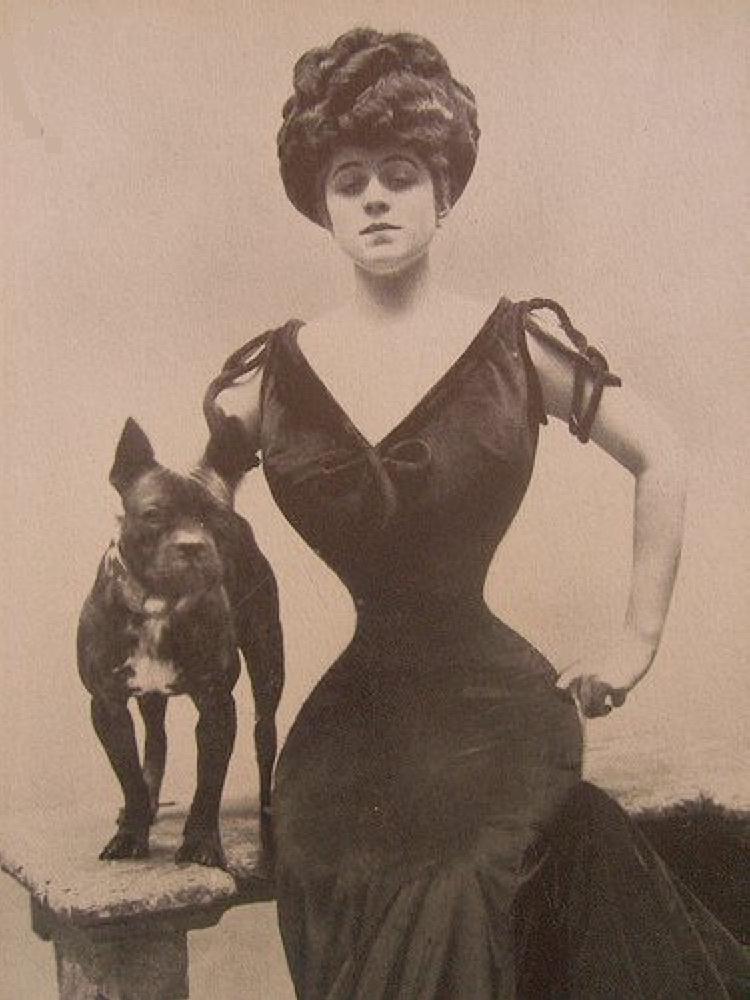
Born Today June 28: Valeska Suratt


1882-1962

Silent film starlet and fashion icon Valeska Suratt (yes that was her birth name) was born on this date in Owensville, Indiana.  When she was aged 6, her family moved to Terra Haute (a town that is sometimes mistakenly listed as her birth place), she grew up attending schools there, but dropped out in 1899 to go to work in a photography studio.  She eventually made her way to Indianapolis and went to work in the hat department of a department store there.  This lead to making her way to Chicago, which is where her stage career began.  Working in vaudeville until 1906 when she made her Broadway debut in a musical; she would go on to be one of the city's biggest star--due in no small part in her own successful self-promotion.  In fact, she became such a sex symbol that the mayor had one of her productions shut down, deeming it "Salacious."  All during this time, she was noted for her high sense of fashion--both on and off the stage.  And today she is well remembered pretty much for that alone.  That is due in part to the sad fact that not one single film appearance that she made has survived--none.  Yet, one cannot pick up a book on silent films without encountering her photographs in various fashion "get-ups"--many of which were deliberately intended to be "vampy."  Her fashion promotion earned her the nickname "Empress of Fashions."  Suratt signed with Fox in 1915 and made her film debut in The Soul Of Broadway, with Herbert Brenon in the directing chair. What follows below is the complete list of her films, again, all of them sadly lost; and a few of her more memorable fashion moments caught in photographs.  Suratt herself did not make any more motion pictures after 1917 and her star began to fade throughout the 1920's.  The nail in the coffin of her career came when she and Mirza Ahmad Sohrab sued Cecil B. DeMille in 1928 claiming that he had stolen the scenario of King Of Kings--which he had made into a film in 1927--from them.  The suit was settled out of court in 1930, with a gag order attached to it; so no one really knows the outcome (I suspect there was a payout).  The outcome of this case effectively blacklisted Suratt--one of the first of it's kind in Hollywood--it certainly ruined her career!  She was found a short time later living in a run down hotel in New York.  A benefit for her was held by novelist Fannie Hurst, which raised around $2,000.  Suratt disappeared with the money, returning to the same squallid hotel a few weeks later in the same state she was in before the benefit; apparently, she had lost all of the money on gambling.  At one point she tried to sell her self penned memoir to William Randolph Heart; but the manuscript contained so many outlandish claims--such that she was the Virgin Mary and the mother of Jesus--that the attempt failed.  This might give away that she was suffering from some sort of mental illness that was only getting worse; this especially worth speculating on given that her actual faith was Bahá'í.  Not much is known about her life after this, she eventually somehow wound up in a nursing home in Washington D. C., where she died at the age of 80 on the 2nd of July 1962.  She was buried in the Highland Lawn Cemetery in Terra Haute, Indiana with her mother.


For More:


Leave Virtual Flowers @ Find A Grave

Saturday, January 28, 2017

Born Today January 28 (Not So Silent Edition): Louis Joseph Hérold AKA Ferdinand Hérold


1791-1833

Composer Louis Joseph Ferdinand Hérold was born was on this date in France, he was of Alsatian descent, and came from a family of well known musicians.  His paternal grandfather was on organist, and his father--François-Joseph Hérold was a pianist and a composer in his own right.  At the age of six, he was already in enrolled in the prominent Hix Institute, and while there, studied music theory with Belgian composer and musicologist François-Joseph Fétis.  By the age of seven, he could play the piano well enough to actually compose some pieces for the instrument.  He became most well known as a operatic composer, though he also composed ballets as well.  His music was used for the first time in a motion picture in 1929, with the Fox Film produced Happy Days--a riverboat revue, which they billed as an extravaganza--emblazoning it with the all-caps tagline THE ALL STAR...ALL TALKING...MUSICAL ROMANCE!  The sound was MovieTone and the special black and white "widescreen" film stock was by Grandeur.  The piece of music used in the soundtrack was his Zampa Overture.  That same piece was used again the following year a short film simply entitled Zampa.  In fact, this is the only of his compositions to be used in film, with the only other use coming in the 1957 comedy musical Les Girls, directed by George Cukor. Hérold had long suffered from tuberculosis, and succumbed to the disease on January 18th, just ten days shy of is 42nd birthday.  He was laid to rest in the very famous Pére Lachaise Cemetery in Paris--it is located in Division 13.

His the tomb to the right. The bottom of the tomb has since been modernized.

 
[Source: David Conway (Find a Grave)]


LINKS:


Leave Virtual Flowers @ Find A Grave

Monday, May 30, 2016

Born Today May 30: Howard Hawks


1896-1977

Howard Winchester Hawks was born into a wealthy industrial family in Goshen, Indiana; the eldest of five children.  In 1898, the family relocated to Neenah, Wisconsin so that Howard's father Frank could go to work in the mill that his father-in-law owned. Winters there were very harsh, which by 1906, saw the family annually escaping by over-wintering in Pasadena, California.  In 1910, the family moved there permanently due to Howard's mother's ill-health.  In 1912, the family relocated again to Glendora, where Frank Hawks owned orange groves.  By the time Howard was old enough to attend high school in 1913, he was sent away to the prestigious private Philips Exeter Academy in New Hampshire.  While there, began to attend theatrical shows in Boston; the first real evidence of his being interested in performance art.  After finishing high school back in California, Howard went on to attend Cornell University in Ithaca, New York, where he majored in mechanical engineering.  College friends remember him as an average student that spent basically no time applying himself; but everyone did notice that he was an extremely avid reader of English language novels.  Back in California, Howard's grandfather purchased a Mercer race car for him (in his youth Hawks had discovered Coaster Racing, a form of gravity racing). It was because of this car that he crossed paths with Victor Fleming.  It wasn't long after this that Fleming, a former auto mechanic, quickly found himself in the position of cinematographer to film director Allan Dwan, after Fleming quickly fixed a faulty film camera for him.  Through this connection, Hawks got his first job in the film industry; that of prop boy to Douglas Fairbanks on the film In Again, Out Again (1917), which Fleming shot (Hawks is sometimes credited as assistant director of the film).  He very quickly worked his way up to set designer.  He was next hired, in more or less the same capacity, by Cecil B. DeMille. Also in 1917, he supposedly worked on the Mary Pickford film The Little Princess.  He would go on to have 3 more assistant director credits by 1921.  During this time, he also applied to Sanford University, but returned to Cornell instead in 1916.  In 1917, he joined the armed forces with the U.S. joining the effort in 1917, finally received his degree in absentia.  A lot to cram into such a short period of time.  In 1923, Hawks received his first writing credit, penning the story that the film Quicksands is based on.  He made his directorial debut at the age of 21, when he and a cinematographer attached to the project, filmed a strange double-exposed dream sequence for another Mary Pickford film. His first formal director credit came the next year in The Road to Glory, which he also wrote the story for (this is, unfortunately, a lost film). The film was made for Fox Film Corp. During the time in-between, he was just one of rebel-rousing group of young men kicking around Hollywood up to all sorts of antics; more can be read about that below by clicking the Wikipedia link below.  He would continue with Fox throughout the remainder of the 1920's; making 8 films for them.  The first time he worked with sound came in 1928 with Fazil, the soundtrack and sound effects provided by MovieTone. His first full sound film came with The Air Circus (1928), yet another lost film (note: amazingly only two of Hawks' film are lost to us). The last film that Hawks made in the 1920's was a return to the partial silent format; Trent's Last Case (1929), a mystery, utilized soundtrack and sound effects only, with sound by Western Electric.  As the 1920's ended, so did his association with Fox Films.  He bounced around from production company to production company in the early 1930's (this includes the time period when Scarface (1932) was made). Finally in 1933, he, and most of his old gang, landed at MGM; though most of greatest and well known films were made at other studios.  Such as:  Bringing Up Baby (1938)--RKO, His Girl Friday (1940)--Colombia, Sergeant York (1941)--Warner Bros., The Big Sleep (1946)--Warner again, The Thing From Another World (1951)--back to RKO, etc.  He became one Hollywood's most sophisticated and prolific directors during it's Golden Age.  The last film that Hawks directed came in 1970 with Rio Lobo, starring an aging John Wayne.  Like many directors, Hawks also got into the world of film production, but unlike other directors, his production credits fail to outnumber his directorial credits.  A couple of weeks before his death, Hawks accidentally fell over his dog; already suffering from vascular disease, the fall caused complications that led to a stroke.  He passed away on 26 December 1977 at the age of 81 in Palm Springs, CA.  He was cremated and his ashes were scattered.


Leave Virtual Flowers at Find A Grave

Saturday, May 28, 2016

Born Today May 28: Minna Gombell


1892-1973

Born in Baltimore, Maryland into a prominent doctor's family; Gombell had by 1912 made her successful stage debut. The following year, she made her Broadway debut, realizing success there quickly.  She specialized in comedic roles and had a very well known and regarded run as a stage actress all the way up through the 1920's in many such role.  This garnered the attention of Hollywood and by 1930 she had signed with Fox Film Corporation.  It was not Fox Films, however that produced her filmed debut in 1929; that fell to Franklin Warner Productions.  Gombell had married playwright Myron C. Fagan sometime well before 1929 and had starred in his play The Great Power in 1928 on Broadway; the cast was approached to make a film of the play, which was released the following year.  It was a strange early talkie, and like a good number of small budget early talkies, it had and alternative silent version.  What makes this film strange is the sound mix for the talking version.  The sound mix for that was provided by Bristolphone Sound, not your ordinary Hollywood talking sequencers at all! For more on this, please click here.  After this, she did continue her stage career, mostly along side her husband,  but also made a prolific number of early talking films under her contract with Fox.  She appeared in more than fifty films, including some real blockbusters such as The Thin Man, from 1931 through 1951, when she retired.  Gombell remained married to Fagan until his death in 1972.  She followed him in death on 14 April 1973 at the age of 80, passing away in Santa Monica, CA.  She is buried in Loudon Park Cemetery in Baltimore, Maryland.


Tuesday, February 2, 2016

Born Today February 2: Frank Albertson


1909-1964

Born Francis Healey Albertson in Fergus Falls, Minnesota; his family moved around quite a bit, before settling in Los Angeles.  When settled there, young Frank, as he was affectionately known, found work in as an laboratory assistant at a photography shop--this resulted in contacts in the newly established studio system(s) in Hollywood.  In 1922, at the age of 13, he was already at work at one studio (most probably Paramount, given his film debut the following year).  In 1923, but before his 14th birthday, he had a very small part in James Cruze's The Covered Wagon, a western adventure; the film was produced by Paramount.  He wouldn't appear in another film until 1928.  Most likely, he continued to work on and around back-lots during this time. There are also probably several titles that he appeared in as extraduring the hiatus, that have not been attributed to him as an uncredited extra. He returned to film definitively for his first named credit in 1928, in The Farmer's Daughter, produced by Fox. The next film that he made, also in 1928, Prep and Pep, was a partial silent, with soundtrack and sound effects provided by Western Electric.  His first full sound film came in 1929, with Words and Music, which had a fully silent alternative version--sadly it is amongst the many lost films.  He next made Salute, also in 1929, which was a full early talkie, with sound also by Western Electric.  He would make just one more film in the 1920's--a full sound musical revue.  After this, he had steady work as a character actor, and sometimes a leading man in a B-movie, for the rest of his life. He would go on to act in over 100 film and television programs.  He is probably best remembered for a small, but very visible part in Alfred Hitchcock's horror thriller Psycho, in the leering role of Tom Cassidy, the rich man who talks up Marion Crane and boasts about his wealth at the beginning of the film--it was his money that she later steals (Albertson had made two appearance on Hitchcock's television series, Alfred Hitchcock Presents, before this).  In looking at the fresh faced youngster pictured above, it is rather hard to imagine, that by the young age of 52, he would look old enough to play such a role!  He did not live long after this--he passed away in his sleep at his home in Santa Monica, at the age of 55 on Leap Day in 1964, having worked right up until his death.  He is buried at Holy Cross Cemetery in Culver City, CA.  It should be noted that he was in no way related to sibling actors Jack and Mabel Albertson.


Thursday, January 21, 2016

Born Today January 21: Rudolph Maté


1898-1964

Born Rudolph Mayer in Krakau, Galicia in the Austro-Hungarian Empire (in what would now be Poland), to Jewish parents.  He went into the film business following his graduation from the University of Budapest.  Though he started out using his birth name when credited, he later changed his last name in order to get more work--as the prejudice against Jews in Europe was already intense.  He first went to work as an assistant cameraman--he would go on to be one the greatest early cinematographers in Hollywood history; but he had to get there first.  Before making that leap, he worked on films all over Europe, including:  Hungary, Austria, Germany, France and the U.K.  In Europe he would often work with his directorial friend Karl Freund.  His first film credit comes in 1919 with Kutató Sámuel.  From then on, he would go on to have steady work throughout the 1920's, as mentioned above all over Europe.  His crowning achievement for that decade came when he was hired as DP on Carl Theodore Dreyer's La passion de Jeanne d'Arc (The Passion of Joan of Arc) in 1928.  The last film that he photographed in the 1920's was the short La manque de memoire.  To the best of my knowledge, the first film that he is credited as "R. Maté" was Prix de beauté (Miss Europe) in 1930; this was a film with both a silent version and full talking mono version (for many years the silent version was not available--not lost, but of no interest, but renewed interest prompted viewing at silent film festivals, and finally a full restoration debuted in 2013).  This was the last silent version film that he photographed.  He went on to be the cinematograher for another well known Dreyer production, the horror film Vampyr in 1932.  He made his US debut in 1935 working for the Fox Film Corporation as DP on Dante's Inferno in 1935.  He would go on to work with several famous Hollywood directors (many originating in Europe); the list includes:  Ernst Lubitsch, Alfred Hitchcock, René Clair, and Orson Welles.  The later of which was the last time he worked in cinematography on Welles' The Lady From Shanghai (1947).  He wanted to switch to directing and his first credit in the category also came in 1947, just before his job with Welles on It Had To Be You on which he was the DP and shared a directing credit with Don Hartman.  Once he switched to directing, he did not go back to cinematography.  Amongst his directing credits are D.O.A. (1950)  and When World's Collide (1951).  He even managed to get in a little television directing on The Loretta Young Show.  On the 27th of October 1964, he died suddenly from a heart attack in his Beverly Hills home.  He is entombed at Holy Cross Cemetery in Culver City--a Catholic burial place.  In his lifetime, he was nominated for 5 Oscars.


Wednesday, September 23, 2015

Born Today September 23: Mickey Rooney


1920-2014

Born Joseph Yule Jr. in New York City to vaudevillian parents, he was literally born into "the business."  At the time of his birth, to a Scottish immigrant father, and an American mother of English ancestry, his parents were literally appearing in a Brooklyn production of A Gaiety Girl.  So basically he was a child actor, even an infant actor, as his first stage appearance came at the age of 17 months of age (one account puts him at 15 months).  During his acting career, he acted and on and in vaudeville, the Stage--including Broadway, radio, films and television.  He appeared in over 300 films.  He is listed in the Guinness Book Of World Records as having the longest movie career at 86 years of any other actor (male or female); if one were inclined to add his earliest work on, he might have the longest acting career in history.  As to how he came to the name "Mickey Rooney" from Joe Yule Jr. actually applies to the subject of this blog--the silents.  Obviously, being born in 1920 means that he was a seriously young child actor in that decade.  After his parents separated, his mother moved him to Hollywood (after moving from New York to Kansas City where she had relocated during a vaudeville slump, with husband traveling for work).  She took him to an audition call from Fox Fontaine for a dark haired child actor (according to legend she couldn't afford to have his hair dyed, so she rubbed his hair down with burnt cork), he got the part and his first role came in 1926 as Mickey McBan, a barely disguised version of the character he came to play formed from a strip cartoon (in that he is credited with same name as the character McBan).  This led to a contract for a series of short films based on the actual character named "Mickey McGuire," the cartoon character that Fox was, well, ripping off to begin with the McBan credit.  Because of this, Fox convinced his mother to have his name legally changed to the character's name, in a disgustingly slimy move on their part to get around paying royalties to the cartoon strip writers--his mother changed her last name to McGuire as well.  There was a very nasty law suit filed against the studio that they lost, which, I guess meant he was legally returned to his birth name (not at all sure about this, it's vague and the ligation was messy).  Well, there comes the "Mickey" part--and these are the movies that will be featured below in this post.  As to the "Rooney" part, that came when there was a series interruption of Mickey McGuire shorts which came in 1932 and his mother wanted to take him out on a touring vaudevillian Show, she wanted to bill him as "McGuire," and Fox was compelled to sue her to keep her from doing that because it was part of the legal settlement that he not be allowed to use the name in any way whatsoever.  So she suggested Looney, since he was known as a comedic actor, but the kid had enough sense to suggest "Rooney" instead, reminding his mother about lawsuits--it would have been a copyright infringement on Warner's Looney Tunes. Hence Mickey Rooney was born when he was 12 years of age.  Fatherless, a number early Hollywood big shots took on fatherly like roles as he appeared in films with them, people like Wallace Beery and Lionel Barrymore, but it was Louie B. Mayer that became the most important man in his younger life.  From there on, he had one hell of a reputation, if one is inclined to delve, you don't have to go too deep to find some truly dark stuff!  He was well known to have a terrible gambling problem and was married 8 times--none of them successful (he was separated from his last wife at the time of his death), but that's about as far I will go here, especially given that it's his child work in the 20's that this blog is concerned with.  On the other hand, it has to be pointed out that he worked right up to his death, not something often seen with actors in very advanced years.  Clearly he truly loved the entertainment business--he came in the world an actor and he left it the same way.  He died on the 6th of April 2014 at the staggering age of 93.  Vanity Fare called him "the original Hollywood train wreck."  Like so many other famous people in Hollywood, he is buried in the Hollywood Forever Cemetery.


The 1920's Mickey McGuire Shorts:

Not To Be Trusted (1926) (credited to Mickey McBan)


Mickey's Brown Derby (1929) (partial silent)


Wednesday, August 12, 2015

The Next Studio Innovation: Glass Ceilings

Interior of a very early glass ceiling studio
When you need lighting--what better way to get it than from the sun?  While the very first studio, Edison's Black Maria, was covered completely in tar paper and had more in common with early photographic rooms in the 1830's than it did with what we would think of as a film production studio, it quickly became clear (literally) that as films got longer in length, a better source of lighting was required and artificial light was not really an option given the technology of the day (the Black Maria did actually have a roof that could be opened to the sun).  Glass ceilings were the solution.  As they evolved some studios were eventually made entirely of glass plates. And thus became known as "greenhouse studios."


Back lot of a studio in Fort Lee NJ after 1915.  Not the multiple large glass plated buildings.

As the studio systems and company began their permanent westward migration out to California, many of these massive structures left behind on the east coast were then converted into storage space for early films (note:  early Hollywood had some glass paneled studios of their own in the early days).  This proved to be disastrous for FOX, when in 1937 the nitrate film stored a New Jersey facility spontaneously caught fire and burned almost the entire FOX silent catalog (almost all of Theda Bara vamp films for them went up in flames), the fire also claimed the life of one person, and severely injured two more (anyone who has seen Tarantino's Inglourious Basterds, is familiar with the extreme flammability of nitrate film!).

Kinda Spooky!  The very first Universal studio under construction on Main Street in Fort Lee, NJ.  It's easy to see where the glass paneling is meant to go.