Showing posts with label Western Electric. Show all posts

Sunday, July 16, 2017

Born Today July 16: Barbara Stanwyck


1907-1990

One of the most popular movie stars ever to grace the big and small screen, Barbara Stanwyck was born Ruby Catherine Stevens today in Brooklyn, New York.  Her childhood was not ideal, as her mother died under tragic circumstances when she was just four, and her father took a job digging the Panama Canal and disappeared--thought dead--shortly after her mother's death.  Fortunately for Ruby and her brother Byron, their eldest sister Mildred was quite a bit older and she was able to care for the pair for a while.  However, when she was forced to get a job, Ruby and Bryon were placed in a series of foster homes.  Ruby made it a habit to run away from these situations.  Mildred's profession was as a showgirl, and at the age of 9, Ruby was back with her sister, who was by this time touring in the entertainment industry.  For two years Ruby traveled with her, often practicing her sister's routines backstage.  She was also a big fan of silent serial specialist Pearl White, which made her determined to become a performer of some sort.  Ruby dropped out of school at the age of 14 to take a wrapping job at a Brooklyn department store, never attending high school (though some made up biographical material was circulated when she was gaining in popularity as an actress, that she performed while attending a famous Brooklyn high school).  She next took a filing job that paid much better than the department store; this allowed her to live independently.  She saw both jobs as a means to an end, and disliked them both; for her they were necessary to enter the entertainment industry.  She briefly worked for Vogue magazine, but was fired do to her lack of experience in cloth cutting; so she went to work as a typist for a music company, this was reported to be the first job that she actually enjoyed.  Despite that her sister had repeatedly tried to keep from attempting to become a performer, Ruby auditioned in 1923, just before her 16th birthday, for a job in chorus at a night club that operated above New York's famous Strand Theater in Times Square.  A few months later found her dancing for the Ziegfeld Follies.  For the next several years she worked hard evening to dawn as a night club dancer.  In 1926 she was introduced to stage producer Willard Mack, for whom she auditioned and gained a part in a play that he was casting as a chorus girl played by a real chorus girl.  The play opened but was not initially successful, so Mack actually decided to expand Ruby's part as the chorus girl, giving her significantly more lines.  When the play reopened, it became a hit and quickly made it's way to Broadway.  It was at this time that one of her mentors (not known exactly which one) suggested to Ruby that she change her name: thus Barbara Stanwyck was born.  Under this name, she quickly became a huge star on Broadway.  In 1927, she was given a screen test for the upcoming silent Broadway Nights. She did not get the main part (that went to Lois Wilson), but she was given a bit part as a fan dancer, thus Stanwyck made her silver screen debut (see the film's entry at IMDb).  This would be the only silent film that Stanwyck acted in.  In 1928, she married a fellow actor whom she had met on the wildly successful Broadway run of the play Burlesque; the couple promptly relocated to Hollywood.  The first full sound film that she acted in came when she starred in The Locked Door in 1929, with mono sound by MovieTone.  She next starred in and received top billing in Mexicali Rose also in 1929, this time with sound provided by Western Electric.  Though neither film stood out in any way, other than being talkies, a curiosity at the time, they were enough for her to get the attention of directing giant Frank Capra, who gave her the starring role in his 1930 Ladies Of Leisure.  It's a cliche, but it's true to say, the rest is history.  She made her television debut in 1956 on the Ford Television Theatre in the episode Sudden Silence.  In the late 1950's her film career began to wane, she made the decision to specialize in television, at one point having her own show The Barbara Stanwyck Show.  Her role on The Big Valley made her one of the most popular actors in television history.  After making a television movie in 1973, she retired from acting full time and didn't make another appearance in front the camera until making one appearance on Charlie's Angels.  She then had recurring roles in 3 additional television series (one a mini-series), including Dynasty.  Her last role was a large one, she agreed to actually star in the Dynasty spin-off The Colby's.  in 1982, while filming the mini-series The Thorn Birds she contracted a very seriously case of bronchitis, due to special smoke effects on the set, the fact that she had been a serious smoker since before the age of 10 only made this worse.  So, it is not surprising that in the late 1980's she began having trouble with COPD, this in turn brought on congestive heart failure.  Stanwyck died of the ailments on the 20th of January 1990 at the age of 82. She was cremated and her ashes were scattered, via helicopter, over Lone Pine, California--where she had found memories of filming some of the westerns that she starred in.  


Fore More:


Leave Virtual Flowers @ Find A Grave

Sunday, March 12, 2017

Born Today March 12 (Not So Silent Edition): Thomas Augustine Arne


1710-1778

English composer Thomas Augustine Arne was born in Convent Garden, London, UK on this date to an Catholic mother and an Anglican father.  Despite that his grandfather and father, both ulpholsterers, had fallen on hard times (his grandfather actually died in a debtors prison), his father had saved enough monies back to have young Thomas educated at Eton.  The young Arne showed a very early interest in music and smuggled a spinet into his room to practice on during the night when the rest of the family slept.  He also would dress up as a liveryman to gain access to the opera, which eventually lead to his having an apprenticeship of sorts with musician and composer Michael Festing; who among other things, taught Arne to play the violin.  When he finished school, he was articled to a solicitor for a period of three years.  He had, though, continued to work with Festing; a situation that his father found out about.  Festing was mostly likely the person responsible for persuading Arne's father to allow him to leave the legal service and pursue a career in music instead.  What Arne is by far and away most famous for is his composition Rule Britannia; he also penned A-Hunting We Will Go and a version of God Save The King (which in movies, he is also credited for when it is listed as God Save The Queen).  Three partial-sound or full sound films made use of his Rule Britannia and one short featuring "Hunting" were made in the late 1920's.  The first of these is a very famous, one could say infamous, film:  the Paramount produced, William A. Wellman directed (at least most of...) Wings, starring Clara Bow and Charles Rogers.  The film was made in 1927, but not released formally until 1929.  The mono musical score and sound effects were furnished by Western Electric.  The Divine Lady (1929) was also a partial sound film.  The first full sound film featuring his music also came in 1929, with the Mickey Mouse short animation When The Cat's Away, featuring sound from the Powers Cinephone Sound System; this marks the first use in a film of A-Hunting We Will Go.  Finally, the first all sound feature film to use the work was Disraeli (1929). Rule Britannia was used next in King Of Jazz  in 1930.  Of course, over the decades, such well known music has been used in dozens of films from the likes of The King and I  to Minions.  The most recent use came last year in the series The Crown.  Arne died at the age of 67 close to the place of his birth in London on the 5th of March, just shy of his 68th.  He is buried in St. Paul's, Covent Garden, a church designed by the renowned Inigo Jones; it is known as "The Actors Church."

Scene from When The Cat's Away (1929)


For More:


Leave Virtual Flowers @ Find A Grave  

Tuesday, February 14, 2017

Born Today February 14: Ernest Legouve


1807-1903

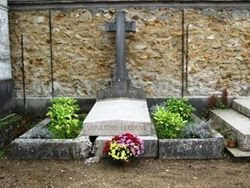
French dramatist Ernest Legouve was born Valentine's Day in Paris; his birth name was Gabriel Jean Baptiste Ernest Wilifrid Legouvé.  Though writing came as an inheritance--his father was a poet, and his grandfather was a well known writer and reader--his young life was rocked with tragedy.  His mother died when he was only 3, and his father was soon after placed in lunatic asylum.  The family was extremely well-of and he inherited that fortune at this young age and was carefully educated by a tutor.  By his early 20's he was already an award winning poet and would go on to find success and fame both inside and outside of academia.  Today he is by far most well known for the collaborative play Andrienne Lecouvreur, which he wrote with A. E. Scribe.  He is also known for being the grandfather of the French writer Maurice Desvailliéres.  Almost all the films that have used his work as source material have been based on that play.  In the silent era, 5 films were produced using his work for screenplays, the first coming in 1913 with a French short rendition of Adrienne Lecouvreur, which is unfortunately a lost film.  The last silent film made from his work was Dream Of Love, starring Joan Crawford. The first sound film to use his work for a film production came in 1929 with Devil-May-Care, a comedic musical, starring Dorothy Jordan and the tragic "other Latin Lover" Ramon Novarro.  The sound was by Western Electric System and the film sported one color sequence with the early Technicolor 2-strip technique. The most recent film to be produced from his work came in 2000 with a very lavish production of Adrienne Lecouvreur, under the title Adriana Lecouvreur, made in Italy.  Lagouve died in Paris at the age of 96 (!) on 14 March 1903, exactly one month after his birthday.  He was a lifelong proponent of physical exercise and made fencing his sport and workout of choice.  He is buried in Paris' Cimetiere de Montmartre.
 
[source: Tyler Li (Find a Grave)]

[Source: Tyler Li (Find a Grave)]


Leave Virtual Flowers @ Find A Grave


View of Montmartre facing a major road over pass [Rue Caulaincourt]--showing how urban the cemetery really is.

Thursday, May 19, 2016

Born Today May 19 Not So Silent Edition: Anthony Bushell


1904-1997

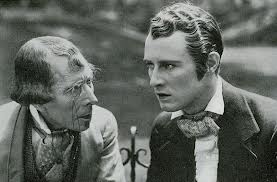
Anthony Arnatt Bushell was born in Kent, England, UK.  He was educated at Magdalen College, and later, Hertford College, Oxford.  After Oxford, he went on to study formal training in stage acting at the Royal Academy of Dramatic Art in London.  Bushell made his stage debut in 1924 in a production of Sardou's Diplomacy at the West End's Adelphi Theater.  By 1927 and 1928 he was touring with high profile theatrical productions in the United States; and by the end of 1928 he was the talk of Broadway.  That same year fellow British stage actor George Arliss saw him in a play; when Arliss was cast in a very early talkie Disraeli (1929) [sound by the Western Electric Apparatus], Arliss recommended Bushell for the role of Charles Deeford, which the studio accepted.  Also in 1929, Bushell was part of the huge production of The Show Of Shows.  He was featured in the "Henry VI" sequence.  Thus his movie career began in the earliest era of sound in motion pictures.  He would go on to be in films with likes of Douglas Fairbanks Jr., Myrna Loy, Edward G. Robinson and Erich von Stroheim.  He served his country during World War II; commissioned into the Welsh Guards, where he served as commander in the Guards Armoured Division--tank squadron.  After the war, he developed a close relationship with Sir Lawrence Olivier, and would go on to be an assistant director to him.  By the early 1960's, he had grown tired of the business.  The last full length film he made was the The Queen's Guards in 1961 and, he retired for good in 1964 after making his last acting appearance on the television series Drama 61-67.  He served for a time as the director of the Monte Carlo Golf Club.  Bushell passed away on 2 April 1997 at the age of 92 in Oxford, England, UK.  The details of his burial are unknown

Bushell right with Arliss in Disraeli (1929)


Leave Virtual Flowers at Find A Grave

Saturday, May 7, 2016

Born Today May 7: Gary Cooper


1901-1961

Born Frank James Cooper in Helena, Montana to English immigrant parents; he had one older sibling, a brother named Arthur.  Their father Charles had become a prominent lawyer in Montana, rising even up to the Montana Supreme Court; this allowed for the family to purchase a large ranch and live comfortably.  Their mother, Alice, wanted her two sons to have an English education, so in 1909 she escorted them back to the UK where they were enrolled in Dunstable Grammar School located in Bedfordshire.  He was educated there from 1910 through 1912.  The boys were then escorted, again by their mother, back to Montana to attend school at the Johnson Grammar School in Helena.  While in high school, he was encouraged by a teacher to join the debate club and get involved in the dramatic arts; this was his first exposure to public oration and acting of any sort.  Also while still in high school, he enrolled in college courses the agricultural college in Bozeman.  After graduating, he headed for Grinnell College in Iowa, the year was 1922.  While there he did well in his course work, but was disappointed not to be accepted at the college's drama club.  During summer's he supported himself as a guide at Yellowstone.  Disgruntled with college life, he quit suddenly in 1924 and headed to Chicago to find work as an artist, but was unsuccessful.  After a month, he headed back to his hometown of Helena, where he got work selling editorial cartoons to the local newspaper.  In the autumn of that same year, Cooper's father Charles left the Montana Supreme Court and moved with his wife Alice out to Los Angeles to work with family members living there.  At his father's request, he joined them there.  He wasn't there long before he ran into two acquaintances from back home who worked as stunt riders in the motion picture industry; they introduced him to rodeo champion "Slim" Talbot who knew people in the industry.  Talbot took Cooper to see a casting director, and he soon found work as an extra for $5.00 a day and a stunt rider for double that amount.  This is were some confusion comes into play.  Many film historians have claimed that Cooper made his film debut in 1923 in an uncredited role in a film titled The Last Hour; this highly doubtful, as Cooper didn't show up in Los Angeles until Thanksgiving of 1924.  It is much more likely that his real debut came as a "crowd extra" in Dick Turbin which came out in 1925.  From there on he got steady work in extra roles in a string of silent films throughout the 1920's.  Realizing that there was more than one actor who went by the credited name of "Frank Cooper," he figured that he needed to change his name.  Nan Collins, a casting director, that had turned agent for Cooper suggested the name "Gary" (after her hometown of Gary, Indiana) and a budding star was born. The first known credit under this name came in 1927 with The Last Outlaw, as "Garry Cooper," in an early starring role for him.  The first partial sound film he starred in came in 1928 in Lilac Time opposite Colleen Moore; though the film had no speaking parts--only sound effects with a musical score.  The first film that he starred in that actually had talking sequences in parts was The Shopworn Angel (1928), with sound provided by Western Electric Sound System.  It was, however, the very last film that he made in the 1920's that was not only his full sound film, but made him a superstar; that would be The Virginian (1929).  Directed by Victor Fleming, it is still a household name amongst connoisseurs of the western film genre.  Cooper would go on to have a very prolific film career, with some very notable roles along the way, including that of real war hero Alvin C. York in the 1941 Sergeant York , for which he won an Oscar.  He also won for High Noon (1952).  His life, though, was cut short, when a late diagnosis of prostate cancer allowed the disease to spread to his colon.  He passed on the 13th of May in 1961, just a week after marking his 60th birthday.  His funeral mass was held on May 18 and was attended by many Hollywood luminaries.  He was then interred at Holy Cross Cemetery in Culver City.  However, in 1974 when his family relocated to New York, he was exhumed and his remains transported to Southampton, NY, where he was reburied at the Sacred Hearts cemetery there; a 3 ton boulder from the Montauk quarry, along with a flat grave stone mark his final resting place.  

His original grave marker in California

His new grave marker, with Montauk boulder, along with the marker for his wife's grave in Southampton, NY.


Monday, May 2, 2016

Born Today May 2: Hedda Hopper


1885-1966

Born Elda Furry in Hollidaysville, Pennsylvania to a "Pennsylvania Dutch" (German) family that was staunchly German Baptist Brethren; an influence that would stay with her all her life, especially in role as a notorious Gossip Columnist.  She had six siblings and the family resided in Altoona as of Elda's third birthday.  Before transforming into the columnist that she became (in)famous for, she had quite a long acting career. This started in New York City, where she had relocated in order to break in chorus line work on Broadway.  She did manage to get parts in this capacity, but was not very good at it and was famously fired by the renowned Broadway big-wig the Shubert Brothers.  She eventually found work in a staged matinee where she met it's owner DeWolf Hopper, whom she would later marry and have her only child with--famed Perry Mason actor William Hopper.  She began then to hone her acting skills and was eventually awarded a lead role in a touring stage production of The Country Boy.  It was at the time of her marriage to DeWolf Hopper that she changed her first name to Hedda, as her real first name was too similar to several of his previous 5 wives!  It was also at this time that she started acting in motion pictures.  The first film that she appeared in was in 1916, The Battle of Hearts, and was billed under her birth name.  The next two films in which she appeared, both in 1917, she was, for some reason, billed as "Elda Millar" (her mother's maiden name was Miller, why the change in spelling is a mystery).  It wasn't until the next year that she was finally billed under married name in Virtuous Wives, when she was credited as "Mrs. DeWolf Hopper."  From then on, she was credited as Hedda Hopper.  Her first partial sound film came in 1927 with an uncredited role in the huge production that was Wings; however there was no dialog in sound, only sound effects and a soundtrack by Western Electric Sound System.  It would be fully two years later before she would appear in another sound film, with many appearances in late silents in between.  That came with her role in Girls Gone Wild (1929) (a most unfortunate title since the schmuck that was filming girls on spring break in the 90's called his series the same thing!).  The film was in full mono sound provided by MovieTone.  Though she continued to appear steadily in films right up through the year 1940 (and would, indeed, accept a few scant roles right up to the year she died); her acting career started to slip in the mid-1930's.  She began to look for alternative sources of earned income.  Hopper was known as a notorious gossip, so when the Los Angeles Times offered her the opportunity to write a Hollywood gossip column, she naturally jumped at it.  Thus she began the career that she is most known for.  Her first column appeared in the Valentine's Day edition of the paper in 1938, and things took off from there. She became quite the vicious writer, and was reportedly quite vicious person in actual life.  She started a rivalry with Louella Parsons, who had arguably created the role of the film columnist, and with whom Hopper had been friendly with when she was acting.  The column would soon lead her to radio, where she had a spot on Hollywood romance and scandalous divorces.  Her strict religious upbringing "informed" her politics, about which she was very vocal; she was an unrepentant Republican.  Her darkest moments in the political arena came in the era of communist scares in Hollywood, when she basically came up with name after name, with no evidence, to hand over the Hollywood Blacklist.  She was also a very strong supporter of the House Un-American Activities Committee, which had origins in congressional committees going back to the 1910's and created the Hollywood Blacklist.  It was also closely associated in the popular mind and in the press with Senator Joseph McCarthy, the infamous Junior Senator from Wisconsin--though he never had anything officially to do with the committee, and, indeed, had never served in the House of Representatives.  Future disgraced president Richard Nixon however, did serve on the committee; being that he was from California, Hopper was a supporter.  Hedda Hopper died on February 1, 1966 of double pneumonia at the age of 80.  Her body was sent back to her home state for burial.  Her last acting role came earlier that same year, when she played the role of "Hedda, the Mad Hatter" in in a musical television adaptation of Alice In Wonderland, starring Zsa Zsa Gabor and Sammy Davis Jr.  Hopper had long been known for her very large hats. She is buried Rose Hill Cemetery in Altoona, Penn. where she grew up.  Her grave marker states that she born in 1890, which does not match her birth certificate.  She was succeeded in death in 1970 by her only child William. Just as side note:  she was recently played by the great Helen Mirren in the 2015 release Trumbo, about blacklisted writer Dalton Trumbo, assayed by the equally great Bryan Cranston (an interesting recently published article about her in the 1960's in Variety can be found here.)


Saturday, February 6, 2016

Born Today February 6: Ramon Novarro


1899-1968

Born Jose' Ramón Gil Samaniego in Durango, Mexico to a well off family (his father was a prominent dentist there); the family fled the Mexican Revolution in 1913 and relocated in the Los Angeles area here in the U.S.  His mother, Leonor, was said to be of prominent mixed ancestry and a descendant from the Aztec royal house.  His father's side of the family were pure Castilian.  As a young man in the L.A. area, he decided to study ballet.  By 1917 he had gotten the attention of the movie industry.  He made his motion debut in 1916 in Cecil B. DeMille's epic Joan the Woman as a starving peasant.  By the next year he had steady work in various extra roles; supplementing his income by working as a singing waiter.  By the 1920's, he as being promoted by MGM as a "Latin Lover" type--even as a rival of Rudolph Valentino.  This was done at the urging director Rex Ingram and his wife Alice Terry; early Hollywood friends of Ramon.  It was Terry who suggested that he change his name to "Novarro," though the name had no familial connection and he had plenty of prominent names that he could use that did.  His break through role came in Scaramouche in 1923; a film directed by Rex Ingram.  The film also starred Alice Terry.  By 1925, he had full blown, and well known, leading man status; playing the lead role in Ben-Hur: A Tale of the Christ--his revealing costume causing quite the stir.  After Valentino's untimely demise in 1926, only Novarro was left as Hollywood's Latin Lover.  Oddly he did not make any films in 1926, opting instead for the stage (his work on the stage, is undoubtedly what allowed him to make the transition to talking films).  The Flying Fleet (1929), was his first partial sound film, with the soundtrack and sound effects being provided by Movie Tone.  His next film, the rather infamous The Pagan, in which he plays a "half-caste Pacific islander" who refuses the Christianity of his white father, had a specialized synchronized full musical soundtrack, also by Movie Tone--one of the first of it's kind.  His next role Devil-May Care, based on a French drama, was his first full sound talking film; sound provided by Western Electric.  It also featured on full scene in early 2 strip technicolor.  This would be the last film that he made in the 1920's.  During this time, and through the early 1930's he had prominent roles opposite the greatest leading ladies of their time, including:  Myrna Loy, Greta Garbo, & Lupe Velez; becoming one of the highest paid actors in town.  After his contract with MGM expired in 1935, he made fewer and fewer films; largely retreating from public life.  He developed a drinking problem that was the result of his homosexuality being at odds with his strict Catholic upbringing.  Supposedly, Louis B. Mayer tried on more than one occasion to arrange for a "lavender marriage," the term used for men and women (largely actors) who were gay that marry each other out of convenience; Novarro was having none of it.  Things only got worse for him, when he, and Lupe Velez, Dolores del Rio and James Cagney were all accused of promoting communism in California after they attended a special screening of Russian filmmaker Sergei Eisenstein's ¡Que viva México!.  Fortunately for Novarro, he had used some the hundreds of thousands of dollars he was paid as a leading man to invest smartly in real estate around Hollywood.  His own personal residence as designed by Lloyd Wright, son of Frank Lloyd Wright.  From this he was able to maintain quite an easy lifestyle, working in acting when he felt like it.  It also allowed him to keep a comfortable low profile.  Throughout the rest of his life, he acted sporadically in films and later television, until his horrific death on 30 October in 1968.  Two young men, one a minor and one not (ages 17 and 22)--brothers Tom and Paul Ferguson--were hired by Novarro from an agency for the purposes of sex.  Apparently they thought the actor kept $5000 hidden behind a portrait.  They tied him up and beat him incessantly, demanding to know where the money was (one of them would later deny this part of the story).  Novarro died from asphyxiation on his own blood.  The brothers left the house with the $20 dollars that the actor had in his bath robe.  They were caught, tried and convicted and spent several years in jail, before being released in the 1970's (they were both rearrested several times, and one of them, committed suicide).  Novarro was buried by his sibling under his stage name at the Catholic Calvary Cemetery in Los Angeles as "Beloved Brother."


[Source: AJM (Find a Grave)]


Tuesday, February 2, 2016

Born Today February 2: Frank Albertson


1909-1964

Born Francis Healey Albertson in Fergus Falls, Minnesota; his family moved around quite a bit, before settling in Los Angeles.  When settled there, young Frank, as he was affectionately known, found work in as an laboratory assistant at a photography shop--this resulted in contacts in the newly established studio system(s) in Hollywood.  In 1922, at the age of 13, he was already at work at one studio (most probably Paramount, given his film debut the following year).  In 1923, but before his 14th birthday, he had a very small part in James Cruze's The Covered Wagon, a western adventure; the film was produced by Paramount.  He wouldn't appear in another film until 1928.  Most likely, he continued to work on and around back-lots during this time. There are also probably several titles that he appeared in as extraduring the hiatus, that have not been attributed to him as an uncredited extra. He returned to film definitively for his first named credit in 1928, in The Farmer's Daughter, produced by Fox. The next film that he made, also in 1928, Prep and Pep, was a partial silent, with soundtrack and sound effects provided by Western Electric.  His first full sound film came in 1929, with Words and Music, which had a fully silent alternative version--sadly it is amongst the many lost films.  He next made Salute, also in 1929, which was a full early talkie, with sound also by Western Electric.  He would make just one more film in the 1920's--a full sound musical revue.  After this, he had steady work as a character actor, and sometimes a leading man in a B-movie, for the rest of his life. He would go on to act in over 100 film and television programs.  He is probably best remembered for a small, but very visible part in Alfred Hitchcock's horror thriller Psycho, in the leering role of Tom Cassidy, the rich man who talks up Marion Crane and boasts about his wealth at the beginning of the film--it was his money that she later steals (Albertson had made two appearance on Hitchcock's television series, Alfred Hitchcock Presents, before this).  In looking at the fresh faced youngster pictured above, it is rather hard to imagine, that by the young age of 52, he would look old enough to play such a role!  He did not live long after this--he passed away in his sleep at his home in Santa Monica, at the age of 55 on Leap Day in 1964, having worked right up until his death.  He is buried at Holy Cross Cemetery in Culver City, CA.  It should be noted that he was in no way related to sibling actors Jack and Mabel Albertson.


Friday, January 22, 2016

Born Today January 22: Ann Sothern


1909-2001

Born Henriette Arlene Lake in Valley City, North Dakota; her mother was a professional singer who regularly toured with musicals.  Her maternal grandfather was famed Danish violinist Hans Nielsen.  The family resided in Minneapolis, where she attended McPhail School of Music.  Her mother also home schooled her in piano.  Her parents separated when she was four.  She then began to tour with her mother when time permitted.  By 11 she was both a well schooled pianist and soloist in singing and spent time singing in her church choir.  By 14 she resumed voice lessons.  In high school, she not only appeared in several school plays, she even directed a few of them!  Also while in high school, she entered state sponsored music composition competitions, and won three years in a row.  After she graduated from high school her mother moved to Los Angeles because she had gotten a job a Warner Bros. studios as vocal coach.  Sothern chose to move to Seattle where her estranged father had moved, there she enrolled in the University of Washington; but dropped out one year later.  At some point after she dropped out of University, she appeared in one silent film (her motion picture debut) as a Fan Dancer extra in 1927; Broadway Nights [this must be around the time that she chose to use a stage name].  The film was shot in New York City and produced by the short lived Robert Kane Productions.  She then visited her mother in Los Angeles; while there she auditioned for and got a role in a very early full sound musical revue produced by her mother's employer Warner Bros in 1929:  The Show of Shows.  The film featured full mono sound by Vitaphone with the Western Electric Apparatus, and had parts that were in very early technicolor.   This lead to her signing a 6 month contract with MGM.   These titles were the only two films she appeared in during the late silent era.  She quickly became disillusioned with Hollywood, and left for Broadway in the 1930's with the help of Florenz Ziegfeld.  She returned 3 years later; and had a very long and prolific career in film, radio and television.  During the 1950's, she decided to become a business woman and owned a slew of different type of business ventures, from production companies, a sewing store, to a cattle ranch in Idaho.  She even managed to record an album in 1958.  Some of the notable television appearances came on shows such as:  The Loretta Young Show, The Alfred Hitchcock Hour, and The Lucy Show.  From 1958-1961 she had her very own television series The Ann Sothern Show.  She is also the mother of actress Tisha Sterling (her father is was actor Robert Sterling).  The last film she made was in 1987, The Whales of August, with the likes of Lillian Gish, Bette Davis and Vincent Price.  This garnered her the only Oscar nomination of her career--that for a supporting role.  After this she retired to her ranch in Idaho.  She passed away there at the age 92 on the 15th of March 2001.  She buried there in the Ketchum Cemetery.


Sunday, January 17, 2016

Born Today January 17: Grant Withers


 1905-1959

Born Granville G. Withers in Pueblo, Colorado; the actual year of his birth differs in various sources, but his grave marker states 1905.  Apparently he had always wanted to break into movies; but worked as an oil company salesman and as a newspaper reporter before breaking into films in the well into the 1920's.  His first appearance in film came in 1925 with a bit part in a comedy short featuring the, by then, overdone theme of The Vamp entitled So Long Bill.  By 1926 he had steady work.  For an actor with no stage training or appearances, he is rare example of someone who successfully made the transition to talking roles with no formal training.  His first sound film came in 1929.  The Greyhound Limited was one of those films that had both a silent version and full talking version, with sound by Western Electric with Vitaphone technology.  The film that he made next was his first in mono.  Saturday's Children also had sound provided by Western Electric with the soundtrack and sound effects on one track and the mono talking sequences on another; this film, too, had a silent alternative version.  His following film The Divine Lady (1929), reverted back to the partial silent sound mix, with the dialog being silent and the soundtrack and effects manufactured with the Western Electric Apparatus.  Madonna of Avenue A (1929) was his first full sound film, with the sound mix being Vitaphone. It was directed by Michael Curtiz, who would go on to direct Casablanca. His last film in the 1920's was Tiger Rose (1929), a Canadian Mounty adventure film.  He continued to work right up to the time of his death in 1959 at the age of 54.  On the 27th of March he committed suicide in North Hollywood by taking a deliberate overdose of barbiturates and left a short suicide note apologizing to his family.  He had increasingly been suffering from serious health issues, including horrible back pain that kept getting worse.  He is interred at the Great Mausoleum at the famous Forest Lawn Memorial Park, in Glendale.  In all, he appeared in over 200 films.


Saturday, January 16, 2016

Born Today January 16: Harry Carey


1878-1947

Born Harry DeWitt Carey II was born on this date in the New York borough of The Bronx.  He was the son of prominent judge who served on the New York Supreme Court.  He grew up in one of the only high-scale areas of The Bronx:  City Island.  In higher education, he first attended Hamilton Military Academy; then he studied law at NYU.  By the time he made it into his first movie, he had been a real cowboy, railway superintendent, a playwright & author, and had practiced law.  He first got into acting after writing he first play while recuperating from pneumonia; he then spent the next three years touring the country performing it.  The play was quite the success.  However, his next play flopped.  After being introduced to Fort Lee director D. W. Griffith, his film career started.  Griffith knowing his background as a cowboy, immediately began to give him rolee in the earliest of westerns.  Carey made his film debut in 1909 in Griffith's western short Bill Sharkey's Last Game.  The vast majority of the films that he made were in the silent era; even the last film he made in the 1920's was fully silent:  The Border Patrol (1928).  In fact, the only film he made in the 1920's that had sound, was a partial sound film:  The Trail of '98 (1928), with soundtrack and sound effects provided by both Movietone and Western Electric Sound System.  Having taught himself how to act live on a stage, he made a very successful transition to talking films, and did so in 1931 in Trader Horn, his first full sound film, ironically in English and Swahili.  He was nominated for one Oscar for Best Actor in a Supporting Role, for his role as President of the Senate in the famous 1939 film Mr. Smith Goes To Washington starring James Stewart.  Carey passed away on the 21st. of September 1947 at the age of 69 from coronary thrombosis as a complication from emphysema and lung cancer in the Brentwood area of Los Angeles.  Some list the cause of his deadly coronary thrombosis as coming from a bee sting.  He worked right up until the time of his death, with two films he worked on being released in 1948.  He is entombed in a above ground mausoleum at Woodlawn Cemetery in The Bronx, NYC.  


Saturday, September 5, 2015

Born Today September 5: Darryl F. Zanuck


Darryl F. Zanuck:  1902-1979

Yet another giant in the entertainment world (two in a role here), this time from deep inside the industry, pretty much the opposite of Artaud.  Zanuck became one of the faces of the studio era, but unlike others of his generation, he bounced from studio or production company to studio/production company during the duration of his career.  And, unlike many other studio bosses, he got his start from the bottom up and has as many credits for writing as he does for producer (even 3 ghost director credits--one in the silent era--and a novel as well), the list here today will be long, with some very famous silents on it! He was also somewhat unique in the use of at least three aliases for his writing for film.  Not that the moving around in the oil slick was was the golden age of Hollywood, meant that he wielded any less power--in it's hey-day he was considered one of the kingpins of system.   He was one of the first studio directors to build up a "stable" of stars, including Shirley Temple.  This is the beginning of a system that came to benefit the big wigs and harm the actors.  His life after success was certainly not without controversy.  Zanuck was born Wahoo, Nebraska,  There are a couple of different versions of his early life; one stating that by the age of 13 he was abandoned by both parents, and at 15 he lied about his age in 1917 and joined the army.  Another that he moved to LA with his mother when he was six, and actually got his first job film as an extra when he was 8 (no credit or information available on the production--seems a bit questionable), but that he was recalled back to Nebraska by his father and escaped by lying about his age at 16 in 1918 (seems to me this might be cleared up in military records--they are better kept than people think);  He served in both the World Wars.  I will concern myself here with just the silent era of his career.  He spent his first years in Hollywood working with the likes of Syd Chaplin and Carl Laemmle, but most of his early work was done with Mack Sennett, creator of The Keystone Cops, where Zanuck was a sort of jack of all trades for Sennett's Keystone Co.  His earliest great break through, and first "actor" discovery (and he does, in my humble opinion, deserve credit for this, though many disagree) was not even a person:  Rin Tin Tin.  His role in the late silent era was much more in the camp of ushering in the talking era and less about advances in artistic expresses found in many late silents.  His writing credits alone are so numerous that it is head spin, so this clearly is not high art--to the extent it could be called "dime store stuff."  Vitaphone was his and his 1920's bosses thing--they certainly won the day, and added "pulp" to the film industry that quickly frustrated such greats as James Whale.   In 1925 comes his first producer (uncredited) credit, the rest, as they say, is history.  Zanuck died of cancer on 22 December 1979 at the age of 77.  His descendants continued to (and still do) make big marks on Hollywood.  He is the father of Richard D. Zanuck and grandfather of Harrison Zanuck and Dean Zanuck.  For more about his very long and varied career, see his Wikipedia page.  He is buried at Westwood Memorial Park in Los Angeles. 


Acting:

Find Your Man (1924) (Rin Tin Tin, his only known silent acting credit)


Writing Credits

Round Two (1922) (partially lost)


The Knight in Gale (1923) (Series Short)


Six Second Smith (1923) (Series Short)


Gall of the Wild (1923) (Series Short)


Judy Punch (1923) (Series Short)


A Lighthouse by the Sea (1924) (Rin Tin Tin feature)


Eve's Lover (1925) (lost film)


Tracked By The Police (1927) (Rin Tin Tin film)


The First Auto (1927) (Partial silent, Vitaphone sound)

The Desired Woman (1927) (directed by Michael Curtiz)


Ham And Eggs At The Front (1927) (this was a film that Zanuck had personal guilt about later in life and produced a number of well known films to counter stereotypes)

Tenderloin (1928) (partial silent, small speaking parts sound by Vitaphone, lost film, also has a production credit.)

Pay As You Enter (1928) (Vitaphone sound effects and music)

State Street Sadie (1928) (partial talkie, talking sequences by Vitaphone, lost film)


My Man (1928) (talking sequences by Vitaphone)

Harboiled Rose (1929) (partial silent, Vitaphone sequences)

Madonna Of Avenue A (1929) (early talkie, full sound by Vitaphone)

Say It With Songs (1929) (early talkie musical, Al Jolson film, full sound by Vitaphone)


Production Credits:


Old San Francisco (1927) (writer credit here, two version of film, one silent, one sound, with soundtrack and recorded sound effects.)


The Jazz Singer (1927) (he is uncredited here, several now documented production credits were first uncredited, but because this is such a giant in the silent world, I am making a note of it.)

Tenderloin 1928

The Terror (1928) (partial talkie, and partially lost, unfortunately, because it's a horror film--and features an early depiction of a serial killer--as such a horror fan, I'd love to hear that complete footage had been found!)

Noah's Ark (1928) (he also has an uncredited Director role in this film--his earliest, he also has a writing credit here )

On With The Show (1929) (early talkie, Vitaphone with a Western Electric Apparatus)

The Show Of Shows (1929) (early talkie with the same sound as above, John Barrymore film)

Production Manager:

Lights Of New York (1928) (extremely early talkie, often credited with being the first full sound film with full syncopation)