Showing posts with label Michael Curtiz. Show all posts

Sunday, January 10, 2021

Born Today January 10: Péter Andorffy


1856-1919


Hungarian silent film actor Péter Andorffy was born on this day in the town of Eger. A comedian by trade, Andorffy, like Jan Buderman, got his start is film much later in life; and owed to the fact that he died at 63, he didn't appear in that many films.  Andorffy apparently got into performance at the young age of 15, when he left home to join a group of traveling performers.  He would go on the have a rather brilliant stage career specializing in comedies. His established stage career spanned the years 1874-1905. He retired from acting to become a theater director, graduating to a theatrical chief executive in Budapest, finally ending up as secretary of theater before retiring in 1912. So his film "career" was actually just something to do in retirement.  He debuted in film three years into his retirement in 1915 with Lyon Lea, released in November.  It was an early Alexander Korda film (credited as Korda Sándor). Fully half of his short film career came in roles he took in 1915, with the other four spanning between the years 1916 and 1919. One of his film appearances in 1915 came in an early Michael Curtiz (credited as Kertész Mihály) film One Who Is Loved (Akit ketten szerettnek), a film that Curtiz also acted in. The most well known film in which he appeared was also his last. He had a small role in the Alfréd Deésy film Casanova, which starred Bela Lugosi as the famous lover in his last Hungarian film before departing for the German film industry (Deésy had used Andorffy in several character roles before).  The film was released roughly two months after Andorffy's death in May of 1919.  He passed away on the 30th in Balatonfüred.  There are no specifics on his burial, but an information site originally in Hungarian on the village of Balatonfüred has him listed as dying and buried there. Multiple sources list only two main cemeteries in the town, one is Jewish and the other is the Balatronács temetõ.  


Tuesday, October 20, 2020

Born Today October 20: Bela Lugosi


1882-1956

Béla Ferenc Dezsö Blaskó was born on this date in Lugos, Kingdom of Hungary (part of the Austro-Hungarian Empire)--now part of Romania as Lugoj and not far from the real Transylvansia [Note: in the original placing of his name, his surname would have come first as par the norm with Hungarian names].  He was born into a Hungarian speaking family with 3 older siblings; his father István was a banker; his mother was of Serbian ancestry.  He was raised in the Roman Catholic tradition.  At the age of 12 he dropped out of school to work.  He would find work in the town of Resita, where traveling performers would frequent.  He said that her became enamored with acting through watching them there.  He started his acting career around the age of 20 in 1901 or 1902--he acted in smallish parts in all types of performances in regional or provincial theaters.  By 1903 and 1904 he had steady performance work.  By 1911 he had graduated to larger, even starring, roles and had even taken on Shakespeare.  In that same year, he relocated to Budapest on joined the National Theater.  He was there from 1914 through 1919 in mostly supporting roles (though he would later claim that he was a top billed actor to bolster his acting bonafides).  These years were interrupted by active military service from 1914 through 1916 in World War I, fighting in the Austro-Hungarian Army, where he ultimately rose to the rank of L.  He was a leader of ski patrol and his outfit was sent to the Russian Front, where, as he recounted they were nearly all slaughtered.  He, himself wounded twice before, was wounded a third time, surviving amongst the dead of his unit; for his service at the Front he was awarded the Wound Metal; but his wounds would leave him with lasting sciatica (and possible, at least for a time, PTSD).  Despite his war injuries, he returned to theater but left in 1919, fleeing the country during the revolution in Hungary that year. He first made his way to Vienna, and then on to Berlin, were he settled for a short time and attempted to continue his acting career. He eventually immigrated to the United States via a merchant ship as a working crewman that docked in port at New Orleans. He made his film debut in his native Hungary in 1917 under the acting name of Olt Arisztid, despite that he had been using the name "Lugosi" both privately and professionally for well over a decade (a name that was derived from his birthplace Lugos and meant to honor it).  The film was title Álarcosbál, translated into English it is Masked Ball and was directed by fellow Romanian born Hungarian: Alfréd Deésy. Bela, or rather "Olt," appeared in the male lead opposite Annie Góth. Lugosi actually appeared in nearly 15 films in Hungary before fleeing, one--the Michael Curtiz film 99 in 1918--under the name "Albert Lugesi." His last Hungarian film was another Deésy film entitled Casanova in which Bela played the title character. He also made a large number of films while living in Germany; the first of which was Nachenschnur des tot.  It was in Germany that he appeared in his first horror film and it a famous one--famously lost. Billed as Bela Lugosi he assayed the role Dr. Warren's Diener in F. W. Munau's The Head of Janus in 1920.  A complex psychological horror, the leading roles were occupied by Conrad Viedt and Margarete Schlegel; it was Murnau's Jekyll and Hyde.  His last German film was Ihre Hoheit die Tänzerin starring Lee Parry and directed by Richard Eichberg in 1922.  His first American film was a Fox spy melodrama with a Panama Canal plot; The Silent Command was directed by J. Gordon Edwards. Bela, being an actual foreigner, of course was cast as the terrorist Hisston (and credited, due to a mistake, as Belo Lugosi), the film was released in August of 1923.  His movie appearances over the next few years were scant due his working in live theater in New York, eventually making it all the way to Broadway.  He would not appear in a great number of fully silent films after this in fully credited roles. He appeared in only one credited film in 1924--the very small budgeted The Rejected Woman  and just two films in 1925. He did make an uncredited appearance (in two places in the film) in Victor Sjöström's very famous He Who Gets Slapped starring Lon Chaney in 1924 (only very recently verified actually). Probably his two most well known silents came in 1925. The Midnight Girl is definitely the better known of the two, due it's wide availability and inclusion in several "Bela box sets" (I have two copies of it in such box sets, and a further 2 more from budget horror sets, though the film is a melodrama; so it is AVAILABLE!). The other is the George Terwilliger directed spy melodrama (yes, another one) in which Bela plays a Russian agent Daughters Who Pay.  Both appearances are rather famous for on-screen kisses that Bela's characters have; the one in Daughters Who Pay has been remarked on due to it's blood content...his character kisses a dancing woman with a rose in her mouth and it sticks his character Romonsky, who then is seen with blood running down his lips...something that we are deprived of in his role as Count Dracula.  He did not appear again in a feature until 1929, which came in the now lost Fox melodrama The Veiled Woman, a film that was released in one sound version and one silent version, and barley worth the mention in Lugosi's career as the "murdered suitor" if it were not for the fact that film also features Lupita Tovar in an equally small role. It is notable because Tovar would appear in the "Spanish Dracula" Drácula in the "Mina" character place of "Eva" in 1931. That the two appeared in a film together just two years prior is certainly worth the note (the film was Tovar's debut). He had just three more performances in 1929. His first talking sequence film was as a night club owner in the partial silent Prisoners, a Warner's crime film. He did not act in the Conrad Veidt film The Last Performance, but rather provided the Hungarian dub for Veidt's main character for release back in his home country. It is ironic that, to my knowledge, this is his only Hungarian speaking role in a horror film (he did provide Hungarian dub for at least one other film in 1930's that we know of, there may have been more).  One might be tempted to think that this was one of the reasons he got cast in Dracula, if it were not for his performance as Inspector Delzante in Tod Browning's full sound The Thirteenth Chair--released on the 19th of October, just one day prior to Lugosi's 47th birthday.  It also his last film of the decade. He appeared in six films in 1930, the first of which was Such Men Are Dangerous--a film directed by Kenneth Hawks, Howard Hawks' ill-fated brother.  His seventh film appearance of the 1930's is the big one: Count Dracula in Tod Browning's Universal classic Dracula.  I would say "the rest is history"--especially in regards to Lugosi's typecasting in horror, but his career has one final silent film connection. In 1935, Lugosi appeared in another Tod Browning film Mark of the Vampire.   The film was close to being a scene by scene--but all talking--remake of Browning's now famously lost silent horror of 1927 London After Midnight, which is equally famous for starring Lon Chaney.  Lugosi struggled with the burden of typecasting; he also struggled with drug addiction after getting hooked on pain killers legally prescribed for his massively painful sciatica. Bela Lugosi passed away of a heart attack on the 16th of August in 1956 at the age of 73.  His last acting role came in in the  scifi/horror film The Black Sheep in 1956; he appeared along side Basil Rathbone, John Carradine and Lon Chaney Jr. He also did two guest appearances on television shows; his debut on the small screen came in the anthology  series Suspense (A Cask of Amontillado) and he made an appearance on variety show The Paul Winchell Show in October of 1950 (this is the appearance that has become infamous when it was included in the Tim Burton film Ed Wood--as the version seen in the film is pure fiction--Lugosi did not have trouble with his lines and the appearance came years before collaborations with Wood). He is buried at the Catholic Holy Cross Cemetery in Culver City in California.  He was buried in his famous cape. Though he is a huge horror icon now, that is not what he envisioned his acting career would be--quite the opposite actually, as he wanted to play romantic leads and greatly enjoyed classical drama. None the less, us horror hounds are eternally grateful!! Happy Birthday Bela! 
 
 
(source: AJM (Find a Grave)]
(source: Charlie (Find a Grave)]


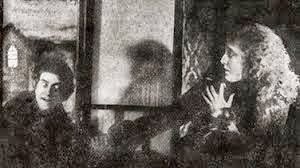
(still from The Midnight Girl)


Sunday, December 24, 2017

Born Today December 24: Michael Curtiz


1888-1962

Famed Hollywood director Michael Curtiz was born Manó Kaminer into a "lower middle class" Jewish family in Budapest, in what was then the Austro-Hungarian Empire (now the capital of Hungary).  His father was a carpenter and his mother was trained as an opera singer.  He became enamored of the theater when he was just a small child probably due to his mother's career (he reportedly first graced a stage with her); so much so that he said that he built a little theater the basement of the family apartment house when he was 8 and directed his friends is re-enactments of popular plays.  He followed high school with studies at university, which he then followed with studies at the Royal Academy of Theater and Art in Budapest.  At the age of 19 he joined a traveling theater group; he spent a small stint working at a circus before returning to another traveling theater group that worked in multiple countries.  This occasioned Kaminer, who had Hungarianized his name to Mihály Kertész, to learn several foreign languages that included most of the major European tongues (he was said to speak at least five languages fluently--though heavily accented).  While working with the group, he was basically a jack of all trades and eventually worked his way up to theatrical director.  By 1912, he was working as a director at the National Hungarian Theater.  In that same year, he had the distinction of directing Hungary's first feature film Ma és holnap (Today and Tomorrow) in which he also acted.  He had, however, made his film directing debut earlier in the year with the short Az ezüst kecske.  [As a side note: amongst his many life accomplishments, he represented Hungary in fencing during the Olympic games of 1912].  The film bug had him and he began actively seeking film work, settling and studying in Denmark and wound up as an assistant director on Denmark's very first multi-reel film Atlantis (the film runs for around 2 hours, and was directed by Danish film pioneer August Blom).  This world of new found film success came to a rude and abrupt end with the out-break of World War I; he soon found himself serving in the Hungarian army for a year before being wounded on the Russian front.  He was then assigned to make fund raising documentaries for the Red-Cross; he later admitted that he had met with a lucky fate that so many others had not.  By 1917, he was the head director at the leading Hungarian film studio Phoenix--it was for all intents and purposes a national studio and he remained in this position right up until he decided to relocate to Austria after the war and the communist take over of his country.  Sadly almost no portion of any film that he directed while there survives (only a few scant fragments remain--such a sad shame, he literally directed dozens of films there during the period of 1917 & 1918).  One of these films, The Wolf (1917), he penned himself,  and constitutes the first of a small handful of films that he self-penned (curiously he is given a writing credit on the the now infamously lost Drakula halála aka Dracula's Death in 1921).  And, while on the subject of horror films, it is worth mentioning that one of the last films that he had a hand in directing in Hungary was the now very lost Alraune, a kind of Frankenstein/Golem/magic conjured like monster film [it involves mandrake sex...] that was eventually released in 1919 (looks as though the credits on IMDb have been strengthened out--they were previously a mess).  The first film that I can find that he directed after arriving in Austria is Boccaccio in 1920.  While in Austria (and Germany) he honed his directorial skills; by the time that he directed the epic Sodom und Gomorrha (which has been called his Intolerance) in 1922, he had become adept at handling large crowds of extras on elaborate sets. 

Film still from Sodom und Gomorrha preserved at Austria Filmarchiv showing the throng of actors involved in this Biblical epic. 

In fact, he became a bit of an "epic specialist" while in Austria; one such large project managed to harken back to his own Jewish ancestry at a time when things were increasingly becoming difficult for Jewish artists in country and in Germany.  Die Sklavenkönigin (better known in the English speaking world as The Moon of Israel) was his exodus epic and sported a huge cast of thousands.  It was a film that got the attention of studios and film makers in the U.S., for better or worse--the rights were bought by Paramount to attempt to compete with DeMille's 1923 Ten Commandments. It was this film that got him an offer to direct for the newly formed Warner Bros. in the U.S., though the growing menace against Jews must certainly have played a big part of his European departure.  

1924 English poster for Curtiz's exodus epic made for Count Alexander Kolowrat's Sascha-Film in Austria.

In 1926, Curtiz journeyed to the U.S. and set up shop at Warner Bros. studios in Burbank, California.  The first film that he made for them was The Third Degree starring "The Goddess of the Silent Screen" herself, Dolores Costello (it also features Jason Robards Sr. and survives with only a degraded print, unrestored at the Library of Congress); he made this film without knowing word one of English (Curtiz's trouble with English became infamous in Hollywood, so much so that many were called "Curtizisms").  The first film that Curtiz made that worked on that had sound from the time of filming was the 1928 Tenderloin, it was a partial silent is now thought lost (Warner's had worked in some post, post-production [meaning added after the films were released] sound by the Vitaphone system that they owned into Curtiz's two previous silent films made for them).  His next film for Warner's was to be their big biblical epic (part of what Curtiz was hired for afterall...) and was as close to full sound as a Warner film got at the time; the 2 hour and 15 minute Noah's Ark told the story of the great flood with a frame story from World War I--the sound was not Vitaphone, but rather the Western Electric Apparatus (this is the first film that Curtiz made for Warner's that has survived intact, and the only one to be restored).  All four of the films Curtiz made in 1929, all full sound affairs, are thought lost.  Curtiz was, it turns out, the perfect director for films made in the early 1930's (what we today call "pre-code" films).  This portion of his film catalog alone is ripe for plumbing the depths.  He made several of my personal favorite films from the 1930's; two of them stand out on their own not because they are horror films, but because they were made with what is popularly called 2-Strip Technicolor-the earliest "Technicolor" process-and the most stable color process up to that time.  The first was Doctor X (1932) starring Lionel Atwill and newly minted scream queen Fay Wray.  The other was The Mystery of The Wax Museum  (1933) starring the same two actors, adding the plucky Glenda Farrell to the cast (the film had a black and white version as well, the color version was thought lost for good until a copy turned up in the late 1960's--after Curtiz's death).  He also directed The Kennel Murder Case in 1933 with William Powell and Mary Astor.  


Of course, Curtiz would go on to direct one the most famous films that Hollywood would ever produce: Casablanca in 1942.  After the point, most his films are/were barely talked about.  Though his directing career would decline, he did go on to direct films in several genres that stand the test of time.  Among them are:  Night and Day  with Cary Grant, Mildred Pierce, the 1952 remake of the The Jazz Singer and White Christmas in 1954 (ironic given his Jewish background and that he was born on Christmas Eve as reckoned by the western, or Roman, calendar).  He is also credited with discovering Doris Day. The last film that he directed was the John Wayne western The Comancheros in 1961.  Curtiz died on the 10th of April in 1962 after a battle with cancer.   He was 73.  He is buried at the Glendale location of Forest Lawn Memorial Park (Whispering Pines section--his younger brother David, an assistant director and special effects artist, joined him there the following month).  


Leave Virtual Remembrances @ Find A Grave

Sunday, April 9, 2017

Born Today April 9 (Not So Silent Edition): Ward Bond


1903-1960

American character actor Ward Bond, birth name Wardell Edwin Bond--was born on this day in Benkelman, Nebraska.  His family later moved to Denver, Co. (this move has lead to some confusion as to when and where he was actually born, but the information above has been corroborated as correct).   Bond grew up in Benkelman; the move to Colorado came in the year 1919, where Ward attended and graduated high school.  He then attended the University of Southern California, where he played football; one Marion Michael Morrison (AKA John Wayne) was also on the team.  Bond would never appear in a fully silent film, and he is often credited with making his movie acting debut in 1929.  However, somewhere along the way, he had gotten into acting as an extra in a couple of Hollywood's biggest films of the late 1920's.  This was probably as a result of his friendship with Wayne, who had been acting in films since 1926.  The first of these was Noah's Ark, a Darryl F. Zanuck written, Michael Curtiz directed multiple time line epic that was an early talkie (sound by Western Electric Apparatus).  He next had a bit part in the 1929 Words And Music, which had both a mono and a silent edition.  His first credited role also came in 1929 with Salute, a film at least partially directed by John Ford.  In fact, the entire  U. of So. Cal. football team was hired for this film--as the film culminates with an Army/Navy football game.  It would be, though the Wayne/Bond/Ford trio who would go on to have serious careers in Hollywood and the three would remain life-long friends.  Having caught the acting bug with these early experiences, he would go on to be one the best character actors of Hollywood's golden age--making a career out of playing hard boiled types, despite the genre.  Though he had roles in earlier blockbusters, such as Gone With The Wind and Sergeant York, he is probably best remembered for his role in the Christmas classic It's A Wonderful Life.  During the 1950's he also got into television work as well, with his last role being Major Seth Adams in Wagon Train--a major character in the show.  Bond died prematurely at the age of 57 from a massive heart attack on the 5th of November in 1960 in Dallas, Texas.  His old friend John Wayne gave the eulogy at his funeral, he was then cremated and his ashes were scattered at sea.

Seen here on the left in It's A Wonderful Life


For More:


Leave Virtual Flowers @ Find A Grave

Friday, November 11, 2016

Born Today November 11: József Katona


1791-1830

Hungarian writer Katona József (western name order used above), was born on this date in the city of Kecskemét.  Primarily a poet and playwright; he is often credited with being the creator of Hungarian drama and is well known for his historical play Bánk Bán.  His work first appeared in a motion picture in 1915 with staging of that same play, Bánk Bán (1915); a very early film by Kertész Mihály, who became very famous in Hollywood as Michael Curtiz.  This was the only known film of Katona's work in the silent era.  It wouldn't be until 1968 that another film of the same work was produced.  The most recent film of that same work came in 2002, and was produced in his native Hungary.  Katona died young at the age of 38 of a massive heart attack on 16 April in his offices in his birth city. He was a relatively unknown author during his short lifetime; he is now a national figure of great reknown in his native country. 


Thursday, January 28, 2016

Born Today January 28 (Not So Silent Edition): Sam McDaniel


1886-1962

Born Samuel Rufus McDaniel in Wichita, Kansas; he was the older brother of actresses Hattie McDaniel and Etta McDaniel--in addition, he had 10 other siblings (13 children in all).  The family was born to former slaves; his (their) father, Henry, had fought in the Civil War on behalf of the U.S. (i.e.:  "The North"); and his (their) mother, Susan, was a very accomplished gospel singer.  In 1900, the family moved to Fort Collins, Colorado, but didn't stay there long; they then relocated to Denver.  While there, Sam attended and graduated from Denver East High School; and was an active participant in the family's traveling minstrel show--the brain child of an older brother Otis.  After Otis' death in 1916, the troupe began to lose money and cohesiveness; they disbanded.  Sam went on to found his own jazz group, with his long time girlfriend Roberta Hyson as lead vocalist and him on piano.  The toured toured heavily, and mostly exclusively, on the vaudeville circuit during most of the 1920's.  Though many sources list his entry into movie as being 1931, the year he moved to Hollywood; he was actually in two films, one of which he had name recognition in: this was in the year 1929.  Both films, however, were early forms of talkies and musicals.  The first film he was in turned out to be rather a doozy; King Vidor's dramatic musical Hallelujah, which was filmed entirely on location in various places in Arkansas and Memphis, Tenn.  McDaniel's role of Adam went uncredited (as did half the of the cast!), but he was in a film, non-the-less that would go on to be nominated for an Oscar.  His sister Hattie, is very, very famous for being the first African-American not only to be nominated individually for an Oscar, but to also go on and win it.  It was for her 1939 role in Gone With The Wind; she won for the best actress in a supporting role category.  Sam's first film credit also came in 1929, in the musical short Brown Gravy; it was produced by the Christie Film Company.  McDaniel went on to have a prolific acting career and also found work and some celebrity on the radio in the 1930's, where he was able to get one of his sister's a spot as well.  He acted in over 210 films and later on in television episodes combined,;although, sadly, because of his race, he was relegated in most cases to bit parts in stereo-type roles, such as:  doorman, servant, butler, porter, dining car waiter, etc.  Even more sadly, many of his roles simply went uncredited.  For example his last role, which came in 1960, in Michael Curtiz's epic The Adventures of Huckleberry Finn, he played a servant, and the role went uncredited.  He lost his life to a battle with throat cancer on the 24th of September in 1962.  He is buried in Valhalla Memorial Park in North Hollywood.  


Sunday, January 17, 2016

Born Today January 17: Grant Withers


 1905-1959

Born Granville G. Withers in Pueblo, Colorado; the actual year of his birth differs in various sources, but his grave marker states 1905.  Apparently he had always wanted to break into movies; but worked as an oil company salesman and as a newspaper reporter before breaking into films in the well into the 1920's.  His first appearance in film came in 1925 with a bit part in a comedy short featuring the, by then, overdone theme of The Vamp entitled So Long Bill.  By 1926 he had steady work.  For an actor with no stage training or appearances, he is rare example of someone who successfully made the transition to talking roles with no formal training.  His first sound film came in 1929.  The Greyhound Limited was one of those films that had both a silent version and full talking version, with sound by Western Electric with Vitaphone technology.  The film that he made next was his first in mono.  Saturday's Children also had sound provided by Western Electric with the soundtrack and sound effects on one track and the mono talking sequences on another; this film, too, had a silent alternative version.  His following film The Divine Lady (1929), reverted back to the partial silent sound mix, with the dialog being silent and the soundtrack and effects manufactured with the Western Electric Apparatus.  Madonna of Avenue A (1929) was his first full sound film, with the sound mix being Vitaphone. It was directed by Michael Curtiz, who would go on to direct Casablanca. His last film in the 1920's was Tiger Rose (1929), a Canadian Mounty adventure film.  He continued to work right up to the time of his death in 1959 at the age of 54.  On the 27th of March he committed suicide in North Hollywood by taking a deliberate overdose of barbiturates and left a short suicide note apologizing to his family.  He had increasingly been suffering from serious health issues, including horrible back pain that kept getting worse.  He is interred at the Great Mausoleum at the famous Forest Lawn Memorial Park, in Glendale.  In all, he appeared in over 200 films.


Tuesday, September 15, 2015

Born Today September 15: Fay Wray


1907-2004

No introductions needed here!  Every horror fan knows her as the original "scream queen"--mostly for her turn in King Kong 1933, but she was plenty "screamy" in other films she made around this time as well.  My personal favorite of these is The Mystery Of The Wax Museum starring Lionel Atwill, directed by the great Michael Curtiz, also made in 1933, and up until the late 1960's was considered to be a lost film.  So much is made of her appearances and noise in early talking horror films, that not much attention is paid to her silent career.  Born Vina Fay Wray in Cardston, Alberta, Canada; the family soon relocated to Los Angeles here in the US.  She began as an extra when she was barely into her teens, and was one of the few child actors that seemed to weather the transition to adult actor better than most.  Far from being a silent horror star, she was in a number of short slapsticks early on.  If she can be said to have specialized in any genre in the 1920 it was westerns ironically.  She passed away at the age of 96 on the 8 of August 2004, in New York City.  She is another very famous celebrity interred in the famous Hollywood Forever Cemetery.


Her Early Film Work:


The Coast Patrol (1925) (the first feature length film she was in.)

Sure-Mike! (1925) (short slapstick)


Isn't Life Terrible? (1925) (short with Charley Chase & Oliver Hardy)

Thundering Landlords (1925) (short, first featured credit in title cards)


Madame Sans Jane (1925) (short written by Hal Roach)


Your Own Back Yard (1925) (an Our Gang short)

A Lover's Oath (1925) (partially lost film)

Moonlight And Noses (1925) (partial lost short)

Ben-Hur (1925) (her slave girl appearance in this is still unconfirmed)

WAMPAS Baby Stars Of 1926 (the fist time she is credited with "self")


The Snow Cowpuncher (1926) (short, part of the Mustang Western series)


Loco Luck (1927) (A Blue Streak Western)

A One Man Game (1927) (A Blue Streak Western)

Spurs And Saddles (1927) (A Blue Streak Western)


Street Of Sin (1928) (lost film)


The Wedding March (1928) (an Erich von Stroheim directed film)

The Honeymoon (1928) (another Stroheim film)

The Four Feathers (1929) (early talkie, William Powell and Noah Berry were in this, dialog by Western Electric, soundtrack and sound effects by MovieTone)

Thunderbolt (1929) (two versions circulated, one silent the other in mono, with sound by Western Electric)

Pointed Heels (1929) (early musical, sound by MovieTone, early two strip technicolor, with some parts in black and white)


Thursday, October 17, 2013

What's Left Of The Very First Dracula Movie

Cool Poster

This was a Hungarian production and dated from 1921.  It was actually reworked and re-released in 1923, which makes for some confusion as to when it was first released.  1921 is the correct year.  It was directed by Karoly Lajthay, who also co-wrote the script.  One of the other writer was to go on to be the legendary Hollywood director Michael Curtiz.  It starred Paul Askonas as "Drakula."