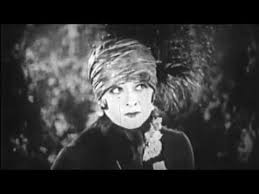
Showing posts with label Lady Windemere's Fan (1925). Show all posts

Tuesday, February 9, 2021

Born Today February 9: Ronald Colman


1891-1958

English born stage and screen actor Ronald Charles Colman was born on this day in Richmond, Surrey into a family of merchants. The family was fairly well off due to his father's merchant business dealing in silks; this made it possible for him to receive an education at a boarding school. He was reportedly a shy boy in school, but became interested in drama there nonetheless.  Once bitten with the "acting bug," it stayed with him and even provided a career path when his chosen path was blocked by family financial woes. When his father died suddenly, leaving the family without the income that it had grown accustomed to, Ronald's plan to attend Cambridge were no longer feasible.  He turned instead to acting, at first merely as an unpaid amateur--working in other fields to support himself, but in 1914, he turned professional. In the meantime, he had been a soldier in the London Scottish in the first World War. Seriously wounded in the fall of 1914, he was discharged from service in 1915; he would deal with ankle and foot problems for the remainder of his life.  By 1916 however, he was sufficiently recovered to return to the stage in London; and in 1917 he made his motion picture debut in a tiny little film (now, sadly, lost) written, directed and produced by George Dewhurst called The Live Wire.  After this he didn't appear in many film productions until 1919, when he starred in The Toilers--a the film based on the work of French writer Victor Hugo (only a portion of the film remains, it has been restored, and a large part of his performance survives, but the film's original plot is missing.).  He appeared in a few other film productions in the UK in 1919 and 1920, but continued the bulk of his work on the stage.  It is worth noting, that one of those films was the Cecil M. Hepworth production Anna the Adventuress in 1920; he was then receiving close to top billing in the United Kingdom films in which he appeared, before making his way to Hollywood.  In 1920, a play in which he was appearing toured the United States and he made the decision to stay in America, rather than return to the British film industry.  The first U.S. production that he found a role in was far from a starring role: Handcuffs or Kisses.  A late Fort Lee Selznick production directed by George Archainbaud, it starred Elaine Hammerstein and Julia Swayne Gordon and featured Colman is a small supporting role; but it was his first American film and his foot was solidly in the door of Hollywood.  By the time he made his next American film appearance, he was in the male lead, and it was two years later.  In the meantime, he had worked on the stage in New York in top supporting and lead roles and that got him noticed. Director Henry King (fresh off of giving up acting himself) managed to talk Colman into the lead male role of the Lillian Gish production The White Sister (released in September of 1923), despite that it meant a return to Europe, as it was mostly shot on locations in Italy (his only other appearance in a film that year was as an extra in George Fitzmaurice's The Eternal City).  His film acting thereafter picked up considerably, starting the new year in the supporting section of the cast, finishing the year as a solid leading a man, and a rising movie star with sex appeal.  His turn in Henry King's Romola, released at the end of the year, along side William Powell and the Gish sisters, solidified his place in film. Over the next two years, he would appear in some of the most expensive productions made during the time. He had real star appeal and was placed in lead after lead in romantic drama after romantic drama, next to a list of leading ladies that included: Blanche Sweet, Doris Kenyan, Norma and Constance Talmadge, Vilma Bánky, Belle Bennett, May McAvoy and Lili Damita.  Bánky in particular would be a frequent co-star in the later 1920's, especially in adventure type films, including the western genre.  Colman was, it turned out, an excellent horseman and was also eager to perform his own stunts, leading to more action roles as time went on. He appeared in The Dark Angel (September 1925) with Bánky, acting with her for the first time. He then appeared as Stephen Dallas opposite Belle Bennett, in Henry King's rendition of Stella Dallas in 1925.  Next appearing as Lord Darlington in Ernst Lubitsch's excellent production of Oscar Wilde's Lady Windermere's Fan, also in 1925.  Finally (after a role in Norma Talmadges Kiki), he was cast in the lead role in Herbert Brenon's war hit Beau Geste, released in August 1926, at the same time as Brenon's other big production of that year The Great Gatsby; actor Neil Hamilton, later of "Batman" fame, appeared in both of them (Brenon, in fact, had three films in theaters at the same time in 1926!). His first film with sound came on one version of the dual released historical action drama Two Lovers in 1928, the partial sound version containing a musical score and sound effects by Western Electric.  His first full talkie came in The Rescue, a romantic adventure, in 1929 opposite Damita.  Everyone who had seen Colman on the stage, or even knew him, was aware that, never mind his dark good "Latin-like" looks, his best feature was his voice: smooth, well enunciated and...you, know...English! He was now able to utilize this, his best acting tool, for the first time in films.  Colman took the lead in two more features in 1929, both of which he was nominated for Best Actor in a Leading Role for the Academy Awards in 1930 (despite this, the Oscar went to George Arliss for Disraeli).  The two films couldn't have been more different: Condemned! was a prison drama and, of course, Bulldog Drummond is a mystery thriller.  He next appeared as A.J. Raffles in the light crime thriller Raffles, playing (fittingly) a British nobleman who is also a crack jewel thief--released in July of 1930, the Colman voice had arrived.  It is not surprising that he was largely typecast as the suave Brit in films of the 1930's, albeit it in a number of different sort of roles from doctors to penniless cur, to MP's. He returned as Bulldog Drummond in 1934 in Bulldog Drummond Strikes Back, this time opposite Loretta Young; and later appeared in the first sound version of The Prisoner of Zenda, produced by David Selznick, in 1937.  Colman made only a handful of films during the war years of the 1940's, but it was in no way surprising that he got into radio work that same decade.  He was again nominated for a the Best Actor Oscar for his performance in the 1947 George Cukor directed A Double Life and won.  He also did some work on television in the 1950's. making his small screen debut in the October 1952 episode of "Four Star Playhouse," The Lost Silk Hat.  He would go on to appear in multiple episodes between 1952 and 1954.  He even had his own series, "The Halls of Ivy" (1954-1955) in which he played an amiable doctor married to a former actress, who was played by Colman actual wife Benita Hume. The series was a reprise of a radio series that the couple had starred in earlier in the 1950's.  Colman had a very bad lung infection for which he had surgery in 1957, when he was diagnosed with emphysema. The disease quickly got worse, he was (under contract to RKO) set to star in The Village of the Damned (which was eventually released in 1960) at the time of death on the 19th of May in 1958. He was 67 years old. His last film wound up being his role in Irwin Allen's strange 1957 historical/science fiction drama  The Story of Mankind.  Colman died in Santa Barbara and he is buried there at the Santa Barbara Cemetery. 


[Source: Chuck L. (Find A Grave)]


Friday, January 29, 2021

Born Today January 29: Ernst Lubitsch


1892-1947

One of my own personal all time favorite directors Ernst Lubitsch was born on this day in Berlin, Germany.  Lubitsch's father was quite the successful tailor and wanted his son to follow him in the business. Ernst, having had a love of the theater from a young age, balked heavily at this and eventually entered theatrical work as an actor. Before long--by 1911--at the very young age of 19--he was a member Max Reinhardt theatrical company at the Deutsches Theater, under Reinhardt's full management.  This is important because, though not discussed often, the two men undoubtedly had an effect on each other in regard to film (topic for an interesting essay/article!).  Reinhardt was seen as very much a "theater man" through and through--his management business was a wild success. But in truth, Reinhardt had a deep interest in directing films; this no doubt was imparted to Lubitsch (Reinhardt would go on to actually direct a few films, no doubt spurred on by Lubitsch's success in the industry before him: tit-for-tat).  Given his beginnings in the theater, it then comes as no surprise that Lubitsch entered the film business in the capacity of an actor, which he did just a year after his full membership at the Deutsches. He appeared as "Speilman" in the medieval mystery The Miracle, an English language/UK production shot in Austria, in 1912 (the 1913 German film The Ideal Wife is often cited at Lubitsch's film debut).  It was not long before he also directed his first film, which he also wrote and starred in. The film was Miss Soapsuds (Fräulein Seifenschaum) was produced in 1914, when Lubitsch was just 22 (in the meantime, he made acting appearances in more the half dozen films).  In his earliest directing efforts, it was common for him to direct himself in prominant roles (it was almost as common for him to have personally written the script, many of which were comedic in nature).  This arrangement came to end when he started getting directing jobs on feature length films, around 1918. Though  The Eyes of the Mummy (1918), starring the delightful Pola Negri, is often cited as his break out film as director, it was pretty clear by his handling of the direction of The Ballet Girl (with the film I Don't Want To Be A Man separating them) that he had arrived as a director of serious merit.  By the time his Carmen, also starring Negri, was released later in 1918, he had well and truly arrived one the world stage as a serious talent in the crafting of films (it was only a matter of time before Hollywood took notice, though with some considerable help from the director himself). He would not make his Hollywood move until 1922, and he made a number of important features between Carmen and his Hollywood debut with Rosita in 1923.  Negri was a frequent lead and light fantasy elements were common. One of his surviving films from the time was The Doll; released in December of 1919 the film was based on an E.T.A Hoffmann story.  Another of his surviging German films is the over two hour long Deception (original title Anna Boleyn) starring Henny Porten and Emil Jannings based on the life of Henry VIII's ill-fated second wife.  But it was The Loves of Pharaoh (Das Weib des Pharao) in 1922 that was his crowning achievement during this portion of his career. Again starring Jannings in the lead, as the Pharao Amenes, the film was the first and only film made by his own production company Ernst Lubitsch-Film (the film was the subject of one of the most complicated restoration projects of the early 2000's).  He made just one more German film before making a permanent move to California. A much shorter production, The Flame (Die Flamme) was a melodrama based on a Hans Müller play released domestically in September of 1923.  


Despite that Lubitsch's Hollywood films would become wildly popular and highly regarded (garnering him Oscar nods by 1930), his relocation there was not seamless. Lubitsch had been intensly interested in making films in the U.S. ever since he saw an exdous of various European directors after World War I; he made a fact finding trip in 1921 and saw for himself the superiority of the equipment and facilities as compared to the increasingly struggling German film industry; but he was burdened with a heavy German accent (and completely ignoring his Jewish ancestry...), was not at all to the liking of Americans fresh off a war they had been drug kicking and screaming into. Lubitsch, however, was persistent and managed to get his foot in the door a couple of years later.  His first American film is a well known one. Rosita, which stars Mary Pickford, with Holbrook Blinn and Irene Rich in top supporting roles (the film exists and has been restored, no thanks to it's star; Pickford so disliked the film that she allowed her own personal copy of the film, the only known print at the time--to decay on purpose--a copy was found in Russia in 1960's however).  Though made for Pickford's production company, it was under the umbrella of United Artists for distribution, a connection that would be of help to him later on. He next moved over to Warner's to direct Florence Vidor in the comedy The Marriage Circle (February 1924); and the melodrama Three Women (October 1924) starring Pauline Frederick, May McAvoy and Marie Prevost. He finished up the year at Paramount (Famous Players-Lasky) directing the comedy Forbidden Paradise (November 1924) starring his old muse Negri. 

Lubitsch directing Forbidden Paradise [source: Paramount Pictures]

Continuing with his track of bringing comedic plays to the screen, he made two films in the vein in 1925 for Warner's. The first of these was Kiss Me Again (August 1925), starring Marie Prevost and Monte Blue, based on the play
Divorçons by Victorien Sardou and Emile DeNajac (the film is now considered lost). He next directed a version of Oscar Wilde's Lady Windermere's Fan, the film that many consider his silent masterpiece. The film stars May McAvoy and Ronald Colman with Irene Rich as the cunning and coy Mr. Erlynne. Wilde would not be anyone's first choice for source material in a silent film...his brilliant word play is what makes Wilde...well, Wilde right? This is what makes this film such a feat of direction on the part of Lubitsch. It's expertly done, story in-tact and superbly shot...and it is very much still with us today! 

Rich and McAvoy

Just one of the many rather perfect fades in Lady Windermere's Fan

In 1926, he next turned his directorial attentions to Halévy/Meilhac play Le Reveillon for his "roaring twenties" dance film (without the song) So This Is Paris starring Patsy Ruth Miller and Lilyan Tashman as a true to form "flapper," with a return performance by Monte Blue (Myrna Loy is also a cast member). Basically a remarriage comedy, the film features the extremely popular dance of the time the Charleston.  The New York Times voted it one of the best films of 1926.  

Lubitsch with his Paris cast.

Lubitsch's last silent film was The Student Prince in Old Heidleberg, a romance pairing up Ramon Novarro with Norma Shearer. Based on the popular Wilhelm Meyer-Förster adapted play Old Heidelberg, the film was made for MGM and Lubitsch was offered production credit.  For his first sound film, he moved over to Paramount to direct The Patriot, a partial silent, filmed completely as a silent with sound added in post-production. And talk about casting...Emil Jannings, Lewis Stone, Florence Vidor, Neil Hamilton....it's a strange line up. It also received multiple nominations for the Academy Awards, including for Best Director (it won for writing achievement). The film is also considered lost; in fact it is the only film within the Best Picture nominations list to have been lost. His next film, Eternal Love, was also a partial silent; with John Barrymore and Camilla Horn in the lead roles, it was produced by Joe Schenck's company and distributed by United Artists. This film survives and is availble; many fans of both Lubitsch and Barrymore cite it as a favoirite film. 


Lubitsch's last film of the decade was also his first full sound film. Back at Paramount, he produced and directed The Love Parade, not only his first full sound picture, but also a musical to boot. It would be the first of several for him. It was nominated for six Oscars, including Best Director and Best Picture. 
 
The Love Parade [source: MoMA]

 
The Love Parade

His first two films of the new decade were musicals, Monte Carlo (1930) and The Smiling Lieutenant (1931), he returned to non-music laden film making in 1932 with Broken Lullaby a story of war redemption starring the other Barrymore, Lionel. Form there, he returned to the musical form in his next film One Hour with You (1932). When I was growing up with morning and afternoon films on TBS, I remember watching his next film Trouble in Paradise (October 1932),  it was my introduction to Lubitsch, though I didn't know it at the time, I just knew I loved the film.  The other film that I also was introduced to on TBS was Ninotchka, a Lubitsch film starring Greta Garbo from 1939. I was introduced to these films just weeks apart, but in Lubitsch's career he had directed several films in the years in between, including Angel with Marlene Dietrich in 1937.  The lighthearted The Shop Around the Corner, with James Stewart and Margaret Sullavan (and Frank Morgan!) was his first film of the 1940's. He made four films through mid-decade, including To Be or Not to Be, which would turn out to be Carole Lombard's last film. He did not have any films released between the years 1943 and 1946. His romantic war comedy Cluny Brown was released post-war June of 1946 and he then went to work on another musical starring Betty Grable. The Lady in Ermine, which also featured Douglas Fairbanks Jr. and Cesar Romero would not only be his last film, it would be left unfinished at the time of his death. Lubitsch died of a sudden heart attack on the 30th of November in 1947. He was just 55 years old. Director Otto Preminger finished his last film, which was released on the 25th of September of 1948, nearly a year after his death. Hollywood was truly stunned by his death, a town that he had spurned him in beginning of his overtures had become a place that, for a moment, could not live without him.  He is buried at Forest Lawn Memorial Park. 
 

[Source: AJM (Find a Grave)]


Tuesday, June 21, 2016

Sexual Innuendo In Ernst Lubitsch's Lady Windemere's Fan (1925)


This post is part of the 2nd Annual SEX! (Now That I Have Your Attention) Blogathon, hosted by Steve over at MovieMovieBlogBlog (wado/thanks for hosting!).  For other really good reads, please click here.  Wado/thank you for reading!
Spoilers ahead!


The sexual innuendos in this silent treatment of an Oscar Wilde comedic play are thick and over-laided, especially in the first two acts. Directing such a wordy writer as Oscar Wilde during the silent era posed specific challenges that often didn't pan out well in the finished product.  In many feature length films, the witty repartee and playful sexual dialog of Wilde was dealt with many, many inter-title cards, often lacking in any kind of corresponding imagery in the part of film that actually showed actors "acting."  This often made for clumsy films that taxed viewer's eyesight and just plain bored people.  In fact, an earlier film version of the play had been made in 1916 and so heavy with title cards that it was panned by the big critics of the time--and was a complete flop.  German director Lubitsch (who had come to Hollywood in 1922 at the bidding of Mary Pickford); knew of this and was determined to approach the play in film form in whole new way.  The question then became how to get across in active imagery, what actors of the stage would actually say, without the use of an intrusive number of dialogue cards.  Lubitsch masters this well!  He employed whole host of not so subtle devices, along with actual acting--he directed the actors to actually say their lines, while interacting with the stage props (many of which were written into the play's direction in the first place).  This resulted in a light-hearted melodrama, filled with fun "winks winks/nudge nudges."  It is so free of dialogue cards that the viewer almost forgets they are needed to advance the plot.  


Wilde's play is a kind of "comedy of remarriage" in the same ilk as films such as His Girl Friday and The Awful Truth, which rely on frame stories to set up perimeters in which the action can play out.  In this case, it's with a long lost mother "returning" to her native London, after reading that her daughter has married one Lord Windemere in a newspaper abroad.  Mrs. Erlynne as she is known (played deliciously by the very talented Irene Rich) is obviously a woman with a shady past; and she wastes no time summoning Lord Windemere to her lavish rooms that she's let in London, with the purpose of blackmailing him.  She's determined that her past, in this case, will no longer plague her--she sees the perfect opportunity to capitalize on it.  Almost immediately the sexual jesters start.  The first thing that Mrs. Erlynne does when she sees her son-in-law Lord Windemere (Bert Lytell), is motion him over to a sort of settee, placed under a window in her sitting room; in point of fact it looks more like what we would call a "day-bed" these days.  Windemere is incensed and insulted; he knows nothing of this woman and is recently married.  Mrs. Erlynne, on the other hand, looks as though she a cat that just swallowed the proverbial canary, but laughs it off.  She then proceeds to tell him who she really is.  Again, he is outraged--demands proof--which she provides; he then looks confused and a bit afraid.  It is at this time that we find out that he is familiar with his wife's background, including that she is obviously the product of some sort extra-marital affair.  He reminds her that her daughter had been raised to believe that her birth mother is dead.  Mrs. Erlynne demands to be let back into her daughter's life; the Lord then falls quickly into her trap.  He soon cottons on to what she is really after--his cheque book.  He sits down at her writing desk and begins to write out a check, that starts with £5....Mrs. Erlynne gets a look of slightly evil ecstasy on her face, as if she believes he is about to hand her £5000.  This look is not subtle at all, it clearly sexual excitement over successful blackmail and love of ill-gotten gains.  Clearly, she is not new to this game.  When the cheque comes out £500 instead, she gives him a look of forlorn regret; it's pure artifice, of course.  He is quickly persuaded to add a 1 in front of the 5.  Now, keep in mind that this is not a one time payment--it's a monthly "arrangement." (This comes to around £17,500 per month in today's money!)  It does not take long about for the gossip to begin!  And so the stage is set.


Fast forward several months to a horse-racing track.  The Windemere's are there with a complete party of on-lookers.  Enter Mrs. Erlynne.  It takes little time for practically the entire park to notice that she is there.  Surely she has some rich man in her bed?!  But who?  None of this is actually placed on a title card, Lubitsch needs only to have ladies hissing into each other's ears, talking behind fans and handkerchiefs, and wincing when they train their eyes on her. Caught in the middle of this soup of gossip and assumption is Lady Windemere (May McCoy), who is the only person in high-society London to have not heard the rumors.  This does not last long. The whispers get louder behind her and finally someone says something directly to her about this woman with a mysterious income.  All of this is all conveyed with actual acting, which give a depth to the resentment on the part of those engaged in gossip; gives the pangs of pain on the part of Lady Windemere's face a great deal of honesty.


Seated right behind Lady Windemere, next to her husband, is one Lord Augustus Lorton (Edward Martindale).  One of the scarce title cards announces that he is the most eligible bachelor in town.  On the other side of Lord Darlington sits another member of the gentry, Lord Darlington (Ronald Colman).  It is clear that he has some sort of design on Lady Windemere; he stares intensely at her, especially after the gossip stings her ears, to see how she is reacting.  There is not one doubt that his gazes are penetrating; and the he has some plan forming in his mind when it comes to this young married, and upstanding, woman.  Again Lubitsch manages to get great performances from his actors, and their performances relay all the feelings, be they:  hurt, embarrassed, stung, exposed, designing, completely.


Darlington, clearly not happy with the married couple in mid-kiss!

What happens next is surprising, only because the viewer doesn't see it coming.  Amongst the antics of the gossips and harpies, we barely notice Lord Lorton admiring the visage that is Mrs. Erlynne.  When she leaves the track early, out of embarrassment, he follows her.  This is the part of the film where Lubitsch employs his most clever special effects to be seriously suggestive.  We see Lord Lorton following her, catching up to her a little more with each step; and then screen begins to blacken out from right to left--at first just a little, then more and finally complete fade to black.  The viewer is left to think "okay, what are those two about to get up to??"


As it turns out, he is only attempting to discover her place of residence.  He reaches her door and hesitates, we have a witty title card, throwing in some actual Wilde on the nature of gentlemen ringing a lady's doorbell; and finally, his stiff extended fore-finger (another suggestive) and the pushing of the bell.  He gains admittance and is shown into the same sitting room as Lord Windemere had reluctantly became the victim of blackmail.  Again Mrs. Erlynne waves toward the window settee--this time Lord Lorton accepts quickly; well for it's day, that would have been shocking to audiences.  What happens next, would have only intensified that shock.  When sitting down, Lord Lorton offers her a cigarette (though Lubitsch updates the timeline of the story to the 1920's, it was still frowned upon for women to smoke, especially in mixed company), she accepts and begins to tease the end of the cigarette with mouth, all the while staring at the Lord sitting next to her.  After this, we get one of those rare title cards, that reads "But when the relation becomes more friendly___"--clearly we are meant to speculate on what exactly is meant by "friendly"--and what is with that dash??

Lord Augustus Lorton
The next live action that we see is Lord Lorton frantically ringing Mrs. Erlynne's bell with impatience; walking in quickly and hanging his hat, cane, and over coat inside her residence with extreme familiarity.  Upon his easy entrance (almost as if he were in his own residence) to her sitting room, we see her puffing away on a cigarette in a very "un-ladylike" manner.  He takes the cigarette from her and puts it out in her ash tray; there he sees a barely smoked cigar and gives her a surprised and disappointed look.  Now the cigar becomes immediately suggestive because it hasn't be cut for smoking (what some cigar smokers call "circumcising" of the role).  As Lorton gets more and more jealous and, she becomes desperate to stem his anger and stave off his leaving her, she retrieves a band from his own brand of cigar and gently slips it over the cigar--another strikingly suggestive visual moment.  She then saunters over to him, to take a cigar from his own pocket holder-again this is done easy and suggestive familiarity.  He becomes convinced and accepts her explanation. From here the film shifts gears significantly. It follows from the fast paced "swinging" woman about town, to the arena domesticity in the Windemere household.


Suddenly, it is the morning of Lady Windemere's birthday, the first of her married life.  Her husband escorts her to a room full of gifts, which included all manner of expensive gifts of jewelry; but the gift that he saves for last is a fancy, but still simple, fan.  She is delighted with it.  Lord Darlington then arrives; not fearing anything, her husband then leaves his wife alone with his old friend.  The playful sexual props may have disappeared, but the domestic drama that takes over is no less thin on sexual matters. We now have a marriage at stake, and this finally puts a mother's instincts into play for the first time since a now grown and wedded child was born.  

Lord Darlington and Lady Windemere
The title of the film would lead one to think that the fan would be a major sexual innuendo of the story, but it shows up past the half way point in the film.  It's not that the film leaves off being interesting after the fast and furious sexual suggestions in props earlier on; quite the contrary, it then moves on from an arena playfulness, into one of real peril for the heroine of the film. Lord Darlington sees Lady Windemere's birthday as the pivotal moment to make his move.  It becomes obvious that he has been slinking around; spying on Lord Windemere.  Having been left alone with her in her own sitting room filled with morning light and gleaming with presents, talk turns to a party being thrown for her that night.  Darlington, sitting with her, gives her the same look that we saw at the racetrack.  We know something coming.  He pounces on this chance and asks to show her something outside and guides her the window.  Outside we see Lord Windemere dismiss his own car, cross the street and get in a cab, which soon pulls away.  There, he's done it--he asks her what kind of man dismisses his own car?!  He then "sets the hook" by suggesting that she check her husband's writing desk, which is suspiciously locked.  Having gotten the drawer open, it contains many cashed cheques made out to Lady Erlynne.  She is devastated.

A declaration of love

A finally it comes, his out and out declaration of love.  What he means by "love" is still unclear however.  What is clear, is that Lady Windemere is put in a really delicate situation and, he pesters her further over why she would want to stay with a cheating husband.  With her birthday party looming, she is left to wonder how she will go forward in life.  Meanwhile, the scene suddenly shifts back to Mrs. Erlynne's sitting room.  Lord Windemere is there handing off the monthly money; she ambushes him with a request, really more of a demand, to attend her daughter's party.  He at first resists, but soon gives in.  He returns home, unbeknownst to him, to a very upset wife.  He tells her that he's invited Mrs. Erlynne to her party, insisting that she is indeed of woman of quality.  There is no way that he can know that this is the LAST thing he should be saying, or indeed, doing.  Understandably his mortified wife explodes and demands that the invitation never be sent.


Cut to the party.  Lady Windemere seems to have calmed down and is enjoying her evening with friends and family.  Meanwhile Mrs. Erlynne is growing inpatient at her residence waiting for an invitation that will never come.  Fed up, she decides to crash her daughter's party, sure that some mistake kept the invitation from arriving.  However, upon her entry to the Windemere house, she is told she is not on the invitation list.  She is at first mortified and then sad.  At this point, who should enter, but Lord Lorton, who is late for the party  He is brimming with joviality and is genuinely happy to see her there.  He then, on the quality of his name, secures her entry to the party.  


When she is announced, Lady Windemere is shocked.  May McAvoy who plays the Lady, does a good job of pulling off a look as if she had actually been hit with a real electric shock.  Lord Windemere seeing and hearing a hush spread across the room, springs to action and begins to introduce Mrs. Erlynne around the room.  Before long she is introduced even to gossip harpies, who, one by one, sit down with a chat with her; they each find her to be perfectly pleasant.  Things seems to calm.  Lady Windemere, however, decides she needs some air and steals out into the garden.  While there Lord Darlington ambushes her and repeats his declarations of love and adoration to her. The suggestive moment here comes when he takes her fan in one hand, while touching her hand with his other, while pleading his love for her.


She rebuffs him and moves out into the garden itself.  Darlington shrinks away.  Mrs. Erlynne, now being this close to her child, cannot help but step out to admire her from afar as she paces around in he garden.  Lord Lorton cannot help but follow her out there to woo her actually for a marriage proposal.  Unfortunately, he does this from behind a large bush; so when Lady Windemere looks up, she sees to her shock Mrs. Erlynne staring at her, with the arm outstretched to an unseen admirer, the Lady assumes that the man behind the bush is, in fact, her husband.  She's had enough.  She makes for Lord Darlington house, with the intent to stay the night with him.  She soon gains admittance.  Unknown to her, Mrs. Erlynne has discovered the note she has left for her husband informing him that she is leaving him for Darlington.  She then confiscates the note and plays up a sham that Lady Windemere is not feeling well and has gone to bed.  She then makes for Darlington's house and soon let in.  At this point one does have to wonder what sort gentlemen Lord Darlington really is; if women can be so easily admitted to his house while he is away, what must say something about his prior behaviors and activities....


When the young lady sees the woman she has no idea is her mother in Lord Darlington's house she is at first insensed and dismissive.  The viewer expects Mrs. Erlynne to blurt out who she is; and she does struggle to keep the words from passing her lips.  Biting her lip, she thinks the better of it and falls to entreating the young lady to flee and return home to her husband.  It is at this point that she does blurt out that she had done the very same thing and that it ruined her life.  So, now we know the whole story of the conception of Lady Windemere and why she was brought to believe her mother was dead.  Of course, the young lady has no idea that this is what she is being told, only the viewer is in the know.  But, the story does impact her and she allows Mrs. Erlynne to assist her out of the situation.  Before they can make good their escape, however, the men from the party have decided to have an after-party at Darlington's house, with Lord Lorton amongst them.  They flood his sitting room, leaving the two women trapped in the back of the house.  


Seeing the men arriviving for after-party

The only problem with fleeing out the back....Lady Windemere has accidentally left her fan on Lord Darlington's couch!  What to do now?  Mrs. Erlynne tells her daughter that she will take the blame; she knows her reputation precedes her--though she now has everything to lose--having been proposed to earlier in the evening.  She sends the young woman out and steels herself to confront the men.  Meanwhile, the fan has been discovered.


Facing the men

Mrs. Erlynne then confronts the men and claims that she took Lady Windemere's fan by mistake.  Lord Lorton stares at her, confounded and wounded.  Everyone else, including, and especially, Darlington looks confused and embarrassed. She is crest-fallen as she glances at Lorton and then leaves.  The young Lady Windemere has been saved; still believing that her mother is dead, but in debt to the woman she believed had been carrying on an affair with her husband.  She never discovers the real reason her husband was paying Mrs. Erlynne.  For her part, the very next day, Mrs. Erlynne has decided that she should continue her "adventures" and is packed up and planning to leave the city.  On her way out, she encounters Lord Lorton, who is on his way to her place of residence.  Being the woman wit and character that she truly is, she informs him that "no I don't think I will marry you!"  She then gets in her packed car, but Lorton follows, gets in with her, and they drive off together.  The implication is that they will indeed be getting hitched, but that is mearly an assumption.


The unresolved issues within the story is pure Wilde.  Ever the social satarist, he was never going to let the English gentry off with a straight forward happy ending, with all the parts reconciled, and all the secrets discovered and explained.  To convey the complicated nature of this through the lens of proper and improper sex, Lubitsch needed a clear vision as to how to approach the visual effects to have them forward the narrative. Because, again this is silent cinema.  This led to a masterful handling with a number of sexual props.  Even the sets themselves seem to convey this; they a comically over-sized.  Of course, there are practical reasons for the sets to be so over-large, from the point of shooting the film entirely (mostly) on a sound stage.  Still one cannot watch the film without having a sense that the especially large doors are meant to be constantly suggestive.  What I have come to love about this film, is it's play on the suggestive; the creative way in which Lubitsch approached it's production.  It has been said that he is the real star of the film, since none of the players were particularly famous.  His direction of the actors is impeccable, during an era when directors approached the job more with fussing over dialogue cards, rather than on directing the actual people in their film.  I feel I don't need the closure of all being known.  We see that one marriage was saved, and another, possibly, is produced.  The comedic and melodramatic sexual misunderstandings provide for a kind of re-marriage at the end.  That is enough for me.  Nice neat bows on packages not needed!