Tuesday, January 9, 2018

Born Today January 9: Anita Louise


1915-1970

Actress Anita Louise [Fremault], who was a child star, was born on this day in New York City.  Although she is best known for her roles in the 1930's, she did appear in a number of films in the 1920's.  She made her acting debut directly on the Broadway stage at the age of 6 in 1921.  By the following year she had made her film debut in a very small (uncredited) part in the 1922 Quaker whaling drama Down to the Sea in Ships starring Marguerite Courtot and featuring Clara Bow.  Her first named credit came in a film came in 1924 at the age of 9 in the Christy Cabanne film The Sixth Commandment (she is credited under Anita Fremault).  Throughout the rest of the decade she would take a few small parts in films including a role in F. W. Murnau's all sound 4 Devils, an early talkie (now famously lost). In 1929, she dropped her last name and decided to use only her first two names as her "stage name;" This is also the year--at the age of 14--that her film career would take off with a marked increase in the number of roles she was offered, and would continue at a steady pace all the way through the 1940's.  The last "silent" film that she appeared in  came in the 1929 partial silent The Marriage Playground, a comedic romance starring Mary Brian (who was playing a teenager) and Frederic March, the film was released a month before her 15th birthday.  She was named a WAMPAS Baby Star in 1931 (with the motion picture industry skipping the year 1930 for the roster).  She went from playing roles that were younger versions of roles played by older actresses in the later 1920's and early 1930's, to a leading lady by 1935.  That was the same year that she was a part of the large cast of A Midsummer Night's Dream, which is that  Shakespeare adaptation that includes James Cagney.  Louise made her television debut in in 1950 after being away from film for 3 years.  She appeared Landing at Daybreak and episode of Stars Over Broadway.  Two years after this, she appeared in Retreat, Hell; it would be her last role for the big screen, and, keep in mind, she was only 37 years old.  The rest of her career would be spent in television; she had a regular role on My Friend Flicka; and appeared in episodes of Ethel Barrymore TheaterThe Loretta Young Show and Mannix.  Her last role came in Call Back Yesterday, an episode of The Mod Squad in 1970, just a month before her untimely death.  Anita Louise died on the 25th of April after suffering a stroke.  She was only 55 years old.  She is buried at Forest Lawn Memorial Park at Glendale next to her first husband, producer Buddy Adler, with whom she had two children.  In addition to being a movie star, she was also one of Hollywood's most active socialites.  

[photo: Find A Grave]

[photo: Find A Grave]


Leave Virtual Remembrances @ Find A Grave

Monday, January 8, 2018

Born Today January 8: Matt Moore

[Photo: Freulich/Universal Pictures]

1888-1960

Youngest of the Moore Brothers from County Meath, Ireland, Matt Moore was born today two years after his brother Owen and 5 years after the eldest Tom.  The brothers immigrated to the U.S. in 1896 on the cheapest passage on a passenger liner, passing thorough the Ellis island gateway in May of that year.  Matt's career was longer than that of his older brothers, but only just in the case of Tom.  His career during the silent era was very successful.  Moore made his debut in the film Tangled Relations in 1912; a production made by Victor Film (the company set up by Florence Lawrence and her husband Harry Solter with backing by Carl Laemmle) where his brother Owen was already working.  From here, he went to work at Laemmle's IMP, next showing up in the George Loane Tucker film Just A Fire Fighter  in 1913 (Moore also appeared in Tucker's 1913 Traffic in Souls the rather infamous [due to it's subject matter] 6-reel "white slavery" film).  His appearances in films at the company over the next year  were mostly opposite Jane Gail, who starred in a number "Jane" films for the studio.  In fact, it was on a "Jane" picture later in 1917 that he first sat behind the camera for the first time on Plain Jane, a film that he also appeared in.  Moore would go on to have 18 credits for directing between 1913 and 1917.  The vast majority of the films were shorts featuring himself and Gail--the last of these was The Brass Girl (1917).  In the meantime, he was on the set of The Pawn of Destiny in 1914, when the infamous set fire broke out that essentially ended her career. He was the actor that the studio claimed that the diminutive actress was supposed to have saved single-handedly.  Of course, it was just a press fabrication and one that must of have mortified Moore.  Two years later  he would go on to his most important role of the teens in the underwater extravaganza 20,000 Leagues Under The Sea, which was directed by Laemmle himself and was a cinema first in terms of undersea camera work.  By 1920 Moore was still appearing in films being produced in the New York area; late for the time period when the majority of studios had made the major move west.  In the early 1920's he found himself working for the Selznick Pictures Corp. By 1922 Moore had moved over to films produced at Universal (Lewis Selznick's  company would not survive much longer).  Universal's The Storm (1922) may not have been the first film that he acted in California (it likely is), but, certainly by this time, he had made the westward move at last.  By the mid-1920's he had also made films for both MGM and the new studio in town: Warner Brothers.  In 1925 he had a major role in the one silent film that he is remembered for; he assayed the role of the straight man Hector McDonald in Tod Brownings famous crime film The Unholy Three, starring amongst others, Lon Chaney Sr.  And, by the late 1920's, he had become a kind of comedy specialist, taking top billing in a number of feature length domestic follies.  He was also at the top of the bill for a couple of mystery films that did quite well at the box office.  These titles include Tillie the Toiler (1927) starring Marion Davies, Diplomacy (1926) with Blanche Sweet and Three Weeks in Paris (1925) which was penned by Darryl J. Zanuck.  The first film that he worked on that had sound was the partial silent Dry Martini in 1928; the film starred Mary Astor and featured a MovieTone musical score.  His very next film, Coquette (1929), was a full talkie of his career, and featured his sister-in-law at the time Mary Pickford (who was married to his brother Owen).  Moore weathered the transition to sound just fine (as did his brothers), his turn in the Joan Crawford film of 1932 Rain, shows his bankability in the new talking era.  He worked continuously throughout the 1930's and 1940's, though by the late 1940's his roles had dwindled to small to uncredited.  He lived long enough to debut on the small screen as well.  In 1955 he played a judge in an episode of Screen Directors Playhouse; and he went on to make a couple of more television appearances in his lifetime.  The last film that he appeared in was the B-horror mystery I Bury The Living in 1958.  Matt Moore passed away in Hollywood on the 20th of January in 1960, just a couple of weeks after his 72nd birthday.  He is buried (along with his brother Tom) in Calvary Cemetery in East Los Angeles.  


IMDb

Wikipedia

Leave Virtual Remembrances @ Find A Grave

Sunday, January 7, 2018

Born Today January 7: Virginia Tyler Hudson (Virginia Hudson Brightman) [In Honor of The Golden Globes Time's Up Tonight!]


1886-????

Early female screenwriter Virginia Tyler Hudson, who was later credited under her married name Virginia Hudson Brightman, was born on this day in Kentucky (probably Millersburg) to family that included her well known reverend father, Daniel Hudson, her mother and two sisters. Early in her life she showed a natural talent for music, and it was more or less taken for granted that she would make a career in the field.  Hudson was well educated for a woman of her time, attending college in both her native Kentucky and Macon, Georgia.  She then went to work as journalist, her talent in writing and reporting soon outstripped her job and she was moved/promoted to Chicago.  While working as a reporter, she was employed in various press capacities, she wrote everything from periodical composition to higher level political press reporting.  As she wrote longer and longer pieces for newspaper weeklies, she began to write her own short stories and plays; this eventually lead to scenario writing and screenplays written directly with film in mind.  Somehow she wound up working at Thanhouser and penned the scenario for what is generally regarded at the first non-pornographic film in the U.S. to feature nudity: Inspiration (1915) (this is leaving off the series photography that Muybridge produced of both nude men and women in art and athletic setting).  All prints of the film are thought lost. If it were not for this film, and later an lawsuit that she filed against World Film, her life might have been relegated to complete obscurity altogether.   She worked through a two year contract with Thanhouser in 1915 and 1916.  All of her films that are known date from her time at the company, though she has more credits at World that are much more obscure.  The first film that she penned under contact to World was The Burglar in 1917; an adaptation of am Augustus Thomas play, and directed by Harley Knoles.  Her contract with World was for two years starting from the beginning of  1917, which they terminated nearly 5 months early; for this she sued them for breach.  World claimed that it was in her contract that the agreement could be broken, she sued for lose of monies that would have been hers had she stayed.  The whole affair wound up going to the Supreme Court, not once, but three times in 1919.  Hudson, who was by then married, eventually prevailed; with World ordered to pay her $1,600--$300 dollars less than her contract stipulated.  The whole affair was heavily reported on in the press, in part due to her background in the news industry, but also because of her sex...she was a woman daring to take on some the most powerful men in the industry, and she won! Her last World scenario was the adapted A Woman Of Redemption (1918), starring pseudo-vamp actress June Elvidge and directed by Travers Vale.  She has one additional credit, under her married name of Brightman in 1924, when a novel that she wrote along with Clinton Stagg, was adapted into an adventure vehicle for western actor Tom Mix by Fox.  Teeth was adapted by David W. Lee and directed by John G. Blystone, who is probably best known for his directing Buster Keaton's Our Hospitality the year before.  At some point, she met her husband, Grant L. Brightman, who also worked in the film industry (it was probably at World Film).  They are known to have married in October of 1918 and remained married until his death in 1931.  As for Virginia herself, there are no death records: so the date, place and cause of her death are not known at this time.  


Thursday, January 4, 2018

Born Today January 4: Jacob Grimm


1785-1863


One half of the famed Brothers Grimm Jacob Ludwig Carl (sometimes spelled Karl) Grimm, older brother of Wilhelm Grimm, was born on this day in Hanau, Hesse-Kassel (then a co-ruled province of the Holy Roman Empire), it is now Hesse district in Germany (this is the region that gives it's name to "Hessian," and the Hessian dialect of German is still spoken there).  Jacob was a name he used in study and publication only, he was known to his familiars as Ludwig Karl.  Apart from the famous works that he and his brother collected and published together, he is the brother known (and was much more famous during their lifetimes) for solo works and publications not based on fiction or folktales.   Father Philip Grimm was a prominent lawyer, that obviously left in impression on Ludwig Karl, despite that he died when he was only a child.  Grimm entered the University of Marburg in 1802, after having been in public school with younger brother Wilhelm.  He studied the law in University and became intensely interested in the history of the subject (unlike his younger brother, who followed him a year later to study the same subject).  After attending numerous lectures by the German law historian Friedrich Carl von Savigny (Karl), he became one of his students, and later joined him in Paris as a kind of literary secretary.  It was his year in France that solidified his intense curiosity concerning the languages and literature of the Middle Ages.  Jacob Grimm is credited, as a result of this interest, with more or less founding the study of linguistics; including an attempt at a comprehensive study of the origins of the Germanic languages particularly Middle German.  His work with language along with his historical research and writing are generally regarded as a bigger contribution to scientific literature, than is his work on Grimm's Fairy Tales, but, of course, it is the later that he is most famous for.  And, it is that material that has been used exclusively as source material in motion pictures.  Of course, the credits for the Tales earliest use in film mirror exactly those of his younger brother, written up here last February.  And, their work constitutes some of the earliest use of literature for film, used twice in 1897 at the dawn of the narrative film itself.  Both also represent some of the earliest films made in Germany.  One was based on Rapunzal and the other on Hansel and Gretel, both were made by Messter Film.  In all around 20 films (some animated shorts) were produced from source material provided by Jacob and Wilhelm in the silent era (some of them do not give the Grimms direct credit).  The last of these, with credit, was Hansel and Gretel  in 1923 starring little Peggy-Jean Montgomery aka Baby Peggy (who as of this writing is still with us).  [Her appearance the year before Little Red Riding Hood is a good example of a film that doesn't credit with Grimm's; neither for that matter does the recently defunct television series Grimm that was clearly inspired by the tales.]  Sleeping Beauty, in the form of Tchaikovsky's ballet, was produced as an episode of Producer's Showcase in 1955, the first time one of Brother's tales was used in a television series (unfortunately, the original color print that was produced is missing and presumed lost).  Both of the productions mentioned last year in the post of Wilhelm are still listed as announced; since then two more productions have been added.  The first of these is a little 4 minute animation from Croatia, Bremenski gradski sviraci, which curiously only credits Jacob and features late Croatian actor Zlatko Crnkovic.  The second is the live action short Snow White and the Wicked Mirror.  Jacob, along with his brother, became a member of the seven members of the important Göttingen Seven.  Both he and his brother were deeply involved in academics; but Jacob also went into politics with very mixed results; he was a constitutionalist in both philosophy and practice--in the end, however, his efforts to draft and ratify a constitution for a unified Germany while a member of the Frankfurt National Parliament were ultimately in vain.  Grimm left politics, but continued to write on the subjects of national law and government until he died.  He worked full days, in fact, up to his dying day.  He died in Berlin at the age of 78 on the 20th of September in 1863, 4 years after his younger brother.  They are buried in Berlin in a family plot.

Photo: Wiki Commons


Wikipedia

IMDb

Leave Virtual Remembrances @ Find A Grave

Wednesday, January 3, 2018

Born Today January 3: Dorothy Arzner

Arzner on the set (photo credit unknown)

1897-1979

One the most important directors of the 20th century Dorothy Emma Arzner was born on this date in San Francisco.  Though born in San Francisco, she grew up in Los Angeles, where her father owned a resturant popular with Hollywood celebrities.  To look at her body of work as a director, on the page, it would not suggest her importance to the history of cinema; the fact is, that not only is she one of the most important directors to come out of the U.S., she was also responsible for launching the careers of a whole host of strong minded and seriously talented actresses (the list is impressive and includes Katherin Hepburne and Lucille Ball).  She was the first woman to become a hired gun at any major studio; and her work with women of the silent era is equally of import.  She is also a a very important inspiration to filmmakers in the LGBT community.  She broke barriers when the cost doing so was more than sky-high. 


Azner's original plan for a career was to become a doctor; she spent two years in a pre-med program at the University of Southern California; she even spent time working as an ambulance corp in World War I.  The experience made he realize that becoming a physician was not what she wanted to do in life.  Around the time she returned from the war, she caught the movie bug.  It probably didn't hurt that she had been around people in the business through her father's establishment as she was growing up.  There were obviously some family connections.  She is known to have been introduced to William de Mille, the brother of Cecil, through the owner of the newspaper that she went to work for after returning from the war.  This lead to a job as a stenographer at Famous Players-Lasky, which would shortly become Paramount.  She was exposed to editing rooms and active film sets during her work, intriguing her and piquing her interest in directing.  This also lead to her working on the editing, without formal credit, of the Donald Crisp directed 1919 film Too Much Johnson; working along side one Nan Heron--who curiously as only one credit (this would lead me to believe that the credit for editing of the film should be Arzner's).  She does have full credit on the next Crisp directed film that she edited in 1920: The Six Best Cellars.  Her first experience with directing came with work on the 1922 Valentino film Blood and Sand which Fred Niblo was heading up; she directed additional footage for the film for which she received no credit, and was known to be very much involved with the editing, though again, she was given no credit.  


Her career throughout most of the rest of the 1920's was in the Paramount editing department and as a writer for director James Cruze, one of the film industry's first minority directors at a major studio, who saw in her talent and technique.  Her scenario writing is featured in Inez From Hollywood (1924), one of the only films that she worked on the 1920's that was not a Cruze picture (the director was Alfred Green).  Her work, yet again went uncredited formally, on Cruze's Old Ironsides, but it earned her praise at the studio who knew her contributions to the film (she importantly was the script supervisor for the film); this led to her first real directing job.  She was not just handed this job on merits alone however, she had to fight for it.  In the end, she threatened to move to Columbia and Paramount realized she meant it.  She was then given the reigns to Fashions For Women, which was released in March of 1927.  The film turned out to be quite the financial success, so the brass at the studio had to at least acknowledge in private that they had a talented director on their hands.  She directed two more films in 1927, one of which, Get Your Man, starred Clara Bow.  This is worth pointing out, because in 1929 she would direct Bow in her first talkie The Wild Party.  In the process of making this film, Arzner invented, more or less impromptu, the boom mike--but didn't patent it, and therefore a male employee at Fox or did, gets credit for it's invention.  Arzner deserves all the credit in the history books however.  You also be hard pressed to find a poster for the film that contains Arzner's name, this despite coming in 3rd for earnings that year.  She became the first female director to make an all sound film. In 1927,  Arzner met the woman that she would spend the rest of her life with.  She met Marion Morgan on the set of Fashions (Morgan was credited with editing on the film), who was a choreographer and sometime screenwriter (the two also almost shared the same birthday--Morgan was born on January 4th).


Many hold that her films in the early 1930's--the bulk of her work-during the pre-code days of Hollywood are not just her finest work, but rank as some of the most important pre-code films period.  Arzner would go on to be the the first woman to join the Directors Guild of America in 1936 (a newly formed organization at the time).  Although she lived to the age of 82, she left directing in the 1940's.  The last film that she directed was a war picture for Columbia (the company she had threatened to abscond to in the 1920's while at Paramount).  That film First Comes Courage stars Merle Oberon as a woman risking her life working for the Norwegian underground; the film is definitely a product of the time; however it is an interesting feminist slant on war subjects turned out at the time.  Arzner died passed away in 1979--on 1 October, 8 years after Morgan had died (Dorothy was 16 years younger of her) and she moved to La Quinta afterward.  Par Arzner's wishes, she was cremated and her ashes were scattered.


One of my favorite Hepburn films of the 30's, made in 1933.


Wikipedia

Leave Virtual Remembrances @ Find A Grave

Silent Films On TCM In January

SILENT AND PARTIAL SILENT FILM ON TCM IN JANUARY


4th: 8:45AM


8th: 12AM


8th: 1:45AM


15th: 12AM


15th: 6AM (Early Talkie)


22nd:  12:30AM


24th:  11:15PM (1st of an Ernst Lubitsch double feature)


12:45PM


29th: 12AM

Released On This Date


Groundbreaking directed Oscar Micheaux's horror/crime film The Spider's Web was released on this date in 1927.  It was filmed on location in Baltimore, Maryland and stars Evelyn Preer and Lorenzo McClane. The film was self produced by Micheaux's own company.

Tuesday, January 2, 2018

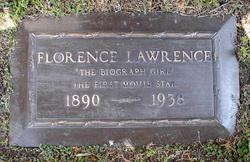
Born Today January 2: Florence Lawrence


1886-1938

The woman who would be called "The First Movie Star" Florence Lawrence was born Florence Annie Bridgewood in Hamilton, Ontario, Canada on January 2nd to a family that included her carriage builder father, two other siblings and her mother, a vaudeville actress.  Florence's mother, Charlotte Bridgewood, went by the professional stage name of Lotta Lawrence (name taken from the dramatic company she worked for); she brought young Florence, called "Baby Flo" onto the stage at the age of 3 (her mother was actually quite the ground breaker with the acting company that she worked for; she was not just a leading lady, but also a director). At the age of 12, her mother moved the family to Buffalo, New York, where her own mother resided (this was following the death of her husband--Florence's father, who had been separated from the family for many years--the death allowed Charlotte the chance to legally immigrate with her children).  After the move, she was taken off the stage and enrolled in school instead. After graduation, she returned to the stage with her mother; and upon the dissolving of the Lawrence Acting Company, the two of them moved to New York City sometime around 1905/1906.  This was expressly done because of the film industry's presence in the area--young Florence had film aspirations and also had her eyes set on Broadway.  It was not long before she did indeed appear in a film, though the Broadway auditions came to nothing. She made her film debut in the Vitagraph crime short The Automobile Thieves, which was released in the fall of 1906.  The film can be regarded, in a way, as a screen test--it was the project of Vitagraph director and executive J. Stuart Blackton (more on him on the 5th!). Her appearance in the Edison film Daniel Boone in the following year is much more widely known; it is the film that most often cited as her film debut.  Keep in mind that in these days actors were not only anonymous, they were expected to do their own stunts as well.  Her ability to ride a horse, and her willingness to shoot in very bad weather earned her the Edison part, but it was her debut appearance in the Vitagraph short that earned her a contract.  She worked for the studio until she was poached by Biograph in 1908 (D. W. Griffith reportedly did this himself on the sly, as he had to quietly figure out who she was due to lack of acting credit--an irony in her case!).  The first film that she made at Biograph was a little known Griffith short The Bandit's Waterloo 1908.  During that year, she would appear in more than 50 Griffith directed shorts for the company; she became a success and was a serious selling point for the company despite her anonymity.  Fans, lacking a actual name, simply called her "The Biograph Girl."  It was a moniker that the company would attempt to keep and cultivate even after Lawrence's departure, but due to Lawrence herself, such "cutesy" anonymous marketing titles would soon be obsolete.  By 1909, "the Biorgraph Girl" had her own franchise in what has been called "the Jone series," (the first of which was Mrs. Jones At The Ball) and was receiving handsome payment for her work.  But, when her and her 1st husband, Harry Solter, who also worked under contract for Biograph, were caught trying to sell their talent to rival Essanay, they both found themselves out of work.  This is how Lawrence came to work for the Independent Moving Pictures Company, or IMP for short; and how she came by her second nickname "The Imp Girl."  At that time, the studio was not a member of the consortium that was later busted as a monopoly (with some very bad "business" tactics) known as the MPPC (read more about it's history here).  The company was owned and run by Carl Laemmle, and he had a head for promotion.  Not long after Lawrence came to work for him, he decided that giving a credit, hell, even a marquee headliner, would be a great way to interest theaters in showing IMP films, since they could be cut from MPPC distribution circles for showing films not made by member companies.  The scheme worked--and it was not long before Lawrence was a household name.  Laemmle even went so far as to put out that Lawrence had be killed, only to reveal her to be alive and unscathed by any accident.  Not wanting to miss out on the back end of such a stunt, he then claimed that a wildly relieved crowd of fans had literally torn her clothes off when seeing her alive and well.  There is zero evidence that anything of the sort occurred, but it was great press.  Her headlining for the company is where she got the nickname--well earned actually--of "The First Movie Star" (Laemmle would later be "credited" with creating what came to be called the "star system," and his company would go into creating the powerhouse studio Universal, where he would basically become a household name himself as a powerful executive).  

Advert in Moving Picture World 1912 proving Lawrence's star power through her name.


The first film that she made at IMP appears to be The Forest Ranger's Daughter in late 1909.  Laemmle gave her husband the director's chair for films featuring his wife, something he could never have had at Biograph because of Griffith.  The couple, though, would not stay there long.   By the end of 1910 they left for Lubin, with His Bogus Uncle being the first film that they made at the house in early 1911 (Solter, again, directed).  Feeling the lose, despite Lawrence's urging of Mary Pickford to take her place at IMP, Laemmle promised Lawrence and Solter that he would bankroll their own studio, which he did in 1912, creating Victor Film Company in Fort Lee, NJ.  The couple (in what could only be an attempt to copy the founding of Solax studio by the uber talented Alice Guy and her rather ne're-do-well husband) was given complete artistic control.  They did manage to lure in some real talent in Owen Moore (one of the talented Moore Bros.), and he appeared in the their first film In Swift Waters opposite Lawrence in 1912.  The company would not remain independent for a long; in 1913 it was folded into the conglomerate that would become Universal.  In 1914 Lawrence was working on a Victor/Universal film The Pawns of Destiny when a staged fire set for a dangerous stunt went wrong and got out of control.  Another Moore brother, Matt (more about him on the 8th), was on the set that day.  Lawrence was seriously wounded and was laid up for months with what was essentially a broken back (and possibly a case of PTSD as well).  It was put out that she had miraculously saved Moore from the fire; we are talking about a woman who stood no taller than 5'3"--and Moore was a stocky man.  I don't know if Laemmle had a hand in that extreme exaggeration (um...er...lie), but it certainly has his M.O. all over it!  Lawrence returned to work that same year, but collapsed on set.  This was really the end for her career.  Things would only get worse from there, though she tried and tried again to make a comeback to the industry.

Another ad in Moving Picture World, this time placed directly by Laemmle in 1916 attempting to make a big deal out of comeback that wasn't really happening.

She appeared in just three films between 1916 ad 1918, one for each year.  In the meantime, Universal had pulled paying for her medical expenses and she and Solter divorced.  She wouldn't appear in another film until 1922.  By then, the film industry had dried up on the east coast almost completely; so in order to attempt a comeback, she had to relocate to Hollywood.  She was given a starring role in The Unfoldment the 1922 "independent" drama produced by minor company Producers Pictures; though after this, her roles became smaller and smaller, until, eventually she was consigned to uncredited roles.  Her last appearance in a silent film came in an uncredited part as "woman" in the World War I drama The Greater Glory in 1926.  She next showed up in a bit part in the late partial silent Sweeping Against the Winds in 1930.  The first full sound picture that she was filmed for came in an uncredited role Homicide Squad in 1931, a lesser crime drama produced by Universal (that must have stung, given her history with essentially fonding a portion of the studio in the teens!). She would have just one more credited role in her lifetime and that came in the 1931 romantic drama Pleasure.  She managed to get very, very small roles in nine more films, with the last being the 1937 MGM mystery thriller Night Must Fall (it is possible that she was in other films after this, as MGM hired her and other silent actors to work in bit parts for a salary).  Lawrence through her hard times was a survivor, but she just couldn't seem to catch a break.  She lost most of the money that she had made in films in the stock market crash in 1929 and the upscale cosmetic company that she started in Hollywood with her second husband fell victim to the depression.  She was obviously possessed engineering skills naturally and is credited with the invention of the precursor to the turn signal and braking lights on automobiles; but she failed to patent the invention and the inventions were stolen, leaving her no profit and no credit [she must have gotten her "inventors brain" from her mother who was also possessed of this talent and used it to start her own business in California].  She lost her mother, with whom she was very close, suddenly in 1929--an emotional blow that never fully recovered from.  And, she had recurring problems from the fire accident that she was in, that also included scaring (at some point she apparently had plastic surgery).  The end of the end came in 1937 when she was diagnosed with some type of bone disease that is thought to be a type of bone marrow cancer, or maybe a type of auto-immune "anemia." Lawrence took her own life on the 28th of December 1938 by ingesting cough syrup mixed with "ant paste"--or ant poison, leaving behind a very pragmatic suicide note that is just heartbreaking. In it she acknowledges that she had been told that her condition was incurable.  She was buried in an out of the way corner Hollywood Cemetery (now Hollywood Forever) where she had laid her mother to rest nearly ten years earlier.  For a decades, her grave laid unmarked; but in 1991 an "anonymous" British actor (re: Roddy McDowell who was a film preservationist and historian, in addition to being a great actor) paid to have a marker placed listing her both "The Biograph Girl;" and indeed, The First Movie Star.  


Lotta Bridgewood's urn at Hollywood Forever


Leave Virtual Remembrances @ Find A Grave (note the marker has her birth year off by 4 years)


Find A Grave for her mother's information

Monday, January 1, 2018

Released On This Date--Silent Horror From Sweden


97 years ago Victor Sjöstrom's silent ghost parable and masterpiece was released in his native Sweden on New Year's Day.  The film actually takes place on New Year's Eve. It would take a further 1 1/4 years to reach theaters in the United States (4th of June 1922).  He didn't just direct the film, he also adapted it for the screen and starred in it as well. Sjöstrom, of course, would go on to export himself to Hollywood, changing his last name to Seastrom in the process.  You can check out Criterion's entry on the film Here; and check out a recent trailer manufactured for the film below.  Happy New Year!!

Born Today January 1: Ludovic Halévy


1834-1908

Ludovic Halévy, French writer, playwright and librettist was born on New Year's Day in Paris.  He was the nephew of composer Jacques Fromental Halévy and the writing partner of Henri Meilhac for more than twenty years.  Though his father was a civil servant, he was also a pretty prolific writer of varied genres that included works for the stage; so to say that the younger Halévy was exposed to the world of the theater at an early age would be a bit of an understatement.  As a child, he delighted in performing at home and by his early teens he was a devotee of the theater, helped along by the free entry that he had owed to family connections.  At the age of 18 (1852), he followed his father into governement service.  No one is exactly sure when Ludovic began to write, it is possible--even highly probable--that he started as a child.  What is known is that he had been writing steadily during his time working for the government; sought and found publication.  By the age of 31 his writing career and demand for his work had grown to the point that he retired from public service altogether; that, and the fact that he had met composer Offenbach some ten years earlier when he was around 21 afforded him this opportunity. He went to work for the musician at his small theater, and wrote libretti and stage scenes for performances there.  One of the most well known of his works from the time period is Bat-ta-clan, the name later lent itself to a theater in Paris that became instantly well known due to the horrific terrorist attack that took place in Paris in November of 2015.  Around the time that Halévy made Meilhac's acquaintance, the works of parody and satire that he had been writing for Offenbach's theater fell out of fashion; this left him out of work and under contract for a vaudevillian piece that had been commissioned of him and another writer--that writer abruptly  left the collaboration and Halévy desperately needed to replace him.  This is where Henri Meilhac comes into the picture.  Just by chance, the two men met on the steps of a theater one day and Meilhac reportedly immediately took Halévy up on a proposal that they work together to finish this contracted piece.  As a duo, they became quite successful writing quaint farces and simple comedies; it is ironic then, that the work they are most famous for, Carmen, was a mere side project for them at the time of it's penning.  Also ironic, is that their second most well known work Froufrou is the rare serious drama.  It is these two works that became the basis of the vast majority of silent films using their writings as source material.  His credits in this regard mirror exactly Meilhac's listed on this blog in March of last year. In all, 12  films were made from their work between 1907 and 1926 (11 of them credited). Historically speaking, two films dating from 1907 are the most important, as they both are early sound shorts; and they are both based on Carmen.  The first of these is a pretty well known early British sound short film of Carmen using Chronophone system and directed by Arthur Gilbert, a filmmaker associated with the sound apparatus in Britain (the film was produced by the British arm of the Gaumont film company from France, where the chronophone was invented).  The second film, also called Carmen (1907/II), was a more home-grown affair which was produced in France by Pathé and used a sound system called Cine-Phono, which may have been an apparatus similar to the chronophone which allowed for sound syncopation to a pressed vinyl record.  The second of these may have only been the musical portion of Carmen and may not have actually included lyrics.  The first time Carmen was produced as an actual "silent" film came in 1914 with a joint Spanish and Italian production.  That same year Frou Frou was filmed for the first time; this time the production was an American one--the film was made in conjunction with Thanhouser and Mutual distributed it theatrically.  The next time his and Meilhac's work made it's way into a sound film came in 1931 with a filmed performance of Die Fledermaus, which was a released on Christmas day of that year in Germany.  A performance of Carmen premiered on television for the first time in a closed-circuit broadcast in 1952 to select theaters here in the United States; and the French series Airs de France broadcast Le petit duc as a musical in 1960.  Most recently, Carmen was filmed in Austria and packaged as Bregenzer Festspiele 2017: Carmen this past year.  As a solo writer, Halévy produced books of fiction that brought him a fair amount of personal notoriety as a writer of novels and earned him election to the prestigious Académie française in 1884 at the age of 50.  A few films have been produced using his novels as source material, with one silent film produced in 1916 by Universal, that was based on his novel L'Abbé Constantin and titled Bettina Loved A Soldier.  Halévy spent most of the rest of his life attending to his memberships in various literary academies in Paris that he had been elected a member of.  He died on the 8th of May in 1908 in Paris at the age of 74, one year after the two early sound films of his and Meilhac's opera had been released. Both his uncle and his writing partner are interred in Paris' famous Montmartre cemetery, so it seems reasonable to assume that if he was buried or entombed at all, that he would be there; but alas I can find no information regarding his resting place.  


Online Audiobooks by LibriVox