1797 or 1798-1870
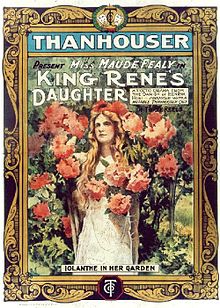
Danish poet and playwright Henrik Hertz was born on this date in Copenhagen, Denmark into a Jewish household. His father died when he was an infant; making matters much worse, the family's property holdings were destroyed in the British bombardment of 1807. As a result of this, he was brought up by a distant relative who happened to be a newspaper editor of prominence. In 1817 he was sent to university where he studied law. In 1825 he passed his law exam, but he had already showed a perference for literature; in fact, he had already begun to write. In 1826 and 1827, two of his plays were produced. By 1832 he had several plays in multiple genres produced and had moved on to didactic poetry. And, by 1844, he had several volumes of edited poetry published, as well as a large number of produced plays. In 1858 and 1859 he served as editor a literary journal: Weekly Leaves. Hertz continued to work on his plays and their productions right up until the time of his death. The last play that he had produced was his final drama and was presented in 1969. Hertz died in 1870 in Copenhagen on the 25th of February. I can find no information on his burial. Today, he is remembered for being a first rate writer of romantic drama and has left a lasting tradition in the Danish live theater. A handful of films have made use of his work as source material, the first being King René's Daughter in 1913--a film made at Thanhouser (a print of which survives in the Library of Congress). It would be 40 years befor another film was made of his work; this was based on the same material as the Thanhouser film, but this time it was a homegrown Danish production. Kong Renés datter (1953) was made for domestic television (though released in other formats as well--including radio), and was a live play performance. The most recent use of his work came in an installment of The Metropolitan Opera HD Live (a series started in 2006), in a 2015 performance of a Tchaikovsky operatti using that same work of Hertz's as a libretto.

1641-1715
It is thought that English Restoration dramatist William Wycherley was born on this day probably in the year 1641. He was born in Clive, which was near Shrewsbury, located in Shropshire. His baptism is recorded as taking place on the 8th of April 1641. The family then departed for India, and settled on a estate in Malappuram with an income of £600 a year. As an adolescent, he was educated in the France; while there he converted to Roman Catholicism. He returned to England just before the restoration of King Charles II, settling in Queen's college, Oxford. Thomas Barlow (who was later Bishop) was Provost there at the time; it is an understatement that he was fiercely anti-catholic. Barlow managed to convince Wycherley to return to the Church of England. There are indications, however, that he may have secretly remained a Catholic at heart. Though he was considered as professional fine gentleman, he did leave Oxford for the Inner Temple, but gave little energy toward the genuine study of law. He spent most of his time at the theater and with the company of women instead. His strong interest in the stage lead him to start writing plays of his own; the first of which was presented at the Theater Royal, in Drury Lane in 1671 (he had bragged of writing a play at the age of 19, but this has been demonstrated to more of boast than a reality). The play, Love In The Wood, was considered to not only to be the most shocking and daring comedy to date, but was equally considered brilliant. It took no time at all for him to become the talk of the court. He also served in the Navy, though the time period that he undertook this service is a matter of conjecture. Opinions are evenly divided on whether this came before, or after the production of his first play. He was, for a time, the most imminent playwright in the UK. Though a brilliant writer, he was also a rogue, with an immature character for most of his life. He was only concerned with marriage, for example, if it was for money; because he was constantly spending on "wine and women," which left him perpetually in debt. Despite his wide spread fame during his lifetime, only 3 films have ever been produced using his work as source material. The first of those was The Country Girl in 1915; a Thanhouser film. The second came with an installment of the BBC Play Of The Month, with his play The Country Wife in 1977. The most recent came in 2011, with the short The Happy Husband. Wycherley died at the age of 74 in Convent Garden on 31 December 1715 (some sources cite that he died in night after midnight, surviving, barely in to the year 1716). It is pretty sure that he was entombed in a vault somewhere in St. Paul's, Covent Garden (The Actor's Church) or in a lost grave in the churchyard there; though minority sources claim not to know where he was laid to rest. As a point of trivia: Wycherley is thought to have coined the phrase "nincompoop."

For More:
1806-1861
English poet Elizabeth Barrett Moulton-Barrett was born in County Durham, England on this date in history; she was the eldest of 12 children. Her family had considerable business interests on plantations in Jamaica. Her family immigrated from there, when her father decided that he wished to start and raise his family on British soil. The family's businesses were still centered there, and their considerable wealth, from both parent's families, was derived from there, including the owning of a large number of slaves. Her earliest education came at home, along with her brother. Their tutor was one Daniel McSwiney. She is reported to have started writing verses at the age of just 4 years. She was apparently studious learner and she claimed that she started reading novels at the age of 6. She formed an interest in Greek while reading Pope's translation of Homer at the age of 8; and by the age of 10 she was studying the Greek language. At the age of 12, she composed her own Homeric epic poem. It would be this poem, The Battle Of Marathon, that would be published privately in 1820. Her father greatly encouraged her writing and this resulted in one of the largest collections of juvenilia of any English writer in history. Around this time, she and two sisters came down with a mystery illness, from which she would not fully recover, though her two sisters did. It is unknown what the illness could have actually been, it left her with loss of mobility and in near constant pain in the head and spine. Some have speculated that it may have, in fact, been caused from a fall while dismounting a horse, but this is unlikely, since the symptoms occurred before that (it may be that the illness caused the fall?). For lack of any other diagnosis, she was treated, unsuccessfully for a spinal problem. In 1837, she also developed a lung ailment, but the two diseases are thought to be have been unrelated. For the pain, she took laudanum, and was later prescribed morphine; unfortunately she would become addicted, a problem that plagued a large portion of her adult life. During this period of time she had become very influenced by the philosophy of Mary Wollstonecraft; she was starting to oppose slavery. When slavery was abolished in the United Kingdom, her father suffered major financial losses; but she seems to have been unaware of this. By the early 1840's she had already lost several key family members (not least were her mother and grandmother), when two of her brothers died. This took it's toll on her already fragile health. Nonetheless, she also experienced success during this time, making the transition to prose. By 1850, she was a serious rival for poet laureate along with Tennyson, upon the death of Wordsworth. Her published volume of poetry dating from 1844 inspired poet and playwright Robert Browning to write to her with praise. After meeting, the two embarked on a romance that captivated the country. The two were married in secret, as she knew her father would disapprove. That he did, and when discovering the marriage, he disinherited her--curiously doing the same for all of his children who had dared to wed. The couple left England for France for a honeymoon, and eventually settled in Italy. There they enjoyed a great deal of fame and lived in comfort. Despite her health troubles, she gave birth to a son at the age of 43 in 1849. The couple lived in Italy until her death on 29 June 1861, she was 55 years old. She most probably died from the lung complaint, the symptoms of which suggested tuberculosis; her reliance on opiates to ease her discomfort may have contributed to her early demise. She is buried in an elaborate above-ground tomb in the the Protestant English Cemetery in Florence. In regards to film, only three films, and two television episodes, have made use of her writing for source material, and two of those came in the silent era. The first was a social commentary entitled The Cry Of The Children, which was based on poem of hers and showed the evils of child labor. The film was controversial upon it's release for showing real children toiling in a real mill. It is one of only very few surviving films from the Thanhouser Company and dates from 1912. The second is Aurora Leigh from 1915 and is based on the poem of the same name.

For More:
Wikipedia
Poets.org
Poetry Foundation
IMDb
Leave Virtual Flowers @ Find A Grave