Tuesday, October 13, 2020

Born Today October 13: Johnny Downs


1913-1994

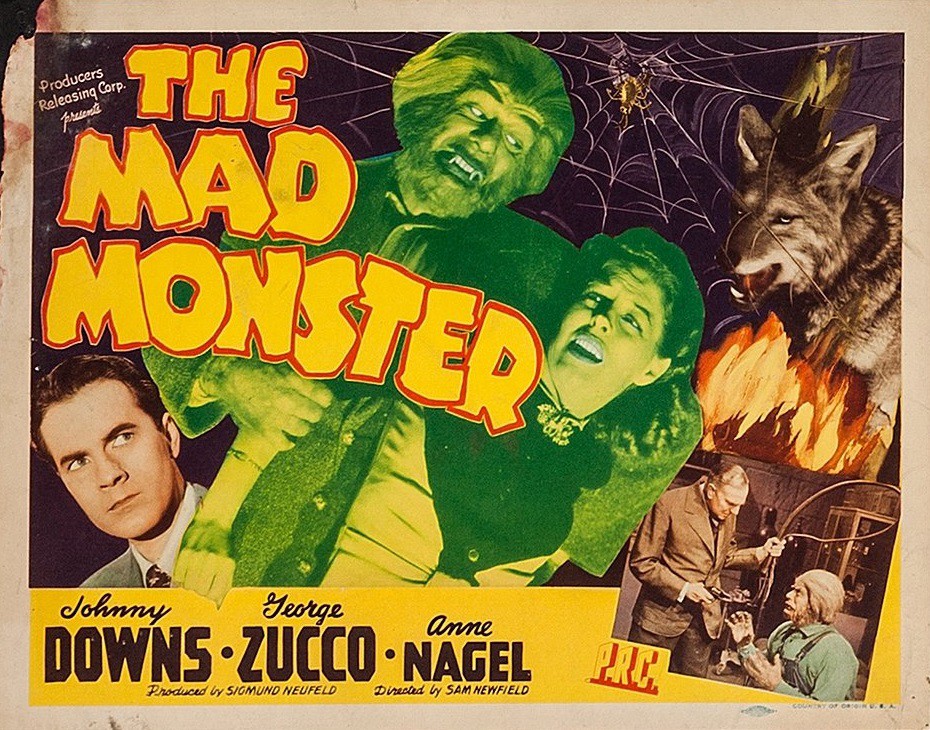
Johnny Downs [John Morey Downs] was born on this day in Brooklyn, New York.  One of the few (close to) original Our Gang members to go on to have a regular career in the film/television industry, he got his start as a child actor in films when his parents relocated the family to San Diego, California in the early 1920's.  For what ever reason, Downs' mother took him up to Hollywood to audition for the Hal Roach studios (responsible for the Our Gang series).  He was reportedly put in a Hal Roach production--The Champeen--in 1923 to see what he could do as a child actor with other children playing scripted roles; he was later cast in 1925 as Johnny as a bona-fide gang member. His first actual film credit came in Circus Fever, released in February of 1925. The entire cast of kids was credited simply under "Hal Roach's Rascals."  At the beginning of his child acting days he also appeared a couple of Jack White short comedies, including one--Red Pepper--with Al St. John in 1925.  He appeared in over 20 Hal Roach films as "Johnny" or "Johnnie" in the years 1925 thru 1927, including one with Oliver Hardy and Charly Chase:  Thundering Fleas. In 1927, now 14 years old (an "old man" in the Little Rascals world), Downs began to branch out into other films parts. He had a small peripheral role in the Tom Mix film Outlaws of Red River, and had a small and uncredited, but important, part in Jesse James (1927) as James as a child, to western star Fred Thomson's grown James. Also in 1927, he appeared in his last Hal Roach production, Chicken Feed, released in November. In 1928 he got a couple of uncredited appearances in "extra child" parts, before getting another named credit in the Dolores del Rio gold rush western The Trail of '98 as John Downs. It was the first film that he worked in a film released with sound effects (the wide release, was of course, all silent). It was also his last film appearance of the decade.  He next appeared on film in 1931 in a Warner's Vitagraph short The High School Hoofer at the age of 18. He was in a number of shorts and small parts in the early 1930's, but it would not be until 1935 before he was another feature in a credit and that was tiny appearance, which occurred in the King Vidor's Civil War melodrama So Red the Rose (Downs had made an appearance in the Vidor silent The Crowd in 1928 as a child actor). In the meantime, he had gone to college and was active in theater while in school. After his return to full time film acting, he had quite a successful career and as young adult actor in the 1930's and 1940's. He also spent time sporadically on the stage throughout the rest of his acting career. He made his television debut in the music variety show that ran only a few episodes "Girl About Town" (also know as "Around the Town") in 1948 as himself.  His appearances on television for the next few years would be on the same type of programing. He made his acting debut on the small screen in the crime drama Racket Squad in 1951. He only took a few more credited acting roles both on television and in film after this before semi-retirement in 1953. His last professional appearance in a film came in an uncredited role/cameo in the Bob Hope musical Here Come the Girls released in October of '53. He then retired to Coronado, California (near his home town of San Diego) with his family, where he would reside for the remainder of his life. He settled into the real estate business and became a local amateur tennis celeb there, but he wound up (kind of by accident) hosting a local "kids show" there on a local channel starting in 1961. It would eventually be called "The Johnny Downs Show" and more a "hosting" kind of affair, with him providing content in between showings of old Little Rascals reruns and eventually cartoons--mostly Popeye. Downs would play characters, but he was bascially appearing as himself--something that he had been doing since an appearance in a documentary short on the Our Gang in 1925 in Twinkle Twinkle.  This is of course "spooktober" and Downs was in at least one b-grade film, The Mad Doctor, in 1942 with the likes of Glenn Strange (who played Frankenstein's Monster several times, including in a couple of Universal films including Abbott and Costello Meet Frankenstein in 1948) and everyone's favorite b-movie mad scientist George Zucco!  As a member of Our Gang, he also appeared in Shivering Spooks in 1926, but that is more of a "ghost gag" short that has the gang also stumbling on a scam fake seance. Downs was also a avid, if not completely talented, dancer. As mentioned above, Downs stayed in Coronado and died there on the 6th of June at the age of 80.  He is buried at the Holy Cross Cemetery in San Diego along with his long time wife. 


 [source: Lot Lzrd (Find A Grave)]

[source: Lot Lzrd (Find A Grave)]


 IMDb


Wikipedia 


Find A Grave entry 

Saturday, October 10, 2020

Born Today October 10: Jane Winton


1905-1959


Tall for her day, actress, opera performer and writer Jane Winton was born on this day in Philadelphia.  Winton got her performance start with the famous Zegfeld Follies in the 1920's in New York.  She made her film debut in 1924 in the bit part that went uncredited in the rather large production that was Ernst Lubitsch's Three Women in Hollywood. Her first credited role came the following year in Tomorrow's Love, a small production of a comedic melodrama. Her film career would last less than 15 years, but she did have appearances in some major films of the silent era. Due to her height (she was nearly 5' 6"--quite tall for the day), she was often tapped to fill roles requiring a "commanding" females presence, such as aristocrats and other high society types.  One film in which she had a major role was a ground-breaker.  Don Juan was the first Vitaphone sound system film to be released. Vitaphone was the first system in Hollywood to provide actual synchronized sound, in this case, sound effects (Don Juan was by no means the first film with sound by a long shot however).  The films featured John Barrymore as the famous lover and Mary Astor as Adriana della Varnese; Winton occupied the role of Donna Isobel.  The film was a release of Warner Bros. who were the one major studio doing the most to advance sound in film in the mid to late 1920's; they were also the studio that had Winton under contract at the time. And, she was quite a bankable actor for them; she for example took top billing, along with Monte Blue and Myrna Loy, in the Spanish-American War exploit film Across the Pacific in 1926.  The studio also paired her up with Irene Rich in a couple of films, a casting that made sense given the height of both ladies. In 1927 and no longer working for Warner's, she made several films produced by different studios; they included The Monkey Talks (Fox Films), Perch of the Devil (Universal), Lonesome Ladies (First National), The Fair Co-Ed (Cosmopolitan/MGM), John Ford's "dramedy" Upstream (Fox) and Alan Crosland's The Beloved Rogue (Feature Productions/United Artists) starring John Barrymore and Conrad Veidt.  Without a doubt the most famous film in which she appeared was also released in the 1927.  F. W. Murnau's Sunrise remains to this day among the top ten most well known silents, despite that it was released in large cities as a partial silent using Fox's own Movietone system for sound effects and a full score (a first). The film shared the "Best Picture" "oscar" with William Wellman's Wings at the very first Academy Awards in 1929 (the first set of awards had two categories for Best Picture, and technically Wings is considered the very first film to win for Best Picture--it's hair-splitting really, if you ask me....let's call it a tie).  It is also considered by many to be among the top ten best films ever made (not something that Wings enjoys now). Nonetheless, Winton was amongst the credited cast, with George O'Brien and Janet Gaynor in the lead. So that makes two films with ground breaking sound advances that Winton acted in. She went on to appear in twelve more films in the remainder of the decade, ten of them fully silent. Her first full talking film actually came in 1928 in Universal's Melody of Love, released in October and directed by Arch Heath (one of the few director's at the time that also directed all black casts). Her last film of the decade was also a Universal production with partial sound (talking sequences); a melodrama, Scandal featured Laura La Plante and Huntley Gordon in the lead roles.  She made the transition to a full sound Hollywood with ease. Though she had a role in the Crosland directed mystery The Furies released in spring of 1930 (another lost feature), her first film appearance of the new decade came in the prologue of Edward F. Cline's morality melodrama In the Next Room, which was released in January. Her major film appearance of the last portion of her film career without a doubt came in Howard Hughes' epic Hell's Angels (November 1930).  She left Hollywood after this, for whatever reason, and moved back to New York. I've read a lot about how her "star was fading," her "star faded quickly"--personally I don't see any evidence that she could not have continued to act in the same sort of supporting roles that she had been. My best guess is that she tired of those type of roles. She was possessed of other talents, and the fact that by 1933 she was singing high opera in New York tells me that she must have felt that was a perishable skill and if she wanted to pursue that in life, she had better go sooner rather than later for that goal.  She did appear in some films after this date. Notable among these are two Warner Bros. short mysteries filmed at Warner's Eastern Vitagraph Studio in Brooklyn (it was part of the "Vitagraph Inspector Carr series")--her appearances came in releases in 1931 and 1932. She also had an appearance in Hired Wife, released in March of 1934 and filmed entirely in Florida. Other than an appearance that she made in a little Al Christie film in 1935, she only made other film appearance in 1937 in Limelight (also known as Backstage)--a musical. The film was British and she had been in London during the time of it's filming performing opera. She made no additional films appearances after this, but she did eventually become a published novelist in 1951. Her second novel was published the following year. In addition to her artistic talents in writing, she was also a painter. Her life was cut short when she died suddenly (of what we still do not know) on the 22nd of September in 1959 at the age of 53.  She is interred in her husband's family crypt in the Jewish cemetery in Hudson-on-Hastings: Temple Israel in New York state. 


[Source: James Lacy (Find a Grave)]

[Source: James Lacy (Find a Grave)]


IMDb


Wikipedia 


Find A Grave entry 

Friday, October 9, 2020

Born Today October 9: Robert Warwick


 1878-1964


Actor Robert Warwick was born Robert Taylor Blen on this day probably in Sacramento, California (his parents were English and some sources cite that he was actually born in the UK just before they immigrated to the U.S.).  He went from movie star leading man to extremely successful character actor on television. His career lasted an impressive 63 years.  Initially drawn to music, he had the intent of going into that most dramatic side of music, opera performance--which he did indeed study for. He wound up in acting classes to improve his drama chops in operatic performance studies, but found acting a much more interesting avenue to pursue. He subsequently made his Broadway stage debut in 1903--he was not alone, one John Barrymore was also making his debut in the same play. Warwick got into the film industry 11 years later, making his motion picture debut in mining drama The Dollar Mark, shot on location in Ontario, Canada and produced by William A. Brady Photo Picture Plays (distribution by Selznick's World Film). It was a rarity for it's time, an actor making a film debut in a feature length film at such an early date (he actually did not appear in very many shorts in the silent era, another rarity).  Though he debuted in film and worked steadily through 1910's, he was still a fixture on the stage and, in fact, left films for most of the 1920's, until the coming of the wide spread use of sound in films. His sophmoric film appearance came in the Maurice Tourneur directed stock market melodrama Man of the Hour (October 1914). His most well known early film is Alias Jimmy Valentine, a formerly lost film filmed at the Peerless studio in Fort Lee, NJ, was again directed by Tourneur, and released in February of 1915. Continuing to work with William Brady production company, Warwick worked with a number of director of note in just 1915 alone. In addition to Tournuer, he was directed by Albert Capellani, Oscar Eagle and Frank Hall Crane. By 1916 his was a movie star in every sense of the term. He began working with director Emile Chautard, making Human Driftwood and Sudden Riches in short succession. In 1917 he teamed back up with Tourneur with the comical parody of the film making that was A Girl's Folly (another film that we are fortunate to be able to still screen).  He next showed up in the Ralph Ince directed mystery The Argyle Case.  Though Warwick technically has only one direct producing credit to his name, he started--in connection Harry Rapf Productions--his own production company bearing his name; The Argyle Case was the first production from the company and the only one not directed by Léonce Perret. Ultimately the company only turned out a handful of films, including the film that Warwick himself directly produced--The Accidental Honeymoon--in 1918. Warwick worked staedily through 1920, but despite being a huge star, juggling his stage work with film work was too large a work load and he felt he needed to make a choice between the two. He chose the stage. After 1920, he only appeared in two more films in that decade. His last film of 1920 was the Paramount comedy The Fourteenth Man. In 1924 he appeared in The Spitfire a Betty Blythe film directed by Christy Cabanne, it was his last silent film appearance. His only other film from the decade was the full sound Unmasked in 1929, an Edgar Lewis film produced and distributed by Weiss Brothers, it was a very late De Forest Phonofilm sound system film, and feature length to boot (it is also among the list of film lost to us).  Warwick next appeared in a film in 1931--The Royal Bed--and his career in front the camera after this point was a very long one. Warwick was 52 years of age when this film was released, his middle aged good looks and serious acting talent lent him to high profile supporting character roles.  As the decade progressed, his film appearances became greater in number; though Hollywood was itself greatly impacted by the Great Depression, so a number of his most memorable roles from the time period came in b-grade pictures. Warwick made his television debut pretty early in 1949 in the historic series "Your Show Time" in the July 1 episode Colonel Starbottle for the Plaintiff--though his small screen career did not really take off until 1955. And, of course, it's Spooktober, so here are few titles that he appeared in that fit with the season: Doctor X (1932) with Lionel Atwill & the scream queen herself Fay Wray, The Whispering Shadow (1933) with Bela Lugosi, Charlie Chan's Greatest Case (1933) with Warner Oland, I Married A Witch (1942) with Veronica Lake, and one appearance each on Alfred Hitchcock Presents in the November 27 episode The Long Shot in 1955 and The Twilight Zone in the 1960 episode The Last Flight which aired on the 5th of February (he also appeared along side horror icon Boris Karloff in Devil's Island in 1939). Warwick ended his acting career on film on a television series. His last acting role came in The Bed I've Made episode of series "Dr. Kildare" which aired on the 20th of December in 1962.  He was 84 years old when the episode ran. Warwick died a year and a half later on the 6th of June in 1964 at the age of 85 and 1/2 years old. He is buried at Holy Cross in Culver City. In addition to being an actor, was a World War I veteran.


[Source: Find a Grave]


 IMDb


Wikipedia 


Find A Grave entry 

Thursday, October 8, 2020

Born Today October 8: Richard Stanton


1876-1956


Actor and director Richard J. Stanton was born on this day in some location in the state of Iowa.  In addition to acting in nearly 100 films, he directed over 50 as well.  He entered films in as an actor in a bit part in the Méliès company's The Immortal Alamo in 1911.  Three years later he made his directing debut at Broncho Film Co. (distribution by Mutual) helming the Shorty Hamilton comedy western Shorty Escapes Marriage (1914).  It was the first in a series of Shorty films that he directed. He added producer to his credits in 1915 with Graft, a 20 part serial that he co-directed with George Lessey. He had his first writing credit the following year with the western The Beast (1916), adapting his own story; he directed the film as well.  Also in 1916 he quit acting. His last appearance in front of the camera came in the IMP short melodrama The Pinnacle, which he again directed. After devoting his career to directing full time, he went to work for Fox directing features. He continued to work for the studio through 1920, directing at least one other serial--Bride 13 (1920)--for them along  the way. His last film at Fox was Thunderclap with Mary Carr and J. Barney Sherry in the lead roles. He made just two more films in his career: one for Universal--McGuire of the Mounted--in 1923. His last film, the comedy American Pluck, was for Chadwick Pictures and was released on the 15th of October in 1925.  He apparently retired, but stayed in the Los Angeles area. He died there on the 22nd of the May in 1956 at the age of 79.  He is interred at the Main mausoleum at Calvary Cemetery.  Being that this is "spooktober" it is worth mentioning that, while Stanton neither acted in or directed a film that could be categorized at "horror"--he did appear in at least comical "supernatural" film in a tiny role. The Ghost (Domino Film, 1913) was farce film with a story depicting a drunken nightmare where a passed out pub patron dreams that he is dead and a ghost (though it was a funny morality tale of the times, it is worth mentioning that the plot would show up in a number of actual horror films through the subsequent decades--films like Carnival of Souls  and The Sixth Sense have plots quite similar). 


[Source: James Lacy (Find a Grave)]


IMDb 


Find A Grave entry 


Tuesday, October 6, 2020

Born Today October 6: Benjamin Stoloff


1895-1960


Director Benjamin W. Stoloff was born on this day in Philadelphia. Though born on the east coast, he obtained his higher education on the west coast, earning a degree from UCLA.  He promptly went into film, which he broke into with Play Ball with Babe Ruth, a short film in which he paired up with future successful Hollywood screenwriter Lou Breslow, in 1920.  A full three years later, he became a director of one of my favorite actors of the time Al St. John, after the downfall of St. John's famous uncle Roscoe Arbuckle some two years prior.   His first outing directing St. John was in Full Speed Ahead, which was a Fox short comedy released in September of 1923. Continuing to work with St. John, he stayed at Fox as director (or co-directing) short comedies. He would remain at the studio for the rest of the decade.  By 1925 he was still working in this capacity, but had expanded to other Fox "gag" actors like Sidney Smith and the very short and funny Barbara Luddy, as Al had moved on to work again with uncle, albeit anonymously.  In 1926, Fox hired him to head up the Tom Mix film The Canyon of Light, it would be his first feature. He then took a break from directing Mix to move back into familiar comedy territory with the now lost to us World War One farce The Gay Retreat (1927), but returned to Mix and Tony the Horse immediately after. His first film with sound was the Fox partial silent farce Plastered in Paris released in September of 1928. While his first full sound film followed with The Bath Between, with Mind Your Business following closely on--both were a return to the comedy short.  Without a doubt, his most well known film--again despite it's lost status--is the 1929 Fox sports drama Speakeasy, only because of the presence of John Wayne as an extra (it's enough to make the film "famously lost" in some circles, despite The Duke's diminutive role).  All three of the remaining films that he directed for the decade were full mono talkies. The last of these was the shot on location(s) latinx tinged crime film The Girl From Havana.  He was promptly put in charge of Fox's next chapter of their Movietone Follies in 1930: New Movietone Follies of 1930, and was one of the longest films that he had directed to date (it was released, with some modern color sequences, on the 4th of May).  In the 1930's he added regular producer to his portfolio, having made his producer "debut" in 1928 with Horsemen of the Plains (additionally, he already had two writing credits from 1924 to his name: Highly Recommended & Be Yourself, both Al St. John films).  Again, with some of the other names I've chosen to feature this month, the reason for choosing Stoloff is his slide into b-movie territory, particularly in the production side of the business. And, we all know, that where there are b-films in the 1940's and 1950's...there are horror films. This being spooktober I'd like to highlight a few of them.  Stoloff began his journey into horror as a director on the 1933 Bela Lugosi old dark house feature Night of Terror.  He also directed The Hidden Hand in 1942.  As a producer his horror credits include Zombies on Broadway (1945) and The Amazing Mr. X [aka The Spiritualist] (1948)--he was also an associate producer on a comedic b-grade take on the invisible man theme in The Body Disappears (1941). Stoloff finished his career by directing some television. He was the sole director of all 26 episodes of the series "Home Run Derby"--really more of a game show, than scripted TV.  His career was cut short by his death, which occurred on the 8th of September, 1960. He was almost 65 years old. There is currently no information on his burial or cremation. 


IMDb

Wikipedia


Monday, October 5, 2020

Born Today October 5: George Irving


1874-1961 
 
American actor George Henry Irving Jr. was born on this day in New York City.  Without a doubt his most famous role was as the lawyer Alexander Peabody in Bringing Up Baby with Katherine Hepburn and Cary Grant, but he got his start on the stage much earlier, and by the 1910's he frequently starred opposite star of the stage Maude Adams, famous for her early portrayal of Peter Pan on the stage and who never made a film, having quit acting after barely surviving the flu pandemic of 1918. Irving went to Hollywood early--in 1914--and had every intention of becoming a director; he didn't stay long, and wound up directing films back in New York by 1916. While he did manage to find work as a director in 1914, it was not before he made his debut on film as an actor first. That debut came in the drama Paid in Full (1914), directed by Augustus Thomas, starring Tully Marshall and produced for the All Star Feature Film Corp.  His very next job at the company did mark his debut as a director, when he co-directed (and made a small appearance in) The Jungle (1914). A fairly important film for it's time (which is now lost to us, unless we believe one reviewer on IMDb who says the Sinclair family has a copy), it was an adaptation of Margaret Mayo's play, which was itself an adaptation of the Upton Sinclair novel.  He remained a co-director on the next couple of films that he worked on (one of which was co-directed with Marie Hubert Frohman of the Frohman theatrical family, in her only film work); but it was on The Builder of Bridges in 1915 that he first directed a film solo. All the while he continued acting during this period, though the more directing jobs that he had, the fewer the acting roles he took. It got to a point that between the years 1916 and 1919, he did not act in a film at all.  And, once again, since it is "spooktober" any chance to feature early horror/supernatural films is a plus. During his time devoted exclusively to the job of directing, he helmed The Witching Hour in 1916, a feature length film (1 hour and 10 minutes in time) based on a popular play of the time that featured a gambling clairvoyant with Svengali like hypnotic powers played by C. Aubry Smith.  With the exception of one lone performance in a film in 1919, he did not pick back up with film acting again until 1924, when he decided to give up directing and concentrate exclusively on film roles instead. He  directed his last film in 1924:  Floodgates for Lowell Film Production. When he returned to full time acting, he pretty quickly became a go-to character actor; and right away he went to work with a major director of the time George Achainbaud in For Sale (June 1924).  Between the years 1924 and 1926 he worked with directors George B. Seitz, James Cruze, Irvin Willat and a film by Alan Hale Sr., that I kid you not, was titled Risky Business (1926) in which he played a Schubal Peabody. By 1930 he had added more than 50 films appearances to his list of credits.  Among these are a large number of westerns based on Zane Grey stories--something that he was not known for later in his career. Films of note in the later part of the silent era that he appeared in include: the comedy Feel My Pulse (1928) with Bebe Daniels and William Powell, Partners in Crime (1928) with Wallace Beery and William Powell and, probably the best known (despite it's lost status) Two Flaming Youths--because of appearances by W.C. Fields and Chester Conklin (he also appeared in a little all color short entitled The Lady of Victories in 1928). The fist all sound film that he appeared in with a credit was the Mary Pickford early talkie Coquette in 1929 (though he did have a tiny role in William Wellman's Wings, which was reworked for some sound later on).  He next appeared in Josef von Sternberg's Thunderbolt (1929), sometimes listed as an early or proto-film noir, which had both a silent and full mono alternative version. His first horror appearance in the new age of sound came in The Last Performance in 1929, a film in which Conrad Viedt menaces a young Mary Philbin. His last performance of the decade came in the goofy comedy with music Dance Hall (1929).  He followed that up with an appearance in another comedy, King Vidor's Not So Dumb, which was released in February of 1930.  Although a number of his film appearances in the 1930's and 1940's  came in small or even uncredited roles, they numbered in the dozens--it's actually quite a dizzying list. Again since it is October, I will mention a few of the scary ones: Island of Lost Souls (1932), Rasputin and the Empress (1932), Charlie Chan in Egypt (1935), Charlie Chan at the Race Track (1936), Son of Dracula (1943), and Bluebeard (1944).  Irving also made two television appearances, his only acting roles in the 1950's. The first of these was an episode-RSVP-of the variety series NBC Television Opera Theater, which aired on 1 November 1951.  He also appeared in multiple episodic segments of the the series Omnibus between the years 1953 and 1955, the last of which--The Mighty Casey which aired on the 6th of March, 1955--was his last acting role. He retired after this and passed away in Hollywood 6 and 1/2 years later on the 11th of September, 1961 at the age of 86.  His ashes are interred at Forest Lawn Memorial Park. Irving had two daughters, one of which--Katherine--also went into acting for a time, herself entering films in the late 1920's. He is also the great-grandfather of actor David Austin


[Source: A. J. (Find A Grave)]


Find A Grave entry

Sunday, October 4, 2020

Born Today October 4: Luis Alberni


1886-1962


Spanish born American character actor of the stage and screen Luis Alberni was born on this day in Barcelona.  He had an early interest in the acting profession and, though some sources cite that he studied acting in some capacity while at university, his major at the University of Madrid was law (his father was a judge). Pursuing acting, he reportedly worked in performance in Europe before immigrating to the the United States in the spring of 1912.  Though of course he made his stage debut in his native country, he did not make his film debut until three years after arriving in the U.S.  His first film appearance came in the Frank Powell directed ethnic melodrama Children of the Ghetto, based on the novel by British Jewish writer Israel Zangwill; the film starred Wilton Lackaye.  It would be four years before he appeared in another film--The Madonna of the Slums (1919)--and that was a short form film. In the entire decade of the 1920's he only appeared in eight films, the last of which was an early talkie.  39 East, his only film appearance in 1920, was his first feature film--it is a comedy based on a popular play of it's day, and sadly another film lost to us.  He appeared in only one film in 1921--based on another popular comedic play--Little Italy was directed by George Terwilliger, who also directed 39 East. His film appearance in 1922 came in a film that is still well known to viewing audiences today; written by and starring Houdini: The Man From Beyond is a strange little science fiction mystery released in April (it is actually available to stream on free services as of this writing).  In 1923, he appeared in two films: one a melodrama with Cuban intrigue starring Richard Barthelemess and Dorothy Gish--The Bight Shawl; the second was a lesser independent production--The Valley of Lost Souls--directed by Caryl Fleming.  All of his other roles in films of the decade, including his first appearance in a talking picture (Battle of Paris) went uncredited. With the coming of sound films, Alberni began to act much more frequently in films. He had been on the stage (mostly Broadway) consistently from 1915 through 1928, including a the stage production of 39 East. But with the new decade and era of fully talking films, he acting switched from the stage to the set. Also, though, with coming of sound, came too type casting. It was a given that as a Spanish born actor, this would be an aspect of his career that he would have to deal with. Case in point, is his first film role in 1930 was as a Spaniard in the western The Santa Fe Trail.  His "exotic European" roots however also meant that he was tapped to play various continental roles of different backgrounds, from rogues to royalty. Since this is "spooktober," I would be remiss if I didn't mention his turn in two John Barrymore horror films, both dating from 1931. The first is Svengali--today regarded as a classic despite it's not listed among the great horror films of that year--being rather drowned out by the two uber-classics from Universal: Dracula and Frankenstein. He again appeared with Barrymore in the Michael Curtiz horror that most have never heard of: The Mad Genius.  Both films featured Marian Marsh opposite Barrymore (bit of trivia:  Boris Karloff has a very small role in this film; Karloff [whose real name was William Henry Pratt] was hired by Curtiz [who was Hungarian] because he thought the actor was Russian).  By the late 1930's, his name had begun to appear on promotional posters in high end supporting roles. He worked with a number of really well known actors of the day, including: Ray Milland, Ralph Bellamy, Edward Arnold, Myrna Loy, Robert Donat, Dolores del Rio, Fred Astaire, Irene Dunn, Olivia de Havilland, Bing Crosby and Bob Hope.  Alberni reportedly spoke a jaw dropping seven languages, which made him convincing in just about any "foreigner" role that he was hired for--though he was principally cast as an Italian. He worked steadily in film all the way through 1946, after which his career slowed considerably.  Alberni did make one appearance on the small screen in the television series Hollywood Opening Night in the November 1952 episode Welcome Home, Stranger. His last film role came in a tiny uncredited role in the massive production that was The Ten Commandments in 1956. In increasingly frail health, Alberni moved into an assisted living facility for motion picture/television actors some time after his last film role. He died there on the 23rd of December in 1962 at the age of 76. He was buried at Valhalla Memorial Park in North Hollywood.


In The Mad Genius

With Barrymore in Svengali


 [Source: Bobb Edwards (Find a Grave)]

Saturday, October 3, 2020

Born Today October 3: Charles Middleton


1874-1949


Actor Charles B. Middleton was born on this day in Elizabethtown, Kentucky.  Known affectionately as Chuck, he got his start in acting because, basically, he was bored...actually he felt stunted creatively. He had a "problem" that many would love to have, he was the son of an extremely wealthy family and did not need to find a career, but he was not exactly happy with his life, which was pretty strict. So he literally ran away with a traveling circus. He then graduated to the vaudeville and finally onto the dramatic stage.  He is remembered for his roles as villains, often comical, and his deep booming voice that made him ideal for such roles. But, before the world came to know the sound of his voice, he made his film debut in the silents of the 1920's. His first film was actually part of a serial released in 1920; the independently produced The $1,000,000 Reward was partially directed by it's producer Harry Grossman, and it now sadly lost to us. He appeared in two additional films in the early 1920's--one of which--The Evil Dead--was a re-release of part of the serial mentioned above; both of which were Grossman productions. Returning to the stage, he did not appear in a motion picture again until 1928, when the world first heard his voice on film. He appeared in the little all talking short produced by Warner Bros. utilizing the Vitaphone sound system:  A Man of Peace.  He was not done with silents however. He next appeared in Pirates of the Pines, a little film directed by J C. Cook, featuring George O'Hara in the leading role. His first turn in a feature film produced by a major studio, albeit in a supporting role, came in the Fox film The Framer's Daughter.  He next appeared in 1929 MGM partial silent crime production The Bellamy Trial playing a district attorney. He was in two more film in the 1929, both full talkies; the first was the Allan Dwan directed drama The Far Call.  The other was a first of sorts for him, he was the "moustache twirling" villain the all talking Harold Lloyd comedy Welcome Danger. This type cast would become a specialty of his with the variety of comedians, including The Marx Brothers.  Finding comedy work to his likely, he next appeared as "the Morally Indignant Father" in the comedy short More Sinned Against Than Usual (1930), his first film of the new decade. Later that same year, he appeared in an all color devilishly comedic short The Devil's Cabaret, which was shot in "2-strip technicolor," as "Mr. Satan."  At this point, his film acting career really takes off and he was rarely out of work. One of his more famous roles came in 1933 in The Marx Brothers' Duck Soup.  By far his most famous, recognizable role came in the Flash Gordon serials in the yellow face role of Emperor Ming--or Ming the Merciless--starting in 1936. Also in 1936, he appeared in James Whale's Show Boat.  Middleton worked right up to the time of his death of a sudden heart attack on the 22nd of April in 1949.  His last role was in the western The Last Bandit, which was released in February of 1949. Middleton was 74 years old at the time of his death.  He was buried next to his wife--actress Leora Spellman--who had preceded him in death by four years, at the Hollywood Forever Cemetery. The couple had one daughter, who was named for her mother, and who did not choose to go into acting; however, her son--their grandson--born in 1941 did. Burr Middleton is still acting today.  


[source: A.J. (Find A Grave)]


IMDb 

Wikipedia 

 Find A Grave entry

Thursday, October 1, 2020

Born Today October 1: Henrí Ménessier


1882-1948

French artist Henrí Ménessier was born on this day--known as a production designer and cinematic art director--he worked in both the early French and U.S. film industries. The first film that he worked on is a rather famous Alice Guy film from 1905: Esmeralda is based the Victor Hugo novel The Hunchback of Notre-Dame, and marks the first time that Hugo's writing was used in a film.  Ménessier served as the production designer on the entire film. After working on another Alice Guy film in 1906, his set designs didn't show up in another film (as far as film history has come down to us has recorded) until 1912, when he worked on three films in various artistic capacities.  By this time, he had immigrated to the United States, along with Guy and her husband and was working for them at the Solax studio in New Jersey.  He apparently stayed there through the run of the studio, though his credits during this period of time are thin.  By 1919, he was working for another French transplant, producer Albert Capellani.  Also that year, he worked on the the George Archainbaud directed film The Love Cheat. Aside from some second unit work on the 1921 John Gilbert film Love's Penalty, he doesn't have another significant credit until the mid 1920's. He served as the art director on the 1925 Gloria Swanson film Madame Sans-Gêne [lost film], and by 1926, he was back in France working as a production designer/manager there. His first film production back on his home soil was The Cradle of God, an independent "devotional" directed by Fred LeRoy Granville. He worked just four more silent films in set decorator/manager capacity, the last of which was Woman of Destiny, a Léonce Perret film, in 1928.  Though, in 1929, he actually helmed a film as director, probably his most important project of the decade. L'évadée was a drama based on, and adapted from, a Sardou play; though it was a French film, Ménessier's art director for the project was Rex Ingram. He did not work on any more films until 1931, well into the coming of sound to the Continent. In that year he worked on La pura verdad as a set decorator and Rien que la vérité as a production designer. Most of the work during the remainder of his career was as in production design with his last film in that capacity coming in 1947 on set of the "foreigner abroad" film Bethsabée. His last contribution to film came in an uncredited--but rather important--contribution to art on the surrealist (stop-motion) animated Alice In Wonderland made in 1949.  By the time that the film was finished, Ménnessier was already dead. He passed away in the 1948; dying on the 15th of June in Paris at the age of65.  There is no mention of a burial location. During his time working during the silent years, he had one acting credit, in Alice Guy's A Solax Celebration in 1912.  He also had one writing credit in that same year with The Sewer, for which he also designed the sets--it is a rare film from Solax by a director other than Guy herself or her husband, the director in question here was Edward Warren. [Note: in some sources his surname is spelled Ménnessier.]