Showing posts with label Cecil B. DeMille. Show all posts

Sunday, November 5, 2017

Born Today November 5: Joel McCrea


1905-1990

Known mostly for his appearances in westerns, actor Joel Albert McCrea, who was born on this date, actually had a career that started at the end of the silent era and spanned all the way into the 1970's; and, he had roles in just about every genre of film along the way.  He was born in South Pasadena, CA. into a well off family (his father was an oil and gas executive).  His boyhood paper route was along a route that had him delivering to film insiders, even to Cecil B. DeMille.  This, along with any early opportunity to see D. W. Griffith's epic Intolerance, gave him the acting bug.  He managed to his find stunt work as teenager.  He is uncredited, but he worked as a stunt double on three films when he was a young man.  The first of these was Pernod and Sam in 1923, when he was 18.  In the meantime, he had graduated from high school and went on to attend Pomona College.  While in college he took courses in drama and voice and worked in stage appearances.  This led to two acting jobs in two films in 1927, a year before he graduated from college.  The first of these was The Fair Co-Ed with Marion Davies and Johnny Mack Brown.  His first credited role came in 1928 in Cosmipolitan's all sound musical The Five O'Clock Girl in the role of Oswald.  In late 1928, he was signed to a contract with MGM (he had previously appeared in that studio's late Lillian Gish silent The Enemy in 1927).  His first starring role came in 1929 in The Jazz Age, a partial silent, starring Douglas Fairbanks Jr.  He spent the rest of 1929 in mostly bit parts, aside from Dynamite, which was directed by his former paper route customer DeMille.  With the dawn of the 1930's, his star began to steadily rise, with his last minor uncredited role coming in Framed in 1930.  Though it would be a goodly number of years before he became associated with westerns; the early 1930's found him acting in almost every genre but that one, including a turn in the Fay Wray horror The Most Dangerous Game (1932) (ironically his last uncredited appearance came in a western: Scarlet River with Tom Keene and Lon Chaney Jr. a genre he was by no means associated with at the time).  By the mid-1930's he was a top-star, appearing opposite actresses such as Barbara Stanwyck and Maureen O'Sullivan (he had also created a stir with his scenes in King Vidor's 1932 Bird Of Paradise with Delores del Rio).  By the late 1930's he was becoming the western star that he is known for today, though he continued to appear in a variety of films from comedy to intrigue.  He was the star of Alfred Hitchcock's 1940 Foreign Correspondent and had a very memorable turn as David Fielding in the 1945 creepy film noir The Unseen.  McCrea came late to television, accepting a starring role in the 1 season western Wichita Town, which ran in 1959 and 1960 and co-starred his son Joel and would mark his only foray into the world of the small screen.  His acting began to slow after the show's cancellation and two early 1960's film appearances, one of which was Sam Peckinpah's Ride The High Country (1962).  He was in one additional minor film in the 1960's and made just three film appearance in the 1970's (two in 1970).  He last film appearance came in 1976 in Mustang Country featuring Robert Fuller and John Wayne's son Patrick.  He then retired to his working ranch.  He was active in his land management from that point on (he had regarded his real job as a rancher and once listed acting as a hobby).  McCrea died in 1990 in the Motion Picture & Television Country House & Hospital, where he was battling pneumonia.  He died on the 20th October at the age of 84, just shy of his 85st birthday.  He was cremated and his ashes were scattered at sea.  In addition to a star of the Walk of Fame for his motion picture career, he also has a star for his work in radio.


Wednesday, June 28, 2017

Born Today June 28: Valeska Suratt


1882-1962

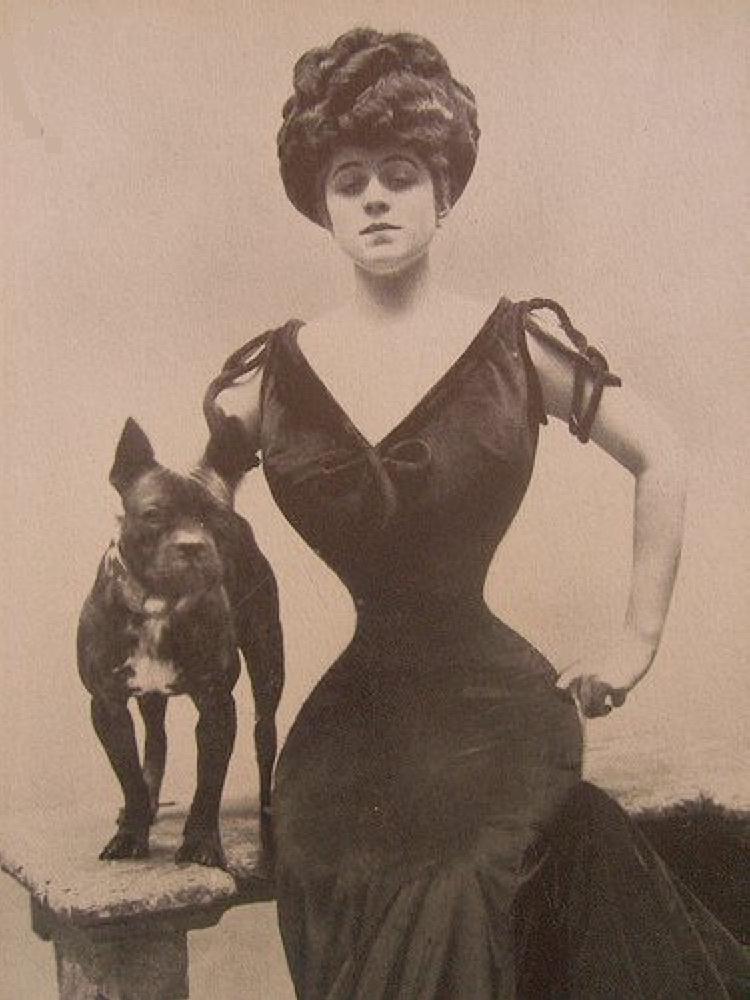
Silent film starlet and fashion icon Valeska Suratt (yes that was her birth name) was born on this date in Owensville, Indiana.  When she was aged 6, her family moved to Terra Haute (a town that is sometimes mistakenly listed as her birth place), she grew up attending schools there, but dropped out in 1899 to go to work in a photography studio.  She eventually made her way to Indianapolis and went to work in the hat department of a department store there.  This lead to making her way to Chicago, which is where her stage career began.  Working in vaudeville until 1906 when she made her Broadway debut in a musical; she would go on to be one of the city's biggest star--due in no small part in her own successful self-promotion.  In fact, she became such a sex symbol that the mayor had one of her productions shut down, deeming it "Salacious."  All during this time, she was noted for her high sense of fashion--both on and off the stage.  And today she is well remembered pretty much for that alone.  That is due in part to the sad fact that not one single film appearance that she made has survived--none.  Yet, one cannot pick up a book on silent films without encountering her photographs in various fashion "get-ups"--many of which were deliberately intended to be "vampy."  Her fashion promotion earned her the nickname "Empress of Fashions."  Suratt signed with Fox in 1915 and made her film debut in The Soul Of Broadway, with Herbert Brenon in the directing chair. What follows below is the complete list of her films, again, all of them sadly lost; and a few of her more memorable fashion moments caught in photographs.  Suratt herself did not make any more motion pictures after 1917 and her star began to fade throughout the 1920's.  The nail in the coffin of her career came when she and Mirza Ahmad Sohrab sued Cecil B. DeMille in 1928 claiming that he had stolen the scenario of King Of Kings--which he had made into a film in 1927--from them.  The suit was settled out of court in 1930, with a gag order attached to it; so no one really knows the outcome (I suspect there was a payout).  The outcome of this case effectively blacklisted Suratt--one of the first of it's kind in Hollywood--it certainly ruined her career!  She was found a short time later living in a run down hotel in New York.  A benefit for her was held by novelist Fannie Hurst, which raised around $2,000.  Suratt disappeared with the money, returning to the same squallid hotel a few weeks later in the same state she was in before the benefit; apparently, she had lost all of the money on gambling.  At one point she tried to sell her self penned memoir to William Randolph Heart; but the manuscript contained so many outlandish claims--such that she was the Virgin Mary and the mother of Jesus--that the attempt failed.  This might give away that she was suffering from some sort of mental illness that was only getting worse; this especially worth speculating on given that her actual faith was Bahá'í.  Not much is known about her life after this, she eventually somehow wound up in a nursing home in Washington D. C., where she died at the age of 80 on the 2nd of July 1962.  She was buried in the Highland Lawn Cemetery in Terra Haute, Indiana with her mother.


For More:


Leave Virtual Flowers @ Find A Grave

Thursday, May 18, 2017

Born Today May 18: Alfred E. Gandolfi


1885-1963

Silent film cinematographer Alfred E. Gandolfi was born on this date in Italy.  Almost nothing is known about his early life, or how he came to the United States.  During his career, he worked at Fox, World, and eventually Goldwyn (the "G" in MGM).  The first film that he is thought to have worked on came in 1914 with The Squaw Man a film co-directed by  Oscar Apfel and Cecil B. DeMille.  The first film that he is known to have worked on came the next year with After Five, again co-directed by Apfel and DeMille.  For some reason, he had a long hiatus in work from 1924 until the early 1930's.  The last film that he worked on the silent era was The Trail Of The Law (1924), an Oscar Apfel directed vehicle.  He did not return to film work until 1931 with the full sound The Viking-- a Canadian film.  The last film he is known to have worked on came the next year with Amore e morte (1932), an Italian language American film.  Gandolfi obviously spent the rest of his life in New York City, where he died at the age 78 on the 9th of June 1963.  There zero information about his life from the 1930's until the 1960's--never mind information about his burial.  


For More:

Sunday, June 5, 2016

Born Today June 5: William Boyd


1895-1972

William Lawrence Boyd was born in Hendrysburg, Ohio, the son of a day laborer and his wife.  The family quickly relocated to Tulsa, Oklahoma, where Boyd would grow up.  When he was quite a young man, he father passed away and he made the move to California and found work as an orange picker.  He would go on to be a tool dresser, surveyor and an auto salesman.  He also found extra work in bit uncredited parts in films; with his first appearance coming in Cecil B. DeMille's Old Wives For New (1918).  At first he seems to have regarded this film work as just another odd job, but when he enlisted in the Army to fight in World War I, he was rejected on grounds of having a week heart, he returned to Hollywood.  Soon more prominent film roles began roll in for him. His first actual credited role seems to have come in 1920 with "carpenter" in The City Of Masks .  In 1923, he was given a small but named/credited role in DeMille's silent version of Adam's Rib; things then started to pick up for him.  By the mid 1920's he was solidly known as a leading man in Hollywood, with a yearly salary to match ($100,000, that is around 1.3 million dollars).  In 1926, he was given the lead role in yet another DeMille film:  The Volga Boatman.  For a time he was DeMille's go to guy.  In 1929 he landed a role as a "Count" in his first sound film, a very early talkie by famed/infamous silent movie directorial pioneer D. W. Griffith, in The Lady Of Pavements.  The last film that he made in the 1920's was the all talking His First Command.  Around this time, another actor with the name William "Stage" Boyd was arrested on charges of gambling and alcohol charges.  The studio that this William Boyd worked for assumed that the news paper article was about him and fired him.  Having squandered his money, he was brought up short and left destitute.  He kicked around Hollywood taking any parts he could land, asking for credit under the name Bill or Billy Boyd to avoid people getting him further mixed up with the other Boyd.  This all changed in 1935, when he was offered a supporting role in the up coming production of Hop-Along Cassidy; he had other ideas.  He asked to be considered for the title role, worked for it and won it.  From then on, he was known to the world as Hop-Along Cassidy.  He would not play any other character for the rest of his acting career.  Eventually the character was given his own television program, which ran from 1952 thru to 1954.  Upon the show's cancellation, Boyd retired from acting.  He then got involved in real estate investing and moved to Palm Desert.  He eventually moved to Laguna Beach, where is died on 12 September in 1972 from heart failure as a severe complication of Parkinson's Disease.  He is interred in a vault at Forest Lawn Memorial Park, along with his widow.  


Leave Virtual Flowers at Find A Grave

Saturday, February 6, 2016

Born Today February 6: Ramon Novarro


1899-1968

Born Jose' Ramón Gil Samaniego in Durango, Mexico to a well off family (his father was a prominent dentist there); the family fled the Mexican Revolution in 1913 and relocated in the Los Angeles area here in the U.S.  His mother, Leonor, was said to be of prominent mixed ancestry and a descendant from the Aztec royal house.  His father's side of the family were pure Castilian.  As a young man in the L.A. area, he decided to study ballet.  By 1917 he had gotten the attention of the movie industry.  He made his motion debut in 1916 in Cecil B. DeMille's epic Joan the Woman as a starving peasant.  By the next year he had steady work in various extra roles; supplementing his income by working as a singing waiter.  By the 1920's, he as being promoted by MGM as a "Latin Lover" type--even as a rival of Rudolph Valentino.  This was done at the urging director Rex Ingram and his wife Alice Terry; early Hollywood friends of Ramon.  It was Terry who suggested that he change his name to "Novarro," though the name had no familial connection and he had plenty of prominent names that he could use that did.  His break through role came in Scaramouche in 1923; a film directed by Rex Ingram.  The film also starred Alice Terry.  By 1925, he had full blown, and well known, leading man status; playing the lead role in Ben-Hur: A Tale of the Christ--his revealing costume causing quite the stir.  After Valentino's untimely demise in 1926, only Novarro was left as Hollywood's Latin Lover.  Oddly he did not make any films in 1926, opting instead for the stage (his work on the stage, is undoubtedly what allowed him to make the transition to talking films).  The Flying Fleet (1929), was his first partial sound film, with the soundtrack and sound effects being provided by Movie Tone.  His next film, the rather infamous The Pagan, in which he plays a "half-caste Pacific islander" who refuses the Christianity of his white father, had a specialized synchronized full musical soundtrack, also by Movie Tone--one of the first of it's kind.  His next role Devil-May Care, based on a French drama, was his first full sound talking film; sound provided by Western Electric.  It also featured on full scene in early 2 strip technicolor.  This would be the last film that he made in the 1920's.  During this time, and through the early 1930's he had prominent roles opposite the greatest leading ladies of their time, including:  Myrna Loy, Greta Garbo, & Lupe Velez; becoming one of the highest paid actors in town.  After his contract with MGM expired in 1935, he made fewer and fewer films; largely retreating from public life.  He developed a drinking problem that was the result of his homosexuality being at odds with his strict Catholic upbringing.  Supposedly, Louis B. Mayer tried on more than one occasion to arrange for a "lavender marriage," the term used for men and women (largely actors) who were gay that marry each other out of convenience; Novarro was having none of it.  Things only got worse for him, when he, and Lupe Velez, Dolores del Rio and James Cagney were all accused of promoting communism in California after they attended a special screening of Russian filmmaker Sergei Eisenstein's ¡Que viva México!.  Fortunately for Novarro, he had used some the hundreds of thousands of dollars he was paid as a leading man to invest smartly in real estate around Hollywood.  His own personal residence as designed by Lloyd Wright, son of Frank Lloyd Wright.  From this he was able to maintain quite an easy lifestyle, working in acting when he felt like it.  It also allowed him to keep a comfortable low profile.  Throughout the rest of his life, he acted sporadically in films and later television, until his horrific death on 30 October in 1968.  Two young men, one a minor and one not (ages 17 and 22)--brothers Tom and Paul Ferguson--were hired by Novarro from an agency for the purposes of sex.  Apparently they thought the actor kept $5000 hidden behind a portrait.  They tied him up and beat him incessantly, demanding to know where the money was (one of them would later deny this part of the story).  Novarro died from asphyxiation on his own blood.  The brothers left the house with the $20 dollars that the actor had in his bath robe.  They were caught, tried and convicted and spent several years in jail, before being released in the 1970's (they were both rearrested several times, and one of them, committed suicide).  Novarro was buried by his sibling under his stage name at the Catholic Calvary Cemetery in Los Angeles as "Beloved Brother."


[Source: AJM (Find a Grave)]


Saturday, January 23, 2016

Born Today January 23: Randolph Scott


1898-1987

Born George Randolph Scott in Orange County, Virginia--his original focus was that of a multi-talented athlete; excelling in such sports as American football, swimming, baseball and horse racing. When World War One broke out, he enlisted at the age of 19 soon after the U.S. entered the conflict, serving with distinction in France.  He later claimed that this had honed his horsemanship and given him experience with firearms, which would serve him well in his chosen field of film acting.  After Armistice he stayed in France and entered artillery school, and was eventually offered a commission; which he turned down.  He returned to the United States in 1919 at the age of 21.  Back home, he attended Georgia Tech, for which he played football; and eventually the University of North Carolina, where he majored in textile engineering.  He eventually dropped out of college to go work as an accountant at the textile firm where his father was employed.  Around 1927, Scott decided that he wanted to act in film and made his way out to Hollywood.  Scott's father had before this, made acquaintances with Howard Hughes, and sent a letter of introduction with his son.  This letter garnered him his very first film role in 1928 in Sharp Shooters, a comedy, starring George O'Brien, as a bit part as a cafe customer in Morocco.  It was the only fully silent film that he appeared in; though his next appearance in another bit part in 1929 in Weary River, had a few sequences that were filmed in the silent mode.  He would appear in 7 more films in 1929, all of them early talkies, in bit parts; including the Gary Cooper western (the first of many that Scott would act in!) The Virginian.  Scott, actually being from Virginia, was said to have been hired as Cooper's voice coach for the film as well.  Around this time, the director Cecil B DeMill gave him the advice that he should get some stage work, so as to hone his acting skills and get him some much needed experience.  He was able to this at the Pasadena Playhouse, where he got roles in at least four plays, including a bit part in a production of Shakespeare's Julius Caesar.   Scott didn't get his first actual named credit in film until 1931.  Although he is best known for his work in westerns, he made all types of films:  everything from romantic comedies to a few horror films, adventure & fantasy films to war movies; however, of his more than 100 appearances in film, 60 of them were westerns.  Later on, the with the U.S.'s entrance into the Second World War, Scott attempted to gain an officer's commission in the marines, but was rejected due to back injuries.  So, instead he supported the war effort by touring with a comedy act with Joe DeRita, who would later go on to be in the Three Stooges, for the Victory Committee.  He also raised food for the government on a ranch that he owned.  The last film that he made was Ride The High Country in 1962; after which he retired from acting.  He lived out the rest of his life on a portfolio of very successful investments that he made during his acting career.  He resided, with his wife, actress, Patricia Stillman in Beverly Hills, where they lived a life of leisure.  Scott died at home from heart and lung ailments on the 2nd of March 1987 at the age of 89.  He is buried in Elmwood Cemetery in the Charlotte, North Carolina area.  


Saturday, September 19, 2015

Born Today September 19: Ricardo Cortez


1900-1977

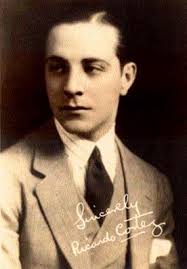
You would think with a name like Ricardo Cortez and the fact that he was born in New York City, he would be  Cuban, Puerto Rican or of some other Caribbean Latin ancestry.  In fact he was born Jacob Krantz to recently immigrated Austrian Jewish parents.  He mother was heavily pregnant with him when the couple made the move to NYC, so many sources incorrectly list his birthplace as Vienna.  The reason for his name change had nothing to do with him personally. With the popularity of the "Latin Lover" type, first made a character type by Rudolph Valentino, who was Italian and other actual Latin actors coming in to fill out roles; due to his genuinely Semitic dark skin color, Hollywood executives actually changed his name (possibly without his knowing it, or at least with some protest) to place him in roles of that sort.  Certainly he was a truly handsome man, and he did bear resemblance to Valentino.  But the incident reminds me a bit of the joke in the Coen Brothers Barton Fink, where Tony Shalhoub's character Ben Geisler mistakes Barton (John Tuturro) for an actor, notices his dark skin and makes a remark about "Indians" (meaning Native Americans), and Barton replies that he's there because he's a writer and Geisler replies "Think about it Fink! Writers come and go, we always need Indians!" (Interesting to me as a side note, because both characters are themselves Jewish).  Before going to Hollywood, and having that abrupt name change, he worked in New York on Wall Street by day and as a amateur boxer by night.  After the move to Hollywood, press kits on him were circulated stating that he had Spanish ancestry, but it wasn't long before rumors arose about his ancestry (now I wonder, did he start them???), so the studios then said he was actually French, finally they admitted his "Viennese" origin, which is why the confusion of his place birth has persisted.  He was married to tragic silent film starlet Alma Rubens until her untimely death in 1931 from pneumonia; but the couple had separated due to her on going drug abuse and instability, she was released from jail just shortly before she caught the cold that eventually led to her death at the age of 33 (she may have been one of the Hollywood Studios first victims of enticed drug addiction--that is a truly dark subject, that was thought to have developed after the silent era).   In all he appeared in 100 films, he was also the second actor to assay the role of Perry Mason, with Warren William being the first.  He went on, to star in films with the likes of Joan Crawford, Bette Davis, Al Jolson and one of the best horror actors of all time Boris Karloff.  Having worked on Wall Street before, when he retired from films he went back to New York and work as a stockbroker at the later infamous (as least for a while) Salomon Brothers.  As a moment of serendipity for me today, checking his credits, I found that archive footage of him was used in two Greta Garbo documentaries (both after his death)--her birthday was just a day before her, and I wrote about her just yesterday. He is interred at Woodlawn Cemetery in The Bronx.

Circa 1935

The Non-Latin Romantic's Early Films

The Fringe Of Society (1927) (scenes deleted, this had to be a real let down for him!  This was to be his first film afterall.  Also has to be one of the earlier cutting room floor incidents in feature films.)


The Next Corner (1924) (Lon Chaney Sr.)

A Society Scandal (1924) (a Gloria Swanson film--love her!!)


Feet Of Clay (1924) (hey the first Jaws film and directed by Cecil D. DeMille to boot.  Take that Spielberg!)

This Woman (1924) (thankfully now a formerly lost film!)  


In The Name Of Love (1925) (also starred Wallace Beery.  Lost film)


Torrent (1925) (this was Greta Garbo's first US film and the last time anyone was ever billed above her...that would by Ricardo Cortez)


The Sorrows Of Satan (1926) (not billed as a horror film, it was directed by D. W. Griffith--but it probably should have been.  Can be viewed as Christian propaganda these days.  At the time it was a over romanticized (surprised surprised) response to Theosophy.  It was adapted from a novel Check out the poster--it's awesome!)


Mockery (1927) (also with Lon Chaney Sr.)


Excess Baggage (1928) (lost film)

The Gun Runner (1928) (lost film)

The Younger Generation  (1929) (Frank Capra directed)

New Orleans (1929) (lost film)

Midstream (1929) (lost film)--was a partial silent with sound effect and musical soundtrack by RCA Photophone System)

The Phantom In The House (1929) (early talkie, sound by RCA Photophone System)

The Lost Zeppelin (1929) (this is a partially lost film that has further footage that has been found--some claim that it complete.  I haven't been able to confirm that.  Would love it if were true.  It is on DVD, but some footage may still be missing due to strange issues with subplots.  Or maybe, it's just a bad script)


Monday, September 7, 2015

Born Today September 7: Roscoe Karns


Roscoe Karns:  1891-1970

Although he is best known for his rapid fire delivery of lines in comedies and crime films of the 1930's and 1940's, with probably his best known role coming in the Frank Capra directed remarriage comedy The Happened One Night (1934) starring Claudette Colbert and Clark Gable, he was a serious silent era actor with his first film role coming in 1915.  There are a whole host of silent era actors who became serious stars that did not come from the theater that had no chance of making the transition to talkies (Theda Bara comes to mind), Karns was something like the exact opposite!  His first stage appearance came at the age of 15.  As for other notable speaking roles that he very, very entertaining in is in the 1940 produced His Girl Friday, another much more straight forward remarriage comedy, directed by Howard Hawks, starring Cary Grant, Rosalind Russell and Ralph Bellamy.  His rapid fire "reporters banter" as "MuCue" with Hildy (Russell) in the press room of the prison serves as a great balance to the antics of her ex-husband Walter Burns (Grant).  He is also one of the only silent era actors of significant note to make it into the world of television; including one show that he was the star of Rocky King:  Detective 1951-1954.  With his wife Mary, he had two children, one of which, Todd Karns (born 1921) went one to have a serious acting career of his own.  He even appeared with his father in Rocky King.  Roscoe is buried in the Hollywood Forever Cemetery.

Roscoe & Todd Karns


Silent Era Work


Down To The Ship To See (1923) (A Pal The Dog short)

The Ten Commandments (1923) (famously remade again by DeMille in 1956)


Dollar Down (1925) (directed by Tod Browning)


Wings (1927) (silent with original score and sound effects by Western Electric Sound System, this one two of the earliest Oscars.)

Ten Modern Commandments (1927) (directed by Dorothy Arzner, one of the earliest female directors.)


The Trail Of '98 (1928) (early talkie silent hybrid, Mono by MovieTone, soundtrack and sound effects by Western.)

Something Always Happens (1928) (haunted house comedy caper)


Warming Up! (1928) (another mono/silent hybrid, but unfortunately also a lost film)


Beggars Of Life (1928) (talkie/silent hybrid, talking scenes and score by MovieTone)


The Shopworn Angel (1928) (talkie/silent hybrid, talking sequences by Western Electric)

The Flying Fleet (1929) (scored silent, soundtrack and sound effects by MovieTone)

Copy (1929) (early talking short, Mono by MovieTone)

This Thing Called Love (1929) (early talkie sound by RCA, hybrid black and white and color film, with color by both Multicolor and Technicolor, but again it is unfortunately a lost film)

New York Nights (1929) (early talkie, sound by Western Electric)