Showing posts with label Edison Co.. Show all posts

Saturday, October 1, 2022

October 1: Uncle Josh in a Spooky Hotel (1900)


The Uncle Josh series by the Edison studio was among the first narrative film series to feature a recurrent character. It was also very much in the slapstick vein. In this film, which runs a little less than 2 minutes, Uncle Josh finds himself in a haunted hotel with a decidedly mischievous ghost and a less than understanding hotel manager.  These films, another of which, Uncle Josh's Nightmare (1900), is in a same narrative ball park, are examples of the very wide influence that French filmmaker Georges Méliès had on early fantasy films. Edison, never to be a "one upped" by anyone, felt the need to make "trick films" in-house. They are fun to watch, but never match the brilliance of Méliès earlier (and later) works. Director Edwin S. Porter was a fine filmmaker in his own right, and left to his own devices, was also an innovator. But in this style of film making, which involved a lot of editing, the finished product comes off as a bit of a lazy rip off. But, still, these little films are fun to watch and deserve their place in American cinematic history as being some of the earliest examples of the fantasy genre produced in the United States. 


(all stills from The Library of Congress)


Sunday, October 24, 2021

Spooktober 24: Little Red Riding Hood (1901)


 I felt it was time to feature some more Méliès, and it is also a good idea to occasionally take the time to turn a little attention to some of his films that are, at present, lost to us. Many only have titles, and are known only by catalog entries; but some, like this one have extant materialsIn this case, all that remains of Méliès Le petit chaperon rouge [Little Red Riding Hood] is one of his drawings. What currently survives of this 1901 short, which was probably released in the spring of 1901 in France, is the color illustration made by Georges Méliès himself of his intents for the final scene of the film. We do know that the film was quite popular as it was released in both the U.K. and the U.S.; though only in the U.K. was it properly promoted. We also know that the film had hand tinting, due to the distribution in England by the Warwick Trading Company, as they had the choice to distribute the film in either color or in black and white. One small hope that we have that a copy may be found, say perhaps in the Library of Congress, in a mislabeled storing is that Edison's company, in all definitions of the word "stole" the film from Star Pictures and promoted it in the United States as an Edison production. Shockingly, laws in the U.S. at the time (written largely due to lobbying by Edison and like companies) permitted this. For this reason, it, ironically, gives film historians and film lovers some hope that copy may turn up under this bogus title.


Wednesday, February 3, 2021

Born Today February 3: Laura Sawyer


 1885-1970


Actress Laura Sawyer, also sometimes known as "the Edison Girl," was born on this day in Iron County, Missouri some 75 miles south of St. Louis.  She was one of several actresses pinned with the moniker, but she was reportedly Thomas Edison's personal favorite actress as the studio.  Not a great deal is known of her childhood, but it is known that she attended a boarding school in St. Louis as a teen. Somewhere along the way, she became interested in/invovled with theatrical acting. Before joining Edison's aging studio in 1911, she worked with Otis Skinner's company (a well rounded actor/director, who was also a Shakespearean specialist). She may have joined Edison in 1911 as a regular actress, but she is listed as appearing in the odd film before that, starting with Cupid's Pranks in 1908 (a film that survives and has been restored). In fact, she is listed as appearing in five Edison shorts before 1911, most directed by J. Searle Dawley or Edwin S. Porter; also in her appearance in the 1910 "political thriller" Through the Clouds,  she plays actor Charles Ogle's daughter (Ogle was kind of the first "man of a thousand faces"). Her first listed film with Edison in 1911 is The Black Bordered Letter, where she again appears with Ogle and British born actor Herbert Prior.  During her formal tenure at Edison, she made some 70+ films in just three years, almost all of them shorts. Her last listed Edison film was The Green Eye of the Yellow God (September 1913), based on a poem, also with Ogle.  It appears that Thomas Edison was not the only admirer of Sawyer as an actress, when Dawley left Edison's employ for Famous Players in 1913, he took Sawyer with him. She appeared in two detective films, in what we would now call shorts (both around 40 minutes long),the films were among the very first Dawley directed at his new production home:  Chelsea 7750 and An Hour Before Dawn in which she plays the lead detective--unheard of at the time.  She then took the character of Detective Kate Kirby into the feature:  The Port of Doom in November 1913.  She only appeared in five more films after this, all of them directed by Dawley. Three, however, were made through production with the short lived Dyreda Art Film Corp. formed by Dawley, J. Parker Read and former Edison man Frank L. Dyer.  She appeared in the company's very first release One of Millions, released in November of 1914. Her last film role came in the melodrama The Daughter of the People in 1915.  All of these titles were also written by Dawley and the last of them was based on a play that he penned.  She then retired from the business, got married and had at least one child, a daughter, who was born in 1920.  She died on the 7th of September in 1970 in Matawan, NJ, at the age of 85.  There is no information on her burial.
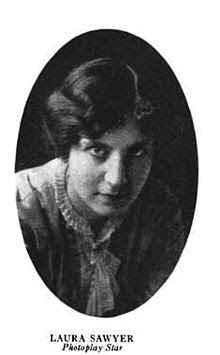

Publicity still from 1913


IMDb 

Wednesday, December 9, 2020

Born Today December 9: Alfred Abadie


1878-1950
 
American still photographer, turned cinematographer and early filmmaker Alfred Camille Abadie (most frequently credited as A. C. Abadie) was born on this day in New York City. Though Abadie was himself an important early filmmaker--who is currently  under-appreciated for his work (as of last year, that is starting to change)--the most famous film he is associated with is one in which he acted. He was part of the large, but completely uncredited, cast of the really famous Edison film The Great Train Robbery, released in 1903 for actual cinema screenings (a late turn for the Edison company away from parlor film).  He is listed as playing the role of sheriff; in the film the longest time duration of his role occurs during the dance hall section. Despite that the film is often cited as the very first narrative film (it's not, but to his credit, director Edwin S. Porter was one of the very first to conceive of films in a narrative style that would have need of what later became the screenplay), it is not exactly a great example of character development--so making Abadie out as the sheriff is not easy. The film was a "first" in one way though--due to it's wild popularity, it could credibly be called the very first "blockbuster."  But it was not Adabie first film association.  Abadie was hired in the film department of Edison manufacturing in 1898 as an assistant. He was a young photographer by trade and his work at the lab was mostly as a camera assistant to Edison filmmaker James H. White.  It is probable that Abadie worked on, and deserves credit for, films produced before the turn of the century. White was responsible for hundreds of Edison productions, most documentary in nature and many dating from around the time that Abadie went to work with him. Actually, it is improbable to think that he wasn't the production assistant responsible for shooting at least a few of these.  But...the first film that we know for certain that he had involvement with came in 1901 when he appeared in the "staged documentary" What Happened on Twenty-Third Street, New York City, another Edwin S. Porter film.  In another first, this was a staged performance that presented itself as a street actuality, but was instead a little comedy featuring Abadie and actress Florence Georgie having her skirt blown up (eat your heart out Marilyn Monroe). Not only have both of the films in which he acted survived, they have both been restored and transferred to disc. What Abadie as a filmmaker specialized in were real actualities--documentary subjects--filmed for Edison both abroad and domestically. As a crafter of films himself, he had a couple of film firsts to his name as well.  One of these was his shooting of the 1903 film Emigrants Landing at Ellis Island; it was chosen in 2019 by the Library of Congress to go on their annual list of 25 films recommended for preservation due to being found "culturally, historically or aesthetically significant."  The film was the very first to capture a ferryboat loaded with immigrant passengers docking at Ellis Island with passenger disembarkation. Many years later, in 1917,  he was deeply involved in the production of the film Birth, which is thought to be the first film of an actual birth of a baby in history (though, I am not sure about the reasons for the making of this film, as it's production company is listed as the "Eugenic Film Company," and that is, I'm sorry, disturbing!). The vast majority of his recorded film career however was during the years 1903 and 1904 under employment with the Edison behemoth. Edison sent him abroad in 1903 to record exotic actualities for the company to show at the screenings of larger, more expensive productions made by the studio. Principally he made these little films in north Africa and parts of the Middle East, especially The Holy Land--though he also traveled and filmed through parts of Europe. The first of these appears to be Market Scene in Cairo, Egypt (1903). Another typical example of one of these films is A Jewish Dance at Jerusalem (1903).  He even made a film of his passage between continents with Crossing the Atlantic (1903).  Back in New York, he shot little documentaries on his own and worked with other well known Edison studio names, such as Edwin S. Porter on Razzle Dazzle (1903), or his own in the staged comic dainty Policeman's Prank on Their Comrade (1903).  He also made a number of films of the aftermath of the fire the leveled downtown Baltimore in February of 1904. One of his last films for Edison was shot in Bliss, Oklahoma: Herding Horses Across a River in the later part of 1904.  Some time after this he left Edison's employ and continued to work as a photographer; he also continued to make independent films, becoming one of the first (if not the very first) filmmaker to produce both educational and industrial instruction films (a catalog of which does not appear to be easily found).  The above mentioned film Birth is the only example of films that we currently have from this part of his career. The film was shot a New York City hospital, so he was evidently still living in the city at that point. At some point later in his life, he went to California. He died in San Francisco at the age of 71 on New Year's Day in 1951. He was buried at the Catholic resting place Holy Cross Catholic Cemetery in Colma, California (located in San Mateo county).


 IMDb

 Find A Grave entry


Saturday, April 6, 2019

Born Today April 6: Lorrin A. Cooke


1831-1902

Lorrin Alanson Cooke, future 57th Governor of Connecticut, was born on this day in New Marlborough, MA. He was educated in Connecticut and was a teacher in Norfolk before becoming a politician.  He was also, from the age of nineteen, a gentleman farmer and a member of the local agricultural society. It is within the society that he got his first taste of running for office, when he was elected president of the society at a relatively young age.  He served in a number of community jobs and elected positions, including state senator and Lt. Governor before becoming governor in 1897. He was in office only two years, leaving on the 4th of January in 1899. During this time, he was the subject of one Edison film (in the form of an early newsreel): Governor Cook and Staff, Connecticut in 1897 (note the Edison Co's misspelling of his last name). The film was made/directed by James H. White, who was head of the Edison production department from 1896 through 1902.  Cooke lived just 3 1/2 years after he left the governor's mansion, dying at the age of 71 in Winstead, Conn. on the 12th of August 1902. He is buried, with his two wives, at the Colebrook Center Cemetery in the Connecticut town of the same name. As with all historical figures, please follow the links posted below if you are interested in learning more about their lives, accomplishments, and why they were of interest as subjects of early film.


Saturday, January 5, 2019

Born Today January 5: J. Stuart Blackton


1875-1941

Founder of Vitagraph studios J. (James) Stuart Blacktin was born on this day in Sheffield, England. His entire family emigrated to the United States ten years later,  changing their last name to Blackton. As a young man, he worked as both a reporter and illustrator at a New York area newspaper (New York Evening World); he supplemented his income by appearing on stage with stage illusionist, later turned filmmaker, Albert E. Smith.  As part of his newspaper duties, he was sent to interview Thomas Edison when the inventor unveiled  his Vitascope projector 1896 (in this regard, Edison was late to the game of film innovation).  Struck with the machine, and owed to Edison wanting a long write-up, he was keen to demonstrate the contraption to Blackton, he took Blackton to the famous Black Maria and filmed him sketching an illustration of his likeness.  Edison actually made two films of Blackton that day, the second of which comes down to us as Blackton Sketches, No. 2 (1896).  Blackton being so impressed with the experience, and owed to Edison's real talent--the art of salesmanship--the illustrator agreed to an investment of sorts in Edison's technology. Blackton and the above mentioned Albert Smith partnered in purchasing a Vitascope from Edison (and a print of the film in which the illustrator appeared) for purposes of making money on their own from paid public exhibition in New York.  Taking a name from the contraption to produce films of their own, Vitagraph Studios was born in 1897, with official name of the company being the American Vitagraph Company. It is hardly surprising that given Blackton's background in newsprint illustration, that Vitagraph would become one of the first major producers of animated films (Blackton starred in films based on the popular comic strip character Happy Hooligan; but these were not what we would regard as animated films). They were also major producers of dramatic narrative film works as well, becoming one of only a handful of major motion picture studios in early film (and, basically, the only one to avoid the lawsuits that Edison flung around like confetti, by purchasing "special licenses" from Edison's company).  They were also one of ten companies to make up the infamous Motion Pictures Patent Company.  Almost all of their films were released to public viewing after the turn of the new century (as far as films listed in their catalog as dating from the late 1890's--most appear to be manufacturing, rather than release dates).  By 1905 the company was well on it's way to being one of the biggest studios in the business.  The company was eventually sold to Warner Brothers in 1925 [Smith's book Two Reels and a Crank gives a very detailed account of the studio and it's complete history as an independent company.] While the company that Blackton helped found was one of the biggest in the early film industry, his personal contribution to the world of film is somewhat over looked.  His genius undeniably lie in animation, and his earliest films made use of tricks first pioneered by the likes of Mélèis, but he would go to invent (or at least partially invent) other forms of animation that would become the mainstay of films for generations.  For example, he basically invented stop-motion animation--even it was by accident (having noticed the effects of industrial steam in a film he shot--he would go on to attempt to reproduce it artificially--which lead to all types of animated images ideas).  I personally do not think that it can be wrong-headed to laud his animation contributions--even if the surviving films of his work don't seem to yield much to praise.  It is no small thing to be a founder of one of the very first major film studios (one whose name continued in use in some form into the 1960's) and to make contributions of any sort to the mechanisms of animation that led to the popularization of that as an independent art form apart from live action. On paper, his credits don't look that distinguished, but note his first directorial efforts are credited in 1897 as Political Cartoon; and all of his earliest work comes in the form of pure animated "cartoon" ideas.  Almost no other director of note started out this way. His directorial contributions continued into the sound era--just barely, but still...what a spansive career (his last direction came on a history of film piece made in England entitled March Of The Movies in 1933). His interest in cartoon artists also lead him to bring some of them to film--the most notable was Winsor McCay who showed up in a Vitagraph short Winsor McCay, the Famous Cartoonist of the N.Y. Herald and His Moving Comics in 1911 (McCay's work had been previously featured as a subject of a now famous surviving Edison short Dream Of A Rarebit Fiend in 1906).  Blackton would also direct some feature silent films that featured famous stars--especially in the 1920's (see for example The Redeeming Sin (1925) starring Alla Nazimova--the film was penned almost entirely by his daughter Marian-- and, she was the writer for most of the melodramas that he directed in the mid 1920's).  He continued to direct for Warner Bros. even after it's acquisition of his company. The first of four films--all contained in the year 1926--that he directed for Warner's was Bride Of The Storm starring Dolores Costello. The last silent film that he directed was a western made for the independent Natural Vision Pictures starring Bessie Love entitled The American in 1927. His life, like many in the business, took a sharp turn for worse in 1929 with the stock market crash. By 1931 he had to declare personal bankruptcy. He died ten years later on the 13th of August, two days after being hit by a bus while crossing a street. He was cremated and interred at Forest Lawn in Glendale. He was 66 years old. At the time of his death, he was working on color processes with famed producer Hal Roach.  All four of his children had some footprint in the film world, but none of them would make as big a mark as his daughter Marian did--as she was a writer in the industry at a time when female writers were at the very least frowned upon.  In addition to his work in the film industry, he was the president of the well known Vitaphone Co.--manufacturer of records players (and vinyl).   He was also a avid boater.


IMDb

Wikipedia

Find A Grave Entry

For More On Vitagraph: Wikipedia

Monday, January 29, 2018

Born Today January 29: Sydney Barton Booth


1877-1937

Sydney Barton Booth, nephew to infamous actor and Presidential assassin John Wilkes Booth, was born on this day in Boston.  The entire family was a theatrical one here in the U.S., with Sydney's grandfather Junius Brutus Booth being an immigrant from England and a stage actor himself.  Sydney was the son of Junius Brutus Booth Jr. and his wife, the popular actress, Agnes Booth.  Sydney was born well after the Civil War and after his Yankee uncle, a northern confederate sympathizer, had shot and killed President Abraham Lincoln.  Undeterred by the history of his family, he chose to follow in the family's footsteps and take to the stage.  He did not, however, appear in film until well after the turn of the century.  It is an irony that his debut role was not only an historical one, but a presidential one to boot.  He appeared in the Edison short The Star Spangled Banner in 1911 at the age of 34 as President James Monroe, opposite Guy Coombs as Francis Scott Key; the film was directed by J. Searle Dawley.  Booth did not stay in pictures for very long; he appears to have had a standard one year contract to work as an actor for the Edison studio for the year 1911.  He appeared in 12 Edison shorts in that year, the last of which was A Modern Cinderella (1911).  In 1913, he penned two film scenarios that made it into production:  The Minister's Temptation and Nora's Boarders, both of which were made for Edison, so it's unclear when he actually wrote them.  He made one additional appearance in a film, that came in the rare-for-it's-day feature length picture Your Girl and Mine: A Woman Suffrage Pay in 1914--a drama produced for Selig.  Booth died in Stanford, Connecticut on the 5th of February, just a few days after his 60th birthday.  He is buried in the Rosedale Cemetery in Manchester-By-The-Sea, Massachusetts.  Booth was married to Elizabeth Synder, a prominent miniature painter.


Leave Virtual Remembrances @ Find A Grave

General Booth information Wikipedia

Monday, June 5, 2017

Born Today June 5: Charles Ogle


1865-1940

Giant of the early silver screen Charles Stanton Ogle was born on this day in Steubenville, Ohio, the son of a minister.  Ogle, of course, was a stage actor before acting in film and he made his successful Broadway debut in 1905. Ogle made his film debut in 1908, when he went to work for the Edison Manufacturing Company under contract--one of the first actors to sign such a contract with a studio (the first studio, no less).  The Boston Tea Party, a short historical drama, was released in July of that year and directed by Edwin S. Porter.  Under this contract he would assay a number of well know roles from works of literature.  Probably the most famous is that of Frankenstein's Monster in the very first film of that book.  Frankenstein dates from 1910 and was directed by J.Serle Dawley.  The film featured some truly impressive special effects for the day; Ogle created the makeup for the role himself--and he did a great job (!)--a tradition that was still going strong in the 1920's (see, for example, the many photos of Lon Chaney Sr. [an actor Ogle would later work with] and his portable make-up kit).

Ogle as The Monster

That same year, Ogle would go on to play the meek, hardworking, rather pathetic Bob Cratchit from Charles Dickens immortal Christmas classic A Christmas Carol  ; he played opposite Marc McDermott's Scrooge (McDermott was actually a much younger actor than Ogle).  He had no shortage of work at Edison!  By 1912, he found himself the star of What Happened To Mary, the first serial ever produced.  With the serial turning out to be a great marketing plan to the public (Edison quickly noticed that they were quite addictive), a larger serial thriller was planned and executed in 1914 with The Man Who Disappeared, both Ogle and McDermott [who was the star] appeared in it.  The last film that he made for Edison was also in 1914, he played Ragnarr in The Viking Queen.  After this, he and his frequent co-star Mary Fuller--who he had been working with since the beginning of his film career--absconded to Victor Film. The company had a distribution deal with Universal, and indeed, the first film that they made for the studio--The Witch Girl (1914)--was distributed by Universal.  By 1917, he was with Jesse L Lasky's company.  The first confirmed feature length film that he is known to have acted in was A Romance Of The Redwood (1917), a Mary Pickford film directed by Cecil B. DeMille; the film is 1 hour 10 minutes long.  In 1920, he appeared as Long John Silver in Treasure Island, a film which also featured Chaney Sr.  Throughout the 1920's he fell easily into character acting; with the last film that he appeared in coming in 1926 with The Flaming Forest.  With his retirement in 1926, in all he had appeared in more than 300 films.  Ogle lived a further 14 years in Long Beach, California, where he died from arteriosclerosis on the 11th of October in 1940.  He is buried at the Forest Lawn Memorial Park.


For More:


Leave Virtual Flowers @ Find A Grave

Saturday, May 13, 2017

Born Today May 13: J. Searle Dawley


1877-1949

The man who considered himself the very first real motion picture director, who the world came to know as J. Searle Dawley, was born James Searle Dawley on this date in Del Norte, Colorado.  I would say that it's more accurate to say that he could be considered the very first director of purely narrative films; but the honor of very first director really should go to the man who hired Dawley at the Edison Co., and that would be Edwin S. Porter.  Dawley at first wanted to break into the acting circuit, securing a position in the acting house run by Louis Morrison; however the tour that he was hired to work on was canceled and his was obliged to return home to Colorado.  This was in 1895 and came just after his high school graduation.  He rejoined the group in 1897, and worked both as a actor and a stage manager for 3 years.  He then left for the vaudeville circuit, with ambitions to become a writer.  He worked there both as a writer and actor, before joining the Spooner company, where he plied all of his talent accrued to date: acting, writing and stage managing.  Having gained attention of the Edison Co. and of Porter, he was hired in 1907 specifically to direct.  This was indeed a first.  He was hired to direct a short film that already had a scenario attached to it:  The Nine Lives Of A Cat became his directorial debut in 1907.  Though D. W. Griffith was two years older than Dawley, he wouldn't make his directorial debut until 1908.  In fact, Dawley would direct Griffith in a film that survives to this day; Rescued From An Eagle's Nest was filmed in 1908, before Griffith made his debut later in the year.  It is a remarkable film, because it contains some of the earliest complicated special effects--films had formally moved on from good old fashioned trick photography.  Some of Dawley's early work in Fort Lee for Edison available on disc include:  A Little Girl Who Didn't Believe In Santa Claus  1907, A Suburbanite's Ingenious Alarm 1908, Fireside Remembrances 1908 (all up to this point co-directed with Porter), and  Cupid's Pranks 1908.  Dawley made the move to California in 1910, earlier than most directors--though he still worked for Edison Manufacturing.  He began to focus of films on works of literature.  He brought works by Twain, the Brothers Grimm, Dickens, Dumas,  and Stevenson amongst others, to the moving picture.  But it would be one work of literature by a female author that Dawley would forever be known for.  In 1910 he made the first ever filmed adaptation of Mary Shelley's Frankenstein.  The film, though a short, features extremely sophisticated special effects--cutting edge for it's time.  


It was released on March 18th and starred Augustus Phillips (in his first film appearance) as Frankenstein and Charles Ogle as his monster.  Being the person chosen to set up Edison in a new studio in the Hollywood area, he also brought in new directors that would go on to have a big impact on silent cinema.  The first non-Edison film that he directed was for Solax (Alice Guy's studio).  The film was Between Two Fires (1912), this was quite a long time before he severed work for Edison.   In 1912 and 1913, he began filming outdoor documentaries, most in Yellowstone National Park, but at least one film was produced in Yosemite as well (Dawley had developed a penchant for photographing and filming in the locations as he made his way from the east coast to the west coast--many of these films were actually filmed during the his time of travel and released later).  In 1913, he made his first film for Zukor's Famous Players, a adaptation of Thomas Hardy's Tess Of The D'Urbervilles.  Though known as a famous silent film director, it should not be forgotten that one of his first skills in the theater was writing, and though he was adept and literary adaptation, he also wrote original scenarios for films as well.  The first of these came in 1909 with The Legend Of Sterling Keep.  In all, he has 40 writing credits to his name.  And though he would never make a film in the sound era, his films were not all silent, in fact, the one credit that he has for cinematographer comes in a De Forest Phononfilm demonstration entitled Adolph Zukor Introduces Phonofilm, a film that has Zukor explaining the Phonofilm sound on film system, it dates from 1923.  In fact, his last 3 films used the De Forest Phonofilm system and were full sound movies:  Abraham Lincoln dates from 1924 and Roger Wolfe Kahn Musical Number dates from 1925.  Dawley's last film came out in 1926:  Brooke Johns and Goodee Montgomery, it is a formally lost and now restored film.  After this, Dawley decided to retire from the movie industry; he eventually made his way over to radio, where he worked successfully through the 1930's.  Dawley would also go on to be one of the founders of an organization to would eventually turn into the Screen Director's Guild.  He certainly influenced a whole host of other directors, both contemporary with him and a younger generation coming into their own when he decided to retire.  Walt Disney mentioned several times how influential Dawley had been for him on multiple levels.  Dawley passed away in Hollywood at the age of 71 on the 30th of March 1949.  Strangely there is no information about a funeral service of any sort.  


For More:

IMDb

Wikipedia