Showing posts with label Charlie Chaplin. Show all posts

Sunday, November 15, 2020

Born Today November 15: James O'Neill


1847-1920


Irish born American actor James O'Neill was born on this day in County Kilkenny, Ireland. O'Neill was primarily a man of the stage, and a handful of films (mostly in the teens) and father of playwright Eugene O'Neill--making him the great grandfather of all eight of Charlie Chaplin and Oona O'Neill Chaplin's children. O'Neill was already famous by the time he made an equally famous film debut. He had been acting professionally since the age of 21, having made his stage debut in Cincinnati. This came about due to the O'Neill family relocating in the Ohio city from Ireland, by way of Buffalo, New York. What made him so well known was not great or high skills in acting--though he was quite good--but that he had become a matinee draw--to the point of becoming an idol. He spent time in touring companies, though he and his wife settled on the west coast in San Francisco, instead of New York, where their eldest son was born. They did return to the east coast shortly after (famous son Eugene was born in New York City).  James became famous for his acting in the stage adaptation of The Count of Monte Cristo; in fact he was so famous for it, his appearances in other plays, including some of Shakespeare's historical works, suffered for it. It is then little surprise that his film debut came as Edmond Dantes in the 1913 film of The Count of Monte Cristo, produced by Famous Players and co-directed by Joseph A. Golden and former Edison man Edwin S. Porter. At the time he made the film he was at what we think of as retirement age now: 65.  He didn't appear in another film for five years, and would only make eight more films in his career.  He was pushing 70 years of age when he appeared in God of Little Children, which was released in the winter of 1917.  It was the first of three films he acted in during that year. Although, he appeared one film in 1918 (The Grain of Dust), his most prolific year acting in films was his last.  The first of four films in 1920 that he had roles in was a short Hoot Gibson western: The Sheriff's Oath, released in February. His last film was also a western, this time a Harry Carey Sr. feature: West is West.  This film was released in November, some three months after O'Neill's death at the age of 72. O'Neill had passed away in New London, Connecticut on the 10th of August.  He was buried locally at Saint Mary Cemetery in a family plot. 
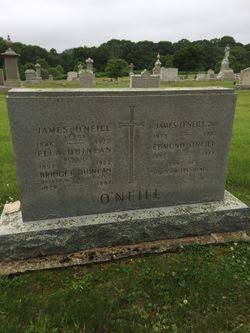
 

[Source: Find A Grave]


[Source: Iain MacFarlaine (Find A Grave)]


IMDb 


Wikipedia 


Find A Grave entry 

Saturday, October 21, 2017

Born Today October 21: Edna Purviance


1895-1958

Actress of the silent era, Olga Edna Purviance, who went by Edna as a performer, was born on this day in Paradise, Nevada. At the time of her birth, her father was a wine supplier to local mines.  When she was three, her parents purchased a hotel in Lovelock, Nevada, but her parents soon divorced and her mother remarried.  Growing up, she learned piano and was quite talented on the instrument.  In 1913, she moved in with her older married sister in San Francisco and started attending business college there.  It just so happened, that at the age of 15, just after she started working as a secretary, she was noticed at a local cafe by an associate of Charlie Chaplin.  Chaplin was working on his film A Night Out (1915) not far from the city, and was in need of a leading lady for the film.  He arranged a meeting with her, and despite some reservations, he cast her in the role of the Headwaiter's Wife anyway.  The two became romantically involved and she was his muse, so to speak, for the next two years, and became a lifelong member of his greater orbit.  She starred in quite a large number of his classic work at Essanay studios and went with him when he gradually started work in his own line of production; in this capacity, she was featured a great number of his non-Essanay classics--these included works at Mutual and National.  The films included the likes of The Vagabond (1916), Easy Street (1917) The Immigrant (1917) and The Adventurer (1917) just to name a few.  In all she appeared in more than 30 Chaplin films, even films such as The Kid in 1921 after their romance was over.  She was the star of Chaplin's A Woman Of Paris: A Drama of Fate in 1923.  The film, however was what we call the perverbial flop, and this went a long way in ending her popularity as an actress.  She was seen as being so closely associated with Chaplin that studios made the assumption that the public would not accept her as a star on her own.  After Woman Of Paris, she would appear in just two more major films in her acting career:  A Woman Of The Sea aka The Sea Gull; a Chaplin production that was directed by Josef von Sternberg and never released (the film is now presumed lost) was made in 1926.  Her last major film appearance during her active career was Education Of A Prince in 1927; the film was really her only starring role outside of the Chaplin production universe.  She then retired and in 1938 married a professional commercial pilot (though they never had any children).  She did appear in two uncredited roles much later on--both of the films were Chaplin films.  Her role as Mrs. Parker his 1952  Limelight being her last time in front of the camera. Purviance died from throat cancer on either the 11th or 13th of January in the Motion Picture Country Hospital in Hollywood.  She was interred at Grand View Memorial Park in Glendale, CA.  


Sunday, April 16, 2017

Born Today April 16: Charlie Chaplin


1889-1977

Giant of the silver screen and silent megastar Charlie Chaplin (birth name Charles Spencer Chaplin) was born on this day in the Walworth area of London, England, UK.  His parents were music hall entertainers, so acting and the stage was literally in his blood.  Though his parents separated when he was very young and his mother's acting career was never successful, therefore, he grew up in poverty, and was even sent to a workhouse more than once.  Chaplin and his brother were sent to at least two schools for paupers, places that he later remembered as sad and soul crushing places to be "schooled."  Things only got worse when, while his mother was convalescing in a public mental institution, he and his brother were sent to live with their alcoholic father, who was so abusive that the National Prevention of Cruelty to Children even paid a visit--a rarity in that day.  His mother would recover, but only for a time and eventually was permanently institutionalized.  This period in Chaplin's life were particularly hard, especially after his brother entered the Navy.  He was a one point homeless and still a young teenager.  Still, by this time, he had also already started to perform on the stage.  In fact, according him, it was his mother that introduced him to the stage at the age of five.  Acting became an active interest to the youngster, something that his mother was said to have encouraged before her hospitalizations.  At 14, he registered with a theatrical agent in London's West End.  Things slowly began to turn around for him.  His first major role came in the play Sherlock Holmes in which he played the pageboy; the play toured nationally.  He stayed in the role until 1906.  By this time his brother Sydney was also pursuing an acting career and the two embarked on a comedy tour together entitled Repairs.  By the age of 18, young Charles had become a seasoned comedic actor with good reviews to his name.  In 1906, Sydney Chaplin had signed with the successful company owned by Fred Karno.  Sydney persuaded Karno to hire his younger brother.  Though Karno was at first reluctant; after Charlie's first performance, Karno was won over.  By 1909, he was a star at the company, and in 1910 he was given a new sketch Jimmy The Fearless, which turned out to be a huge success and had wide positive write-ups in the press.  It this that lead to the decision that Charlie would be one of the company's actors to tour on the vaudeville circuit in North America.  The tour lasted 21 months, and had wide spread positive reviews.  It's success brought another North American tour, and it was at this time that film work entered into Chaplin's life.  About half way through the tour, the New York Motion Picture Company, which operated Keystone Studios, invited him to join.  Though Chaplin didn't think all that highly of the slapstick comedies that Keystone produced, he knew it would be madness not to accept the offer.  Of course, it's history in the making and Chaplin would never have to worry about finances again.  He signed a contract with them for $150 dollars a week (roughly a little over $3600 in today's money). Chaplin arrived in Hollywood where the studio was located in December of 1913.  Despite that his boss Mack Sennett had concerns about Chaplin looking too young, Charles made is film debut in Making A Living in very early February.  He was off on the road to serious comedic history.  There is some confusion about what film came next; many sources site Mabel's Strange Predicament (1914), others that it was Kid Auto Races At Venice (1914).  Whatever the case, the later of these two films introduced his ultra-famous "Tramp" character.  During this period of time, though uncredited, he contributed a great deal to sketches--most of them Mabel Norman films; in fact, he has far more writing credits than acting ones.  He apparently didn't along very well with Norman and when he clashed with her on set, he was almost booted from his contract.  Nonetheless, he kept his contract  and made his directorial debut in Caught In The Rain in May of 1914--thereafter he would direct nearly all the films that he appeared in for Keystone (Tillie's Punctured Romance was notably not among them).  When his contract was up, he asked Sennett to up his weekly salary to $1,000 (around $24,200 in today's money); Sennett refused.  Chaplin was quickly snapped up by Essanay, for a whopping $1,250 a week and a signing bonus of $10,000.  This was December of 1914.  Here he would make some his most famous early silent films, including The Bank (1915) and The Tramp (1915), both of which he directed.  When his contract was up at Essanay at the end of 1915, Chaplin was well aware of his bankability and shopped his contract around, requesting a $150,000 signing contract.  The best offer came from the Mutual Film Company, with the giant sum of $10,000 a week.  He wound up with a contract with them that would pay him by the year at $670,000 a year!   He was just 26 years old.  Mutual gave Chaplin his own studio to boot. There he made such classics as Easy Street (1917)The Immigrant (1917), and The Adventurer (1917).  Chaplin would later recall that his time at Mutual was the happiest of his career.  However, when his contract was up, he chose to become a free agent--his own producer.  He founded Charles Chaplin Productions under the auspices of First National with an agreement to produce 8 films for them in exchange for $1 Million dollars.  He chose to build his own studio on Sunset Blvd.  Probably the well known film that he made under this contract was A Dog's Life (1919).  First National became frustrated with Chaplin's slowing pace in making films, so when Chaplin requested more money from them after making Shoulder Arms in 1918 (it would later be reissued in 1959 in a mono version), they refused any increase in funds.  Angry over this, Chaplin teamed up with Mary Pickford, Douglas Fairbanks, and famed director D.W. Griffith to form United Artists.  The first film that he made with this new arrangement was Sunnyside in 1919, which he also used to count toward his 8 films for First National (this film was also reissued in a Mono version).  Chaplin then could work in his own pace.  As his brother Syd had explained, Charlie wanted quality over quantity.  In 1921, he made The Kid with a very young Jackie Coogan later of "Addams Family" Uncle Fester fame--this was pure Chaplin gold.  Between this time and 1931, Chaplin would produce the silents he most famously associated with, even by those who don't know much about silent film.  Among them are: Idle Hands (1921)Pay Day (1922)The Gold Rush (1925) and the very, very late silent classic City Lights (1931).  At least a couple of these films were made to fully fulfill his contract with First National, but there was no doubt that having formed the United Artists partnership allowed Chaplin to work fully at his own pace during this time.  After 1923, began making full length films as well, with The Pilgrim being his last short (though at 47 minutes long, it's not really all that short).  He would not make another film until 1936, hewing very closely to his comedic silent acting style that he had so famously created.  Modern Times is listed as a Mono film, but recorded with the unique Western Electric Noiseless Recording Sound System; there is very little dialogue in it, rendering basically a very late silent type film.  By the late 1930's Chaplin's popularity had begun to wane and legal and personal problems were on the rise. When people started to remark that his on-screen appearance looking remarkably like the troubling leader of Germany: Adolf Hitler; Chaplin responded by making The Dictator in 1940.  He then gained the very unwanted attention of J. Edgar Hoover, who was determined to go after him because he believed Chaplin was (erroneously) a communist. It did not help that the Nazi party itself was under the misapprehension that Chaplin was Jewish.  He would  go on to make just four more films in his long lifetime, 3 of them in 40's and 50's, with the last coming in 1967.  A Countess From Hong Kong starred Marlon Brando and Sophia Loren, with bit part for him and his brother Syd; the script was based one that he had written for his then 3rd wife Paulette Goddard.  By this time he had long been living in Europe, having been banned from re-entry into the United States in 1952.  Starting in the 1960's Chaplin's health began to seriously deteriorate, having had a series of small strokes.  In 1972 he was offered an Honorary Academy Award, that despite his ill health, he traveled back to the U.S. to accept.  He planned to write and direct more films in the 1970's, but he suffered several more small strokes and was confined to a wheelchair, with his communication abilities effected.  Chaplin died in his Switzerland home after suffering yet another stroke during the night on Christmas Day in 1977.  He was 88 years old.  He was buried in the Corsier Cemetery in Corsier-sur-Vevey Switzerland; his fourth and final wife Oona O'Neill Chaplin  (daughter of playwright Eugene O'Neill) would join him there in 1991.  In a bizarre event that occurred the following March, two Polish immigrants dug up his coffin and tried to ransom his body back to his widow; a scheme that she rejected, saying that her husband would found the whole affair absurd.  Eventually the police were able to recover it and it was re-interred with a cement vault added.  Chaplin was also knighted during his life-time being Queen Elizabeth II.  Several of his children have gone into various aspects of the entertainment industry as well.


For More:


Leave Virtual Flowers @ Find A Grave

Monday, September 19, 2016

Born Today September 19: Ben Turpin


1869-1940

Bernard Turpin was born today in New Orleans, LA the child of a candy store owner.  Having been born long before the invention of the moving picture, he obviously got his start on the stage; which in  his case came in the form of various traveling shows.  He possessed a body type and face that lent itself to comedic work, with one of his eyes permanently crossed (later in his life, he famously--and comically--took out an insurance policy with Lloyd's of London in case his eyes straightened out), and an oversized handle bar mustache.  In the early days of his career, he found work in circuses, vaudeville and burlesque.  He developed an exaggerated form of physical comedy that laid the ground work for what we now call "slapstick;" and was this talent that eventually got him into the motion picture business.  He made his film debut in 1907 in a comedic short that he was specifically cast for:  An Awful Skate, or, The Hobo On Roller Skates.  From this point onward, he starred in a series of slapstick comedy shorts, making him a huge star of the silent cinema, even playing roles such a "The Tramp" long before one Charlie Chaplin would take up that comedic identity. In fact, the company that introduced Turpin to the moving image was Essanay, who would later employ Chaplin, who became their biggest star until his departure bankrupted the studio.  This is when things began to deteriorate between Turpin and Essanay.  As soon has they hired Chaplin, they made Turpin his comedic side-kick, setting up his characters as mere foils for which Chaplin could play off of.  Turpin was naturally insulted by this.   In 1917 he went to work for the king of comedy Mack Sennett. Turpin signed a very lucrative contract the the Mack Sennett Studios.   Much to Turpin's delight, he quickly became one of their biggest stars; so much so, that he began to introduce himself as "I'm Ben Turpin, I make $3000 a week!"  He worked steadily up through the invention of talkies, at which time--owed to good investments--he chose to retire from the industry, rather than attempt to make the transition to talking cinema.  Still, he was sought out for cameo comedy appearances in films regularly.  In 1935 he, and other stars from the silent comedy era (including Chester Conklin and Ford Sterling), starred in Keystone Hotel; it was his only starring role in the sound era.  The last film that he appeared in, very briefly, was Laurel and Hardy's Saps At Sea (1940).  He was set to make a cameo appearance in Charlie Chaplin's The Great Dictator (1940), but Turpin died of a sudden heart attack at the age of 70 on the first of July before filming started.  He is interred at Forest Lawn Memorial Park in Glendale, CA.  


Wednesday, December 9, 2015

Born Today December 9: Douglas Fairbanks Jr.


1909-2000

Born Douglas Elton Fairbanks Jr. in New York City the his famous actor father Douglas Fairbanks Sr.--he was the only from Fairbanks Sr.'s first marriage.  After his parents divorce when he was just 9 years of age, he lived with his mother in various large cities, both here in the US and in Europe.  His first film role came in 1916 in a bit role in one of his father's films American Aristocracy , when he was just 7.  He didn't appear in another film until 1921, when he was 12.  Both of these roles went uncredited.  Two years later, because his father was one of the very first Hollywood icons of film, Fairbanks Jr. was given a contract at Paramount just because of his name:  he was 14 years old at the time.  The first film that he made under that contract was Stephen Steps Out (1923); not only was this his first credited role, he actually got top billing--even over Noah Beery!  Many of his performances in under this contract were pretty unimpressive.  He fell from top billing to supporting roles for the most part.  Though he did have steady work through the silent 1920's.  He is said to have be disillusioned with the motion picture industry, so he took to the stage instead.  There his acting skills improved vastly; reportedly even impressing his father.  It is said that it was his famous stepmother Mary Pickford and family friend Charlie Chaplin that encouraged him to continue his acting career in film.  By the late 1920's he was a well established film actor in his own right, and was back to top billed roles.  His first partial sound film came in 1928 with The Toilers, with the musical score and sound effects provided by the RCA Photophone System.  Also in 1928 he starred in The Barker, which had a silent version and a full mono alternative version--this was his first speaking role on film.  His first full sound film came later that same year with the very famous early talkie A Woman of Affairs (1928), starring the great Greta Garbo.  During World War II he became a highly decorated Naval officer, earning the Distinguished Service Cross from the UK Naval because he was the head the Beach Jumpers program.  He was later appointed a KBE, Most Excellent Order of the British Empire by the King of Great Britain, for this wartime service.  One of his last roles came in one of my favorite ghost films of all time Ghost Story (1981), as Charles Edward Wanderley.  His very last role came in 1989 in a episode of the television show B. L. Stryker.  Fairbanks Jr. passed away in the city of his birth, at the age of 90 on 7 May 2000.  His body was shipped back to Los Angeles, where he is interred in tomb with his famous father, at the equally famous Hollywood Forever Cemetery.


Friday, December 4, 2015

Born Today December 4: Lloyd Bacon


1889-1955

Born Lloyd Frances Bacon in San Jose, CA, the son a famous stage actor Frank Bacon, who managed to live just long enough to have a turn performances in early motion pictures himself.  Lloyd's film debut was in a Broncho Billy film, a franchise in which he would continue to act in; the year was 1915.  He was also a frequent actor in early Charlie Chaplin films.  As a matter of fact, he was in a lot of very classic early Chaplin short films, including The Tramp (1915).  He acted all the way through the 1920's with great frequency, but acted in only film in the 1930's.  That would be Broadway Gondolier, a musical made in 1935, which he also directed.  This was his last acting credit, when then became a very successful director.  He actually made his directorial debut in the early 1920's; in 1922 he directed The Speeder a short film that he also starred in.  The first film that he directed that he did not act in also came in 1922, another short entitled The Educator.  His directing career in the 1920's was probably more prolific than was his acting career, in fact.  In the 1930's and 1940's, he directed some very famous films.  An early hit for him was 42 Street (1933).  He continued to direct films right up until the time of his death, when on the 15th of November 1955 he passed away suddenly from a cerebral hemorrhage at the age of 65, in Burbank, CA.  He is buried in Forest Lawn Memorial Park in Hollywood Hills.

Bacon with Chaplin


Tuesday, September 8, 2015

Born Today September 8: Peter Sellers


Peter Sellers:  1925-1980

This may be a bit of a head-scratcher, because, though Sellers was born in 1925, he was not a child actor, so it begs the question what is he doing here on a silent blog.  We love the the strangeness around here, and this one is a bit "Wierd" for sure.  Sellers for role in a film was in 1950, in a uncredited voice part in the film The Black Rose, however...in 1951, he provided the sound narration for the (inversely numbered) 1915 Charlie Chaplin short film Burlesque On Carmen, and is credited as such in the historical record under the film original release year.  Cheat a bit, but only because it's interesting.  He cremated at Golders Green Crematorium in Golders Green, Greater London, England, and his ashes were buried under a rose bush in the gardens there--there is a marker.

A Burlesque On Carmen (1915)

A quite young Peter Sellers