Showing posts with label Alfred Hitchcock. Show all posts

Monday, December 21, 2020

Born Today December 21: Robin Irvine


1901-1933


British stage and screen actor Robin Irvine was born Leslie Robins Irvine on this day in London--in the Stoke Newington area of Hackney.  He made his acting debut on the stage in 1918 while still at school, subsequently making his professional stage debut in London in 1923.  Just two years later, he made his film debut in a supporting role in the fantasy drama The Secret Kingdom starring Canadian born actor Matheson Lang, whom resembled Irvine to the point of being a bit scary, a brilliant bit of casting, since Irvine was playing the son in the film. He did not make another film for two years; when, in 1927, he shows up in the lesser known Alfred Hitchcock film Downhill (also known as When Boys Leave Home) in another supporting role, this time to Ivor Novello's lead. Also appearing in this film is actress Isabel Jeans, who would become an early Hitchcock muse; her sister Ursula would marry Irvine in 1931.  He appered again in another Hitchcock film with Isabel Jeans that same year. Easy Virtue, released in August of 1927, is a more well known Hitchcock silent film (widely available!) based on the Coward play of the same name, Jeans takes the lead, opposite Franklin Dyall, with Irvine again supporting in the role of John Whittaker. By the end of 1928 he had been in five more films when he appeared in an early British sound film The Intruder, a nine minute comedy produced by British Sound Film Productions.  In 1929 (having gone to Germany to work), he appeared in Maurice Tourneur's 2 hour long German production The Ship of Lost Men (Das Schiff der verlorenen Menschen) featuring Fritz Kortner and Marlene Dietrich in the lead roles, it was his last film of the decade, but not his last silent film. Sound films were later coming to the continent than they were to the British Isles; and in 1930, he had a role in the Erich Schönfelder film Fräulein Lausbub, which was released very early into the brand new decade--it was a fully silent film release.  Back in Britain, he had the lead role in the 40 minute full sound comedy Leave It to Me; filmed at Twickenham studios; it was the production of George King Productions, founded by the film's director George King. He would appear in just two more films in his life time, the last of which was the comedy Above Rubies, released in July of 1932.  He accompanied his wife to New York in 1933, where she made her stage debut. The were in the process of returning to England via Bermuda when Irvine developed a fever from some sort of infection that developed into pleurisy that killed him rather quickly. He died in Bermuda on the 28th of April, 1933 at just the age of 31.  Specific details of his burial are currently unknown, but it is known that his remains were returned to England and he is buried somewhere in the greater London area.  His wife Ursula would remarry; she married Welsh actor Roger Livesey and together the two of them share a memorial plaque at The Actor's Church: Saint Paul's Covent Garden.


Still from Downhill


IMDb 


Find A Grave entry 

Tuesday, December 1, 2020

Born Today December 1: Cyril Ritchard


1898-1977


Australian born character actor (and occasional director) Cyril Ritchard (Cyril Joseph Trimnell-Ritchard) was born on this day in Surry Hills, Australia (a suburb of Sydney). Educated in Sydney by Jesuits and studied medicine at the Sydney University. He completed his studies and briefly went into medicine, but had a long love of non-professional acting and decided in 1917 to take that passion pro.  After a couple of years of fits and starts, he went on a professional tour in New Zealand as a dancer, where he and his dancing partner--one Madge Elliott--appeared in musicals. Sometime after 1918 he immigrated to the New York City area and took up stage acting there. In the mid-1920's he left the U.S. for the stage in London, reuniting with Elliot there; they would eventually marry some ten years later.  Though both of them were actors of the stage and Ritchard was also a talented director of stage production--especially comedy musicals--both did have film careers--his longer than hers. They both made their film debut in On With The Dance in 1927 while living in the UK. It is listed as a silent film, but it is also a lost film, so it is possible that it was some sort of early sound musical dance short (or possibly a "phonofilm" in which an accompanying disc was played along with the film at screening); it is equally possible that it was actually silent with proscribed soundtrack listing.  He appeared in just two more films in the 1920's; both of which were films with some type of sound and both were released in 1929.  The first of these was the large budget BIP production Piccadilly, which survives and has been released on disc.  While Piccadilly is a pretty famous late 1920's film, Ritchard's next film is one of the most famous releases of 1929.  He both acted in and contributed his first musical number in a film to Alfred Hitchcock's all sound crime thriller Blackmail, released in October of that year. His next film appearance did not come until well over a year after, when he appeared in the U.K. musical Just For A Song, released in December of 1930. In 1937, two years after his marriage to Elliott, he appeared in two very early television shorts, one of which--Pasquinade--was an early BBC production starring Herminone Baddeley. His first appearance in an actual television series came is in the U.S. variety series The Billy Rose Show in the 1951 episode Duet for Two Actors, in which he appeared along side Frank Albertson, who would go on less than ten years later to play the "dirty old man" Tom Cassidy in Hitchcock's Psycho. All of his appearances after this up until 1966 were on the small screen, including a made-for-television film of his stage role as Capt. Hook in a musical production of Peter Pan in 1955 (he won a Tony for his role in the live stage production). In 1966 he provided voice work on the animated anthology The Daydreamer, based on the writings of Hans Christian Andersen, which also featured silent era star Tallulah Bankhead.  He there after made appearances mostly on television, including multiple appearances on The Red Skelton Hour. His last role came in the 1977 animated film The Hobbit, made for television by ABC and aired on the 27th of November.  He passed away less than a month later on the 18th of December of that year at the age of 79.  He passed away in his adopted home city of Chicago and was buried at Saint Mary's Cemetery in Ridgefield, Connecticut, along with his beloved wife, who had passed in 1955, preceding him in death by over twenty years. 


[Source: Jack Sanders (Find A Grave)]


His wedding to Madge Elliott


Wikipedia 

IMDb  

Find A Grave entry 

Thursday, January 30, 2020

Born Today January 30: Seymour Hicks


1871-1949

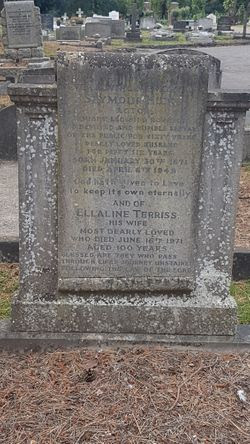
Though Seymour Hicks is most immediately identifiable as a British actor, and one closely associated with the character of Ebenezer Scrooge from 1935 (he was first filmed in that role in 1913), which he played when he was 64, Hicks was actually born in the Channel Islands. Precisely: St. Hélier, Jersey.  This may seem like a difference without a distinction, but in Hicks' case it meant that he also had a very successful acting career in France, as well as the UK. Born Edward Seymour Hicks on this day; by the end of his career, he was not just a highly regarded and knighted actor, he had also produced both films and plays, was an accomplished musician and writer of both plays are screenplays. Hicks started acting as a child while at school in England and he made his professional debut on the stage at the age of 16.  By the age of 20, he was already a member of an acting company that toured in the United States.  He was one the first actors to portray Dr. Watson of Sherlock Holmes fame, though not in a staged performance of Conan Doyle's original material, but rather in a parody of his famous detective penned in part by Hicks himself.  Long before his film career (which really became a kind of addendum to his greater acting career), Hicks had already done just about everything that a person could in the world of theater, including managing and even building not one, but two, theaters that are still standing today (The Hicks--now The Gielgud--in London and The Aldwych in Westminster). Even after his film appearances began, he and his actress wife Ellaline Terriss continued in theater.  Mentioned above, Hicks appeared in Old Scrooge in 1913; this actually his film acting debut; he also adapted the Dickens piece for the film as well (Hicks first appeared as himself on film in 1907 in the comedic short Seymour Hicks Edits 'The Tatler').  He also appeared in the 1913 film David Garrick.  Both films were directed by Leedham Bantock.  Hicks' film career ran from 1913 until 1949, during this period of time he only appeared in a little over 20 films, with only five of them in the silent era. His writing credits in the field number almost as many.  He did not appear in a feature length film until 1927 (his last silent film), when he had a small part in the war drama Blighty, the star of which was his wife Ellaline.  Hicks also managed to direct a couple of films, the first of which officially is also his first talking film:  Sleeping Partners in 1930--Hicks, also adapted and starred in the film (Hicks is one of two uncredited directors on the 1923 picture Always Tell Your Wife--on which he garnered his only producer credit, when director Hugh Croise stormed off the set--the other uncredited director was a little known new comer to films: Alfred Hitchcock).  Hicks' last film appearance came in a film that was released after his death in 1949 in Silent Dust which was released in December of that year.  Hicks had died earlier in the year on the 6th of April at the age of 78. He is  buried at Fleet Cemetery in the English township of the same name, located in Hampshire. 

Still from Old Scrooge (1913)


[Source: fionamac (Find A Grave)]


Sunday, August 13, 2017

Born Today August 13: Alfred Hitchcock


1899-1980

One of the world's best known directors of suspense and even horror, Alfred Joseph Hitchcock, was born on this day in Leytonstone, Essex, England (now part of London).  He was the son of shop merchant (greengrocer and poultry seller).  He was raised Roman Catholic and schooled in catholic institutions in the London area.  He had trouble with his weight from the start and often described this as an alienating factor in his childhood, despite that he was the sheltered youngest child of three.  It occasioned that despite this favor, his father could be quite cruel.  Hitchcock claimed that his father once sent him to the local police station with a note he had written asking that young Alfred by locked up for five minutes; this Hitchcock claimed instilled in him a life long fear and general negative view of police officers.  He was only five years old.  After graduating from engineering school he became a draftsman and an advertising designer--a skill that would serve him well later in life in his famous story-boarding of films.  When World War I broke out, he was called up to service with the army.  His weight, however, ultimately kept him from serving actively; he did, however, serve at garrisons at home.  In this capacity, he joined the regiment of Royal Engineers as a cadet.  It was when he was working at an electrical cable company as an advertising designer that he began to tinker with creative writing.  The company, Henley's, began an in-house publication called The Henley Telegraph in 1919.  Hitchcock began submitting short articles, his first piece "Gas" was featured in the first edition.  He had already developed a fascination with the motion picture industry.  That same year he was determined to enter the business, and he found work as a title card designer for the Famous Players-Lasky, which by then was a part of Paramount--Hitchcock worked for them at Islington Studios.  When Famous Players left the UK in 1922, Hitchcock remained on the studio's pay-roll as part of the staff.  It appears that the first film that Hitchcock actually worked on was The Great Day (1920) as a title designer while still a Paramount employee.  This is a fascinating part of Hitchcock's time in the film industry that gets little attention; at first blush, "title card designer" does not sound terribly exciting, but when one looks at the films he worked on during this time, one can find influences on his later work.  By 1922, he working on more than just title cards and had begun giving active input on art direction.  The first title that he is absolutely known to have worked on in this capacity is Three Live Ghosts, though there may well have been titles before this.  Also in 1922 came his first directing job on the unfinished project Number 13 made under what would become Gainsborough Pictures (the title is thought to be Hitchcock's personal working title for the film).  The budget for the production--two reels of which were shot--ran out and was thus shut down (Hitchcock was said to have raised some funds for the film from his own family); apparently the nitrate was then melted to extract the silver for re-use.  However, some production stills, in the form of photographs, do still exist--as does a photograph of Hitchcock directing it.  The film has become a legend of it's own in the last few decades, what with wholly unsubstantiated rumors of copies in mysterious private collections, right down to it's inspiring it's own film by the same name starring Dan Folger as Hitchcock--ironically, like it's original namesake, the film was never finished for many of the same reasons (hey...what if there is a "Number 13 curse"....doubt it).

Still from Number 13

First known photograph of Hitchcock directing.

Unknown to a lot of Hitchcock fans, he also has a fair number of original writing credits to his name dating from the early twenties quite apart from pictures that he would direct.  One of the earliest is the now lost Woman To Woman (1923), directed by Graham Cutts for Balcon, Freedman & Saville (who would rename themselves Gainsborough).  Hitchcock was famous for making cameo appearances in his own films; this practice actually started in his most famous silent film The Lodger (original title The Lodger: A Story of the London Fog).  In all Hitchcock would make/direct 12 films in the silent era (techinally 13 if you add in a filmed sound check), including one of the most important early sound films in Britain Blackmail (incidentally this is the film for which the 1 minute sound test was filmed; also there is a fully silent version that has been restored). [List of his silent films from the 1920's can be found below.]


Hitchcock's first film cameo

Hitchcock would, of course, go on to be one the most formative and well know film makers of twentieth century.  It is beyond the scope of this silent blog to tackle that, however, a few milestones in his life as a film maker and director can be easily pointed out without becoming too tedious. 

Scene from Blackmail (1929)

The first film that Hitchcock made in the 1930's was Murder! (1930) starring Herbert Marshall.  He experimented with extensive special effects in Number 17 (1932) (one of my favorites).  His The Man Who Wasn't There (1934) featuring Peter Lorre, would be a film he would remake in 1956 with Jimmy Stewart and Doris Day.  His first U.S. production was Rebecca in 1940 for Selznick International Pictures.  His first actual horror film (a genre that he is well associated with today) was actually Psycho in 1960; despite that his Alfred Hitchcock Presents, of which he was the host, premiered on broadcast television in 1955--the show certainly touched on horror elements.  The Birds was a main influence on the late George A. Romero's 1968 The Night of the Living Dead, along with The Last Man on Earth (1964) starring Vincent Price. His next to last film, Frenzy (1972), saw him return to his native Britain for production.  His last film, Family Plot (1976), was a comedy thriller romp starring Karen Black and Bruce Dern.  It was made for Universal and saw his return to Hollywood.  During this period of time, he was intending on making another spy thriller entitled The Short Night, but due to his declining health, and that of his wife Alma, the project was never filmed.  Hitchcock eventually succumbed to full renal failure in his Bel Air home on the 30th of April, 1980.  After his funeral mass, his remains were cremated and scattered over the Pacific ocean.

Directing his lost film The Mountain Eagle.


Number 13 1922 (unfinished, lost)

Always Tell Your Wife 1923 (short)


The Mountain Eagle 1926 (famously lost)

The Lodger (1927)

The Ring (1927)


Easy Virtue (1928)

Champagne (1928)

The Manxman (1929)

Still from his last silent film The Manxman

For More:


Friday, March 10, 2017

Born Today March 10: Barry Fitzgerald


1888-1961

Irish actor Barry Fitzgerald was born on this date in Dublin (birth name:  William Joseph Shields) to an Irish father and a German mother.  He was educated to enter the banking industry and did become a civil servant.  He was working at the Abbey Theater at the same time.  His tenure as an actor at that theater lasted from 1914-1936.  In the silent era, he appeared in two British films--only one of which was actually silent.  The first of these came in 1924 with Land Of Her Fathers.  The second was an early sound film by Alfred Hitchcock released in 1929; The Shame Of Mary Boyle, better known by it's alternative name Juno And The Paycock. By the late 1930's, he had made the move to Hollywood and found regular work there as a beloved character actor.  In 1959, he retired and returned to his native Dublin and assumed his birth name.  He passed away there on the 14th of January in 1961 of a heart attack, he was 72 years old.  He was the older brother of actor Arthur Shields.  He is buried there in Deansgrange Cemetery, next to his brother Arthur.

He and his brother's graves in Dublin, Ireland

Close up of his tombstone bearing his birth name


For More:


Leave Virtual Flowers @ Find A Grave

Sunday, May 15, 2016

Born Today May 15: Anny Ondra


1903-1987

Born Anny Sophie Ondrákóva in Tarnów, Galicia--then part of the Austro-Hungarian Empire, now part of Poland; her father was Czech by ancestry and was an officer in the Austro-Hungarian military.  She grew up in Prague.  She got into stage acting as a teenager, and my the age of 16 she had made her first film Palimpsest, which is sadly a lost film.  There is a great deal of confusion over this lost drama.  For starters, many sources say that she was 17 instead 16 when she secretly agreed to star in this Czechoslovakian film.  Additionally, there is confusion as to who directed it, some sources cite her boyfriend at the time Karel (sometimes credited as Carl) Lamac, he is sometimes credited as an actor in the film; other sources cite Joe Jencík, but this is unlikely because it was Lamac that was the director by profession and Jencík was the actor.  In fact, this is the ONLY director credit for Jencík, which is suspicious. To make things more confusing, Lamac's name when applied to the film is often listed as Karell Lamatch.  Whatever the truth, when Anny's father found about her appearance in the film, he gave her a beating.  As she was billed under her real name, her family was intensely embarrassed by it.  As a military man, her father was outraged that his daughter would stoop to the profession of acting, which in that part of the world after World War I, acting was seen are barely above begging--almost on par with prostitution.  This in no way discouraged her!  Though her father had secured other plans for her after her graduation from convent school (he had managed to save her a position in the government), she instead left home and moved in with Lamac.  She promptly appeared in another film the following year, Dáma a malou nozkou, again under her birth name.  In fact, throughout most of the 1920's, the bulk of her silent career, she went by this name.  Her career at this point was off and running in what was then Czechoslovakia, (she, for example, made 4 films in 1920 alone).  The first film that can be confirmed that she is credited with her last name shortened came in the Czech language film, Chorus Girls in 1928.  Her first English language film also came in 1928 with Eileen of the Trees in the UK; it was also her first sound film, with the whole film in early mono.  She pretty much stayed in the UK from this point on for the rest of silent career.  In 1929 she was in her first Alfred Hitchcock film, The Manxman--it was his last silent film.  That same year, she starred in Hitchcock's first sound film Blackmail. The last silent film that she made was with her director beau, turned lifelong friend, in 1930 in Germany:  The Virgin of Paris.  She would go to marry a famous German boxer and lived the rest of her life in Germany (after WWII West Germany).  During the war, however, the German Fascists tried to exploit the couple to their ends, with the overtures always rebuffed by the couple.  In fact, they helped hide two Jewish children, saving their lives--a capital offense under the Nazi regime.  Unfortunately because of these public overtures to the couple during the war, after the war they were wrongly accused by the post war government of Nazi collaboration and fined to the point of poverty.  They managed to start their own business on family land, she had effectively retired from during the war, so she was committed to the family business from then on.  After the war, she made one more film in 1951 in One Must Be Handsome, then she retired for good.  She died on 28 February 1987 at the age of 84 from a stroke.  She is buried in the Saint Andreas Friedhof Cemetery in Hollenstedt, Germany.  


Leave Virtual Birthday Flowers @ Find A Grave


Sunday, January 31, 2016

Born Today January 31: Tallulah Bankhead


1902-1968

Born Tallulah Brockman Bankhead in Huntsville, Alabama to a wealthy and influential political family.  Her mother died three days later of septicemia; Tallulah was baptized next to her mother's coffin.  This sent her and her older sister Eurgenia's father, William, into a depression that he could not over-come; he then began to self medicate with alcohol.  The two were basically raised by his mother, Tallulah James Brockman Bankhead--for whom little Tallulah had been named.  They lived in extremely high style on the family estate in Jasper, AL, in a house they called Sunset.  Bankhead developed an interest in performance when she was quite young.  It is said, a great deal of this came with attention seeking behavior on her part, especially in regards to her father.  She supposedly attended a circus revue that was passing through her part of Alabama and caught the performance bug from this.  She was then said to have taught herself cartwheels, which she would do mostly inside; and would also sing and recite copious amounts of literature that she had memorized.  Part of her attention seeking behavior apparently came down from that fact that she was a child, she was perceived as fat and homely, next to her older more slender sister.  Tallulah, claimed that her first judged performance came at the party that her aunt was throwing for the Wright Brothers, and that it was none other the Orville and Wilbur who judged her imitation of her kindergarten teacher to be the best of the gathering.  Who knows if it was true...  As the girls reached that double digits in age, they became too much for their grandmother to handle.  It was decided that they be sent off to convent school; and where thus enrolled in the prestigious Convent of the Sacred Heart in Manhattan, NY.  Tallulah was just 10 years of age at the time.  Their father's political career eventually brought him to Washington D.C., and the girls were enrolled in series of boarding schools; each one closer to Washington.  At the age of 15, her aunt encouraged her to diet, improve her appearance and take more pride in herself--advice that she headed.  By this time, Tallulah's sister Eugenie, at 16, ever the southern belle, got engaged; Tallulah had her head stuck firmly on an acting career instead!  At time, she submitted her photo to a contest run the magazine Picture Play, but forgot to include her return address.  The contest promised a trip to New York free of charge and bit parts in a motion picture being shot in the area to 12 winners.  She won one of the parts, and luckily found out about it when reading a edition of the magazine, where she saw her photo published, with the caption "Who is she?"  Her father immediately contacted the magazine and she set off for New York.  When she arrived she found the contest win was true to it's word, but flimsy at best.  She was paid $75 for about three weeks work  on Who Loved Him Best?  in 1918.  The film was set in, and shot on location in, Manhattan and was produced by Mutual Film. A copy of the film survives at the Library of Congress. The part was very small, but it marked her formal entrance into acting.  She wound up in the Algonquin Hotel and, despite her age (which she may have lied about), she quickly charmed her way into the (in)famous, and newly formed, Algonquin Round Table, where she quickly discovered drugs and bisexuality.  She would go on to have very small bit parts in three more silent films in the late 1910's before making her stage debut in New York in 1919.  She would not return to film work until the late 1920's.  She starred in several plays in New York for the next 5 years.  Though her performances were praised; the material wasn't up to par, so her star had yet to rise.  Frustrated, she left for the London stage.  While there she finally found fame, with the play They Knew What They Wanted in 1925 winning a Pulitzer.  She was known (as she had been as an un-famous actress back in New York) for making the absolute best out of inferior material.  Much of this was down to her "mezzo-basso" deep voice, which she always ascribed to frequent childhood bouts with chronic bronchitis.  She returned to film work while still in the UK, starring in His House In Order, a melodrama, in 1928 (it now amongst the films listed as lost).  Her first sound film was made in the UK as well, the following year:  a comedic short entitled Her Cardboard Lover, sound by British Photophone.  This would be the last film that she made in the 1920's and wouldn't appear another film until 1931, when she returned to the United States. Upon her return to the U.S. she booned straight for Hollywood, where had limited success in film acting; but, again, wild (and I mean wild) social success, with numerous parties thrown at her rented Hollywood home.  This is when her supposed "libertine" morals began to leak out in the press.  She was known for very "free behavior" in almost every way:  "Sex, Drugs...and...Acting."  This made her rather infamous. It also made many people think she had a much bigger silent film career; especially since a good deal of the 1920's she had lived in London.  She found movie acting boring and returned to the stage.  She did not return to film acting until 1943.  She is, perhaps, best known in the world of film for her role in Alfred Hitchcock's Lifeboat in 1944.  From there, she skipped about from stage to film and even turned in a few television performances.  She was well known for being a hedonist from early on.  When asked about drug use amongst the Algonquin Round Table, she once jokingly quipped "Cocaine isn't habit-forming and I should know because I've been taking it for years."  When she made fast friends in Hollywood with Irving Thalberg, she asked him "How do you get laid in this dreadful place?"  After complaining a great deal about film acting to fellow players in the 1930's, she was asked why she stuck around and accepted a role in Devil and the Deep (1932), which had a crazy triple billing of Gary Cooper, Charles Laughton and Cary Grant. She simply replied "Dahling, the main reason I accepted [the part] was to fuck that divine Gary Cooper!"  She once quipped to a reporter, "I'm as pure as the driven slush!"  So, when she was offered a chance to play a religious fanatic by Hammer Horror in the 1965 Die! Die! My Darling, she jumped at it.  At the end of her career, she even got a little voice work in; voicing the "Sea Witch" in the 1966 The Daydreamer--which her very gruff voice by that time, lent itself to well.  Her last acting appearances came as the character "The Black Widow" in the original Batman series in 1967.  She wasn't all jokes, and didn't joke about her politics, however!  She had come from what might be called southern aristocracy in the Democratic party; they were privileged white, rich people who supported segregation and Jim Crow laws.  She was unaplogetically a liberal Democrat at time when this was unheard of; especially from a member of such a prominent political family.  She was an outspoken supporter of the civil right movement and equal rights for all.  This put her at open odds in the public eye with her family....did she care: NO!  She died on 12 December 1968 in a New York hospital.  The official cause of death was double pneumonia that was seriously complicated by emphysema.  The hospital also noticed that she appeared to suffering from malnutrition, but that is thought to have been previously brought by a serious bout of the flu, which probably gave rise to the pneumonia.  She was 66.  She is buried in St. Paul's Churchyard, near Chestertown, Maryland.


Wednesday, December 16, 2015

Born Today December 16: Sir Noël Coward


1899-1973

Born Noël Peirce Coward in Teddington, Middlesex, England, UK.  He is best known as a influential comedy playwright; but in reality he was the epitome of a Renaissance man:  he was also a composer/lyricist, director, painter, singer and actor.  He possessed a unique and extraordinary wit, with which in invented a form "Englishness" that persisted at least up until and, even through, the British rock invasion of the 1960's.  He was on the unprofessional stage by the age of 6 and acting professionally by the age of 11, while attending dance academy in London (on strong encouragement from his mother).  He is supposed to have written his first play, a drama, by the age of 16.  In 1921, he visited an increasingly swinging New York City and caught "the Broadway bug" in a big way, when a play he was starring in debuted on "The Great White Way."  By this time, he had already appeared in film for the first time, and with no slouch director either; he had two bit parts in D. W. Griffith's Hearts Of The World, which was released in 1918 and is an anthology of series of tales set in Europe about the coming of The Great War (and is currently on Amazon's Prime rental free).  In the silent era, only three films were produced as adaptations of his work; one of the directed by Alfred Hitchcock. The first one was German, Forbidden Love (originally titled "The Queen Was in the Palour"), was made in 1927.  The next was Easy Virtue in 1928, and was directed by Hitchcock before he left England for Hollywood.  The last was The Vortex, also in 1928, based on his infamous play of the same name that had taken New York by scandalous storm earlier in the 1920's.  From then on out, his adapted works were in full sound; and often either included songs that he had written, or were turned into musicals.  One of my personal favorites, is the David Lean directed Blithe Spirit (1945), which he is reported to have worked on the screenplay covertly.  Coward died in Jamaica, on his Firefly Estate, in Blue Harbor on 26 March 1973 of a heart attack, after suffering for many years the condition that is properly known as "hardening of the arteries."  He is buried there.


Statue over-looking his burial slab in Jamaica.

Monday, December 14, 2015

Born Today December 14: Frederick Worlock


1886-1973

Born in London, England; he started in the theater there in 1906.    In the silent era, he made it only into two films, one of which, released in 1928, was an early talkie; both were shorts.  His first film was a British short Kismet  made in 1914.  Sometime after this he left for the U.S. By 1923 he had made his Broadway debut, and that career lasted into the 1950's.  The short talking film that he made in 1928 was Two Masters.   He did not appear again in films until 1939; from there he went on to have a very long career as a character actor.  Notably along the way in a couple of Sherlock Holmes films with Basil Rathbone.  He also did quite a lot of television, appearing on variety of shows, including Alfred Hitchcock Presents and Perry Mason.  He was Laelius in Stanley Kubrick's Spartacus (1960).  His role came in 1970, and it is an uncredited role in Airport, as a passenger.  He passed away on 1 August 1973 in the Woodland Hills area of Los Angeles.  He is buried in Pierce Bros. Valhalla Memorial Park, in North Hollywood in an unmarked grave (location not known at moment).

With Basil Rathbone


Tuesday, December 1, 2015

Born Today December 1: William Tracy


1917-1967

Born in Pittsburgh, Penn. he was a child actor on the stage; his one and only silent role came as an 8 year, but what a movie it was!  He was the child rat catcher in the extremely famous silent of 1925 The Phantom Of The Opera, starring "the man of thousand faces" Lon Chaney Sr.  He did a stint on Broadway in his late teens and gained attention in 1937.  Well, of course, Hollywood beckoned.  He is probably best known, at least to my mind,  for his role as Sgt. Dorian "Dodo" Doubleday, in a series of late Hal Roach comedies known as Hal Roach's Streamliners, a war time series.  In 1941 he also appeared in two famous director's films:  John Ford's Tobacco Road and Alfred Hitchcock's Mr. and Mrs. Smith (infamously remade with Brad Pitt and Angelina Jolie).  After the second world war, his star started to wane.  Efforts to revive his career as a character actor fell flat.  He did manage to do quite a bit of television after this that included:  Dragnet and Perry Mason, The one that he is the most famous for, actually starred in, was Terry And The Pirates.  He died of unknown causes on 18 June 1967 at the young age of 49 in Hollywood.  He is buried at Pierce Brothers Valhalla Memorial Park, a cemetery with a very strange history.


Wednesday, September 16, 2015

Born Today September 16: Isabel Jeans


1891-1985

A giant of the London stage, Jeans was an early Hitchcock muse.  She was born in London and passed away there almost 94 years later on the 4 of September 1985 at 93.  She had planned to become a singer, but instead wound up on the stage at the age of 15 in 1908, by 1915 she had made it to Broadway States side; but soon returned to London.  Her first film appearance came in 1917, and she went on to make several films in the 1920's; at least one The Rat (1925) based on the play that she had a part in the preceding year at The Prince of Wales Theater in London.  In all she appeared in three Alfred Hitchcock films, two of the them silent, the other being the 1941 Suspicion starring Cary Grant and Joan Fontaine.  Her first marriage was to Claude Rains in 1913 which only lasted two years.  She remarried to a well known British Barrister, whom she remained married to until his death in the 1960's.  As couple they were famous for several couples activities, including being extremely good at poker.

In Hitchcock's Easy Virtue

Her Early Film Work:


Tilly Of Bloomsbury (1921) (based on a play)


The Rat (1925) (screenplay based on the stage production she starred the year before)

Windsor Castle (1926) (short, part of a haunted castles of England series, this was the third one)

The Triumph Of The Rat (1926) (sequel to The Rat)

Downhill (1927) AKA When Boys Leave Home (Hitchcock directed, available for free streaming over at Internet Archive)


Easy Virtue (1928) (Hitchcock directed, based on a Noel Coward play, her highest profile film appearance to date.)

The Return Of The Rat (1929) (second sequel of The Rat, had a synchronized music score, sound by British Acoustic.)


Wednesday, October 8, 2014

Horror Still Of The Day


Over at the Scare Me blog we are celebrating this 8th day of the Countdown To Halloween by passing the time with films from one of my all time favorite directors:  Alfred Hitchcock.  Hitchcock actually started in the motion picture business in his native Britain in the early 1920's and completed several silent films, of which the most famous--and most menacing--it The Lodger: A Story Of The London Fog, loosely based the Jack The Ripper killings.  Which is where this still comes from.


Hitchcock on the set of The Lodger